On Monday, Edie Conekin-Tooze argued that the rise of kinship diversion, though often framed as a humane alternative to foster care, advanced the neoliberal dismantling of the welfare state and revived poor-law notions of family responsibility. On Tuesday, we re-published an open letter from seventy-two University of Minnesota Law faculty addressing the federal government’s ongoing campaign of…
Author: tio
-
Episode 2: Carmelo, Where Are You?
Editors’ Note: This podcast was originally produced in Spanish. But in light of recent events, we wanted to share it with a wider audience, and have reproduced the series in English using AI translation. You can find these translated episodes below, or listen to the original version in Spanish here.
You can also listen and subscribe on Spotify, Apple Podcasts, or any other major audio platform.
-
‘I get nightmares of him’: Former patient of surgeon who harmed nearly 100 children tells BBC
12-year-old Vivaan Sharma was one of 94 patients harmed by surgeon Yaser Jabbar -
Nigerian Pension Reformer Bought US and UAE Properties Before Money Laundering Conviction
Abdulrasheed Maina was appointed to safeguard the retirement funds of millions of Nigerians. Instead, a court found that he had laundered some of the very funds he was tasked with protecting.
Now, reporters have discovered three properties Maina purchased in the U.S. at the time he served as chairman of the Presidential Task Force on Pension Reforms. Reporters also found an apartment he bought in the United Arab Emirates soon after he was removed from the role.
Maina’s case became a major scandal in Nigeria where he was convicted in 2021 of money laundering, and sentenced to a maximum of eight years in prison. He was released early, in February 2025, and continues to proclaim his innocence.
Aside from the money laundering conviction, Maina is facing a separate charge of “receiving stolen property,” with prosecutors alleging that he dishonestly received 700 millions naira USD from the pension fund under the guise of biometric enrollment contracts and official allowances. That case is ongoing.
Maina did not respond to requests for comment. “He is not interested,” his media assistant told OCCRP.
Following his 2021 conviction in the first case, Nigeria’s government sought to recoup some of the public funds that went missing during Maina’s 2010 to 2013 tenure as chair of the pension reform task force. Authorities ordered him to pay 2.1 billion naira (about $5 million at the time), and they seized at least 20 properties around the country.
However, Nigeria’s Economic and Financial Crimes Commission (EFCC) may have missed four properties purchased by Maina, who is now 60 years old.
During his money laundering trial, a detective on the case did mention in testimony that Maina had purchased U.S. properties. But the EFCC does not appear to have made moves to seize them, and no details were made public.
Property records acquired by OCCRP, Premium Times, and the Platform to Protect Whistleblowers in Africa (PPLAAF) show exactly where and when Maina bought the foreign real estate.
One of the properties is now in possession of his former wife, Laila Abdulrasheed Maina. She maintains his first U.S. house, while two others are held by an American trust that he established for his children. A hotel apartment he purchased in Dubai is now in possession of his daughter.
Maina bought all of the three U.S. properties “cash in hand” during the period when he was found to be laundering public money, according to the U.S. property records.
Reached by telephone, EFCC spokesperson Dele Oyewale would not comment on the content of the investigation into Maina except to say that they would likely investigate assets he held abroad.
“If we have the information in that regard, we would want to pursue it,” Oyewale said.
Kentucky to Dubai
Maina’s ex-wife, Laila Abdulrasheed Maina, 51, had been living with him in Dubai and the U.S. until his arrest in 2019.
When she filed for divorce in 2021, she told the U.S. family court that she was unemployed. Earlier, however, she had tried to convince a Nigerian court that she was the rightful owner of some of the 23 properties that authorities accused Maina of acquiring with pension fund money.
In an 2019 affidavit filed in a Nigerian court, Laila stated that she bought the Nigerian properties with the proceeds of her business of exporting African fabrics to the U.S., although she did not provide any evidence of money generated from the business. The EFCC countered that she had never engaged in any kind of export of goods either from the U.S. or Nigeria.
Eventually, at least 20 properties were forfeited to the Nigerian government in a final court ruling in 2024. These included a mansion that he bought for $2 million in cash. He also paid $1.4 million in cash for a property in a luxury apartment complex.
As part of her 2022 divorce settlement, however, the U.S. court awarded Laila possession of the home discovered by reporters. Maina bought that property for $215,000 in Frankfort, Kentucky, in August 2010.
According to the Nigerian indictment in his ongoing case, the month before he bought the U.S. house, Maina was accused of receiving the equivalent of around $1.7 million in what prosecutors described as a pair of phony contracts for the biometric enrollment of pensioners.
Afterwards, the indictment says, Maina and one of his co-conspirators allegedly received the equivalent of around $978,000 via another phony contract for biometric enrollment of pensioners between July and December 2011.
In August 2011 Maina’s U.S. company, VIU Investment LLC, purchased two other homes in Kentucky for a total of $415,000.
The deeds for all three of the U.S. properties specify that he paid for them without any mortgage or other loan arrangement.
In January 2013, Maina transferred ownership of the two properties from VIU Investment LLC to himself and then finally to the Abdulrasheed Maina Children’s Trust. Maina created the trust, and it’s not clear if there have been any changes to its structure or beneficiaries.
Finally, Maina bought a two bedroom hotel apartment in Dubai in June 2013 for nearly $670,000, about three months after he was removed from his position with the pension fund. This property is currently owned by his daughter.
Maina’s ex-wife — who changed her name in the U.S. to Laila Duke Williams — did not respond to emailed requests for comment.
Maina’s Meandering Case
As chairman of Nigeria’s Presidential Task Force on Pension Reforms, Maina’s mandate was to modernize the country’s pension system, implementing biometric technology to verify living pensioners and eliminate fraud.
Instead, Nigerian prosecutors allege in the indictment for his ongoing case that he awarded sham contracts for biometric equipment through several companies. He allegedly used forged drivers licenses to open bank accounts he controlled.
His brother and two sisters also reportedly testified as witnesses for the prosecution in the ongoing case, telling the court that he used their names to open bank accounts for one of the companies.
In the money laundering case, Nigeria’s Federal High Court judge Okon Abang observed in Maina’s sentencing that he had been accused of receiving more than 2 billion naira (almost $5 million in 2021) in stolen funds.
“The convict’s salary as a civil servant was a little above N300,000, and could not have amounted to N2 billion even if he was saving all his salaries for 35 years,” the judge said.
Nigerian media have closely covered the twists and turns of Maina’s case, including how he fled Nigeria to Dubai in 2013 to evade arrest.
Upon returning to his home country in 2017, there was public outrage when a Premium Times investigation revealed that he had been secretly reinstated into the government and given a promotion — even though he was a fugitive at the time.
Two years later, authorities arrested Maina and his son, Faisal, at a hotel in the Nigerian capital of Abuja. During the 2019 raid, Faisal brandished a pistol and reportedly crashed a bulletproof Range Rover into the hotel gate in a failed attempt to escape.
In a separate trial to his father, Faisal was also found guilty in 2021 of money laundering for his role in diverting allegedly stolen pension funds. Faisal was sentenced in absentia after fleeing on bail, and now resides in the U.S.
Maina fled Nigeria a second time in 2020, jumping bail during his trial for money laundering. He was tracked down in neighboring Niger, where he had been attempting to obtain travel documents to abscond to the U.S., where he and his family are dual citizens. Maina was extradited back to Nigeria so he could face trial.
Although Maina was sentenced to a maximum eight years in prison, he was released early, in February 2025, because he showed “good conduct and industry,” the Nigerian Correctional Service said in response to a Freedom of Information request.
Over the past year, Maina has stayed out of the spotlight — until last week, when a local branch of the Nigerian Bar Association held a ceremony appointing him its patron and presented him with a “Rule of Law and Courage Award.”
At the ceremony, Maina again insisted on his innocence. But his money laundering conviction still stands, and has not quite laundered his reputation: The following day, the national Nigerian Bar Association condemned his appointment and announced disciplinary proceedings against the lawyer who handed Maina the award.
-
The Anti-Trans Obsessions of “Skeptic” Michael Shermer: Hallucinating Imaginary Demons to Empower Actual Villains, Once Again.
I want to demonstrate to Michael Shermer that it’s possible for men like us to not talk about trans people constantly. If I can do it, so can he.
The post The Anti-Trans Obsessions of “Skeptic” Michael Shermer: Hallucinating Imaginary Demons to Empower Actual Villains, Once Again. first appeared on Science-Based Medicine.
-
Trust’s maternity care ‘exemplary’, say inspectors
Maternity services at Lancaster Royal Infirmary are rated “good”, but
improvements must be made in A&E. -
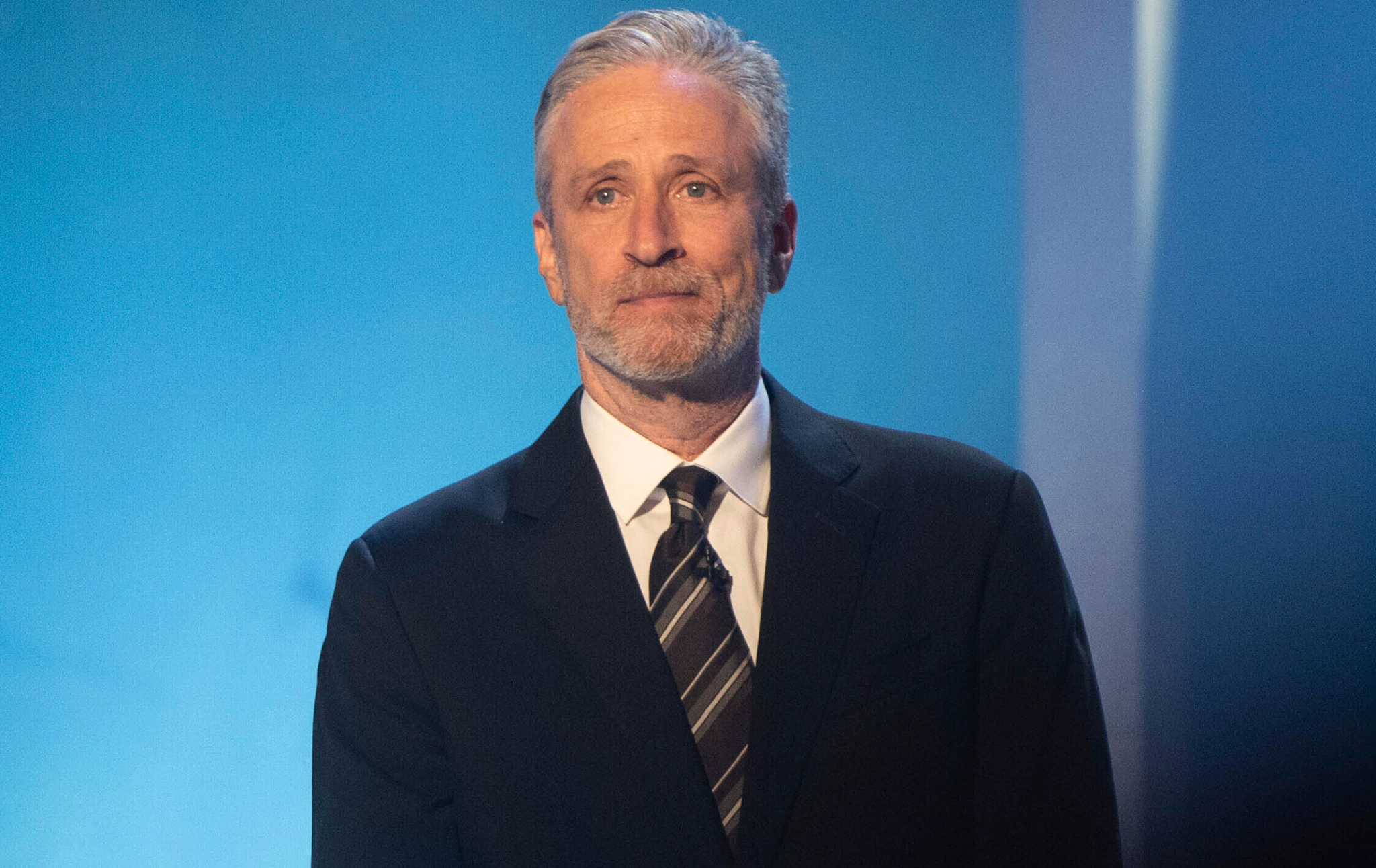
We Might Just Need to Draft Jon Stewart
One piece of good news is that the right-wing agenda is hugely unpopular. Donald Trump has squandered his 2024 victory. His approval rating keeps dropping. Trump keeps saying and doing things that voters hate, and then having to back off. For instance, he dismissed the affordability crisis as a hoax, then, realizing this sounded bad, went back to saying he wanted to bring prices down. He promised brutal immigration enforcement, but people don’t like seeing their neighbors roughed up and taken away by masked thugs, or even killed, so now he’s distancing himselffrom Border Patrol commander-at-large Greg Bovino. He promised to run Venezuela and threatened to conquer Greenland, but there’s no popular support for either action, so the Trump administrationbackpedaled.

-
Could weight-loss jabs be behind rising gallbladder removals?
Last year, there was a 15% annual increase in the operations and surgeons want more research. -

Bulgarian Torrent Giants Zamunda, Zelka, and ArenaBG Seized in Joint U.S.-Bulgarian Operation
Five years ago, Bulgaria informed the U.S. authorities that it would like to shut down prominent torrent trackers such as ArenaBG, Zamunda, and Zelka.
To get that done, the Eastern European country specifically asked the U.S. Government for assistance.
Today, it appears that these shutdown plans have finally come to fruition, at least as far as the domain names go. A few hours ago, three of the largest torrent trackers became unreachable, directing users to a seizure banner.
“This domain has been seized by Homeland Security Investigations as part of an international law enforcement operation in accordance with a court order issued by the United States District Court for the Southern District of Mississippi,” the banner reads.
Seized 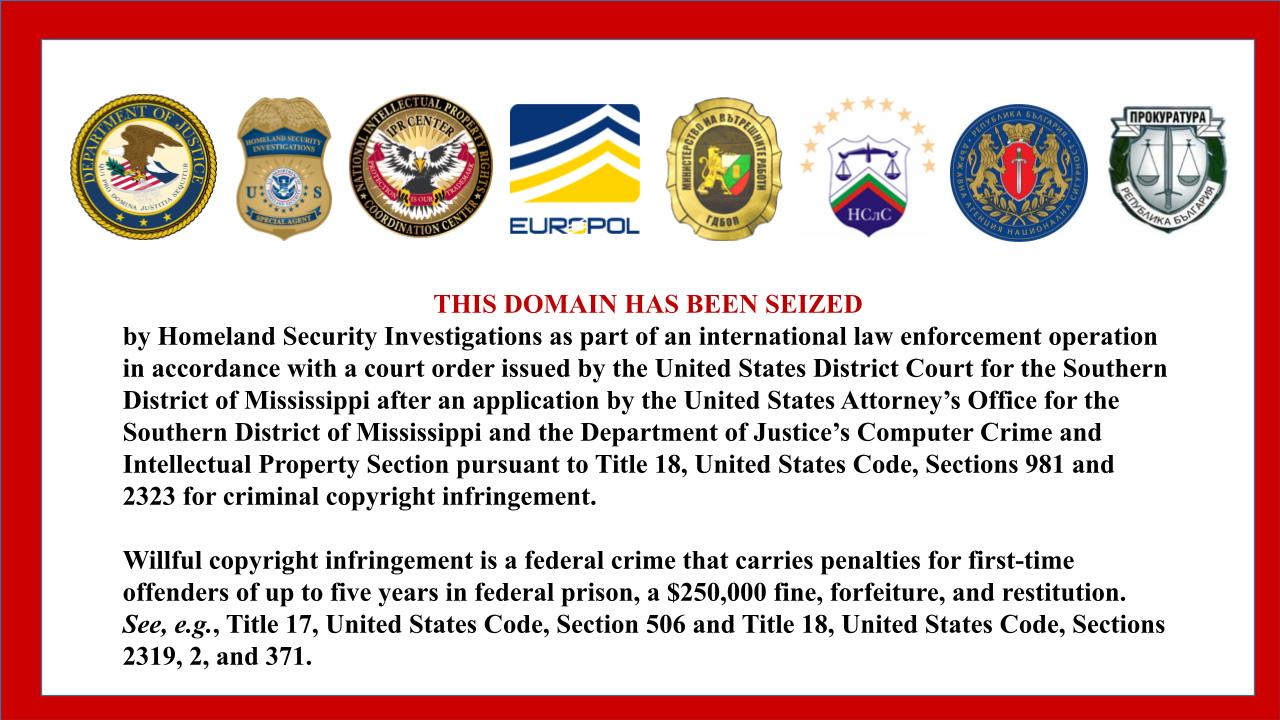
The listed law enforcement logos are, from left to right:
- U.S. Department of Justice (DOJ) – United States
- Homeland Security Investigations (HSI) – United States
- National IPR Coordination Center – United States
- Europol – European Union
- GDBOP (General Directorate for Combating Organized Crime) – Bulgaria
- National Investigative Service (НСлС) – Bulgaria
- State Agency for National Security (DANS) – Bulgaria
- Prosecutor’s Office of the Republic of Bulgaria – Bulgaria
The order issued by the Mississippi federal court purportedly compelled the domain name registrars or the domain registries to take action. With domain names linked to American domain intermediaries, this explains why it would be crucial for the U.S. to be involved.
At the time of writing, ArenaBG.com, Zamunda.net, and Zelka.org all point to seizedservers.com nameservers, which means that the domains are now controlled by the U.S. authorities.
Zamunda’s nameservers 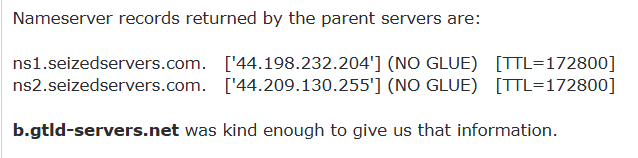
To give an idea of the popularity of these sites, Zamunda.net was up until recently the 11th most visited website in Bulgaria with millions of monthly visitors.
The authorities in Bulgaria previously said that “pre-trial proceedings were opened” against torrent trackers for “intellectual property and tax crimes.” However, it is not clear if today’s actions go beyond the domain seizures.
In the past, Bulgaria has asked the U.S. for assistance to seize the physical servers of Zamunda. However, thus far there is no information about additional enforcement actions. We have also yet to see a press release from the authorities formally confirming the action.
If the current action is limited to the domain names the sites will likely switch to alternative ones, as we have seen with other seizures in the past.
—
Note: This is a breaking story, and we will continue to monitor the situation and may add updates when more information comes in.
From: TF, for the latest news on copyright battles, piracy and more.
-

Ban Prediction Markets
They say if you bet on yourself, you’ll never lose. That might be why, at 3 a.m. on Saturday, January 3, an anonymous trader made a $30,000 bet on the prediction app Polymarket that Venezuela’s president would be captured before the end of the month. A few hours later, the brand new account hit the jackpot: Donald Trump confirmed that Nicolás Maduro was in U.S. custody and the user scored a whopping $436,000. The account cashed out shortly after, according to the Telegraph, and has not been active since.
