We’re taking part in Copyright Week, a series of actions and discussions supporting key principles that should guide copyright policy. Every day this week, various groups are taking on different elements of copyright law and policy, and addressing what’s at stake, and what we need to do to make sure that copyright promotes creativity and innovation.
Author: tio
-
Thousands at risk of inherited cancers to receive regular NHS checks through world-first genetics programme
Thousands of people at higher risk of developing cancer due to inherited faulty genes will be regularly checked and tracked by the NHS thanks to a first-of-its-kind national genetics programme. The world-first genetic register, developed by the NHS, will collect patient information on over 100 genes linked to an increased risk of cancer, with plans […] -
Search Engines, AI, And The Long Fight Over Fair Use
Long before generative AI, copyright holders warned that new technologies for reading and analyzing information would destroy creativity. Internet search engines, they argued, were infringement machines—tools that copied copyrighted works at scale without permission. As they had with earlier information technologies like the photocopier and the VCR, copyright owners sued.
Courts disagreed. They recognized that copying works in order to understand, index, and locate information is a classic fair use—and a necessary condition for a free and open internet.
Today, the same argument is being recycled against AI. It’s whether copyright owners should be allowed to control how others analyze, reuse, and build on existing works.
Fair Use Protects Analysis—Even When It’s Automated
U.S. courts have long recognized that copying for purposes of analysis, indexing, and learning is a classic fair use. That principle didn’t originate with artificial intelligence. It doesn’t disappear just because the processes are performed by a machine.
Copying that works in order to understand them, extract information from them, or make them searchable is transformative and lawful. That’s why search engines can index the web, libraries can make digital indexes, and researchers can analyze large collections of text and data without negotiating licenses from millions of rightsholders. These uses don’t substitute for the original works; they enable new forms of knowledge and expression.
Training AI models fits squarely within that tradition. An AI system learns by analyzing patterns across many works. The purpose of that copying is not to reproduce or replace the original texts, but to extract statistical relationships that allow the AI system to generate new outputs. That is the hallmark of a transformative use.
Attacking AI training on copyright grounds misunderstands what’s at stake. If copyright law is expanded to require permission for analyzing or learning from existing works, the damage won’t be limited to generative AI tools. It could threaten long-standing practices in machine learning and text-and-data mining that underpin research in science, medicine, and technology.
Researchers already rely on fair use to analyze massive datasets such as scientific literature. Requiring licenses for these uses would often be impractical or impossible, and it would advantage only the largest companies with the money to negotiate blanket deals. Fair use exists to prevent copyright from becoming a barrier to understanding the world. The law has protected learning before. It should continue to do so now, even when that learning is automated.
A Road Forward For AI Training And Fair Use
One court has already shown how these cases should be analyzed. In Bartz v. Anthropic, the court found that using copyrighted works to train an AI model is a highly transformative use. Training is a kind of studying how language works—not about reproducing or supplanting the original books. Any harm to the market for the original works was speculative.
The court in Bartz rejected the idea that an AI model might infringe because, in some abstract sense, its output competes with existing works. While EFF disagrees with other parts of the decision, the court’s ruling on AI training and fair use offers a good approach. Courts should focus on whether training is transformative and non-substitutive, not on fear-based speculation about how a new tool could affect someone’s market share.
AI Can Create Problems, But Expanding Copyright Is the Wrong Fix
Workers’ concerns about automation and displacement are real and should not be ignored. But copyright is the wrong tool to address them. Managing economic transitions and protecting workers during turbulent times may be core functions of government, but copyright law doesn’t help with that task in the slightest. Expanding copyright control over learning and analysis won’t stop new forms of worker automation—it never has. But it will distort copyright law and undermine free expression.
Broad licensing mandates may also do harm by entrenching the current biggest incumbent companies. Only the largest tech firms can afford to negotiate massive licensing deals covering millions of works. Smaller developers, research teams, nonprofits, and open-source projects will all get locked out. Copyright expansion won’t restrain Big Tech—it will give it a new advantage.
Fair Use Still Matters
Learning from prior work is foundational to free expression. Rightsholders cannot be allowed to control it. Courts have rejected that move before, and they should do so again.
Search, indexing, and analysis didn’t destroy creativity. Nor did the photocopier, nor the VCR. They expanded speech, access to knowledge, and participation in culture. Artificial intelligence raises hard new questions, but fair use remains the right starting point for thinking about training.
-

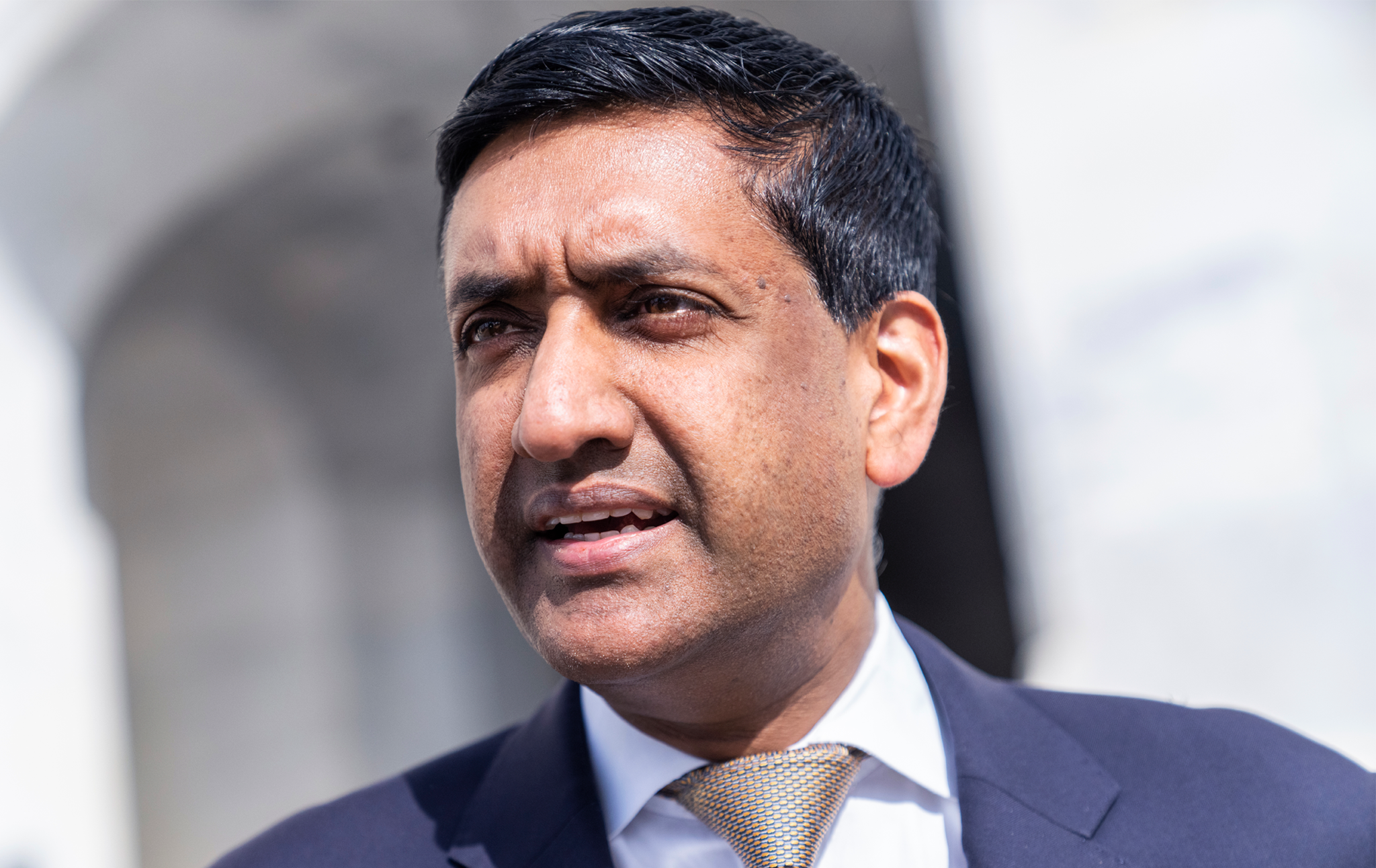
Ro Khanna: “Newsom Doesn’t Want to Offend the Donor Class”
Ro Khanna is the U.S. representative for California’s 17th Congressional district, more commonly known as “Silicon Valley.” He was a co-chair of Bernie Sanders’ presidential campaign in 2020, and there’s been speculation he may run for president himself in 2028. He joined Current Affairs associate editor Alex Skopic to discuss his bipartisan efforts to release the Epstein files, a “new FDR moment” for the Democratic Party, and the dangerous state of U.S. foreign policy under Donald Trump.

-

Recordings From Our Public Domain Day Celebrations are Now Available
This week, Internet Archive celebrated Public Domain Day with a lively mix of ideas, art, and community. Session recordings are now available to revisit or discover the highlights.
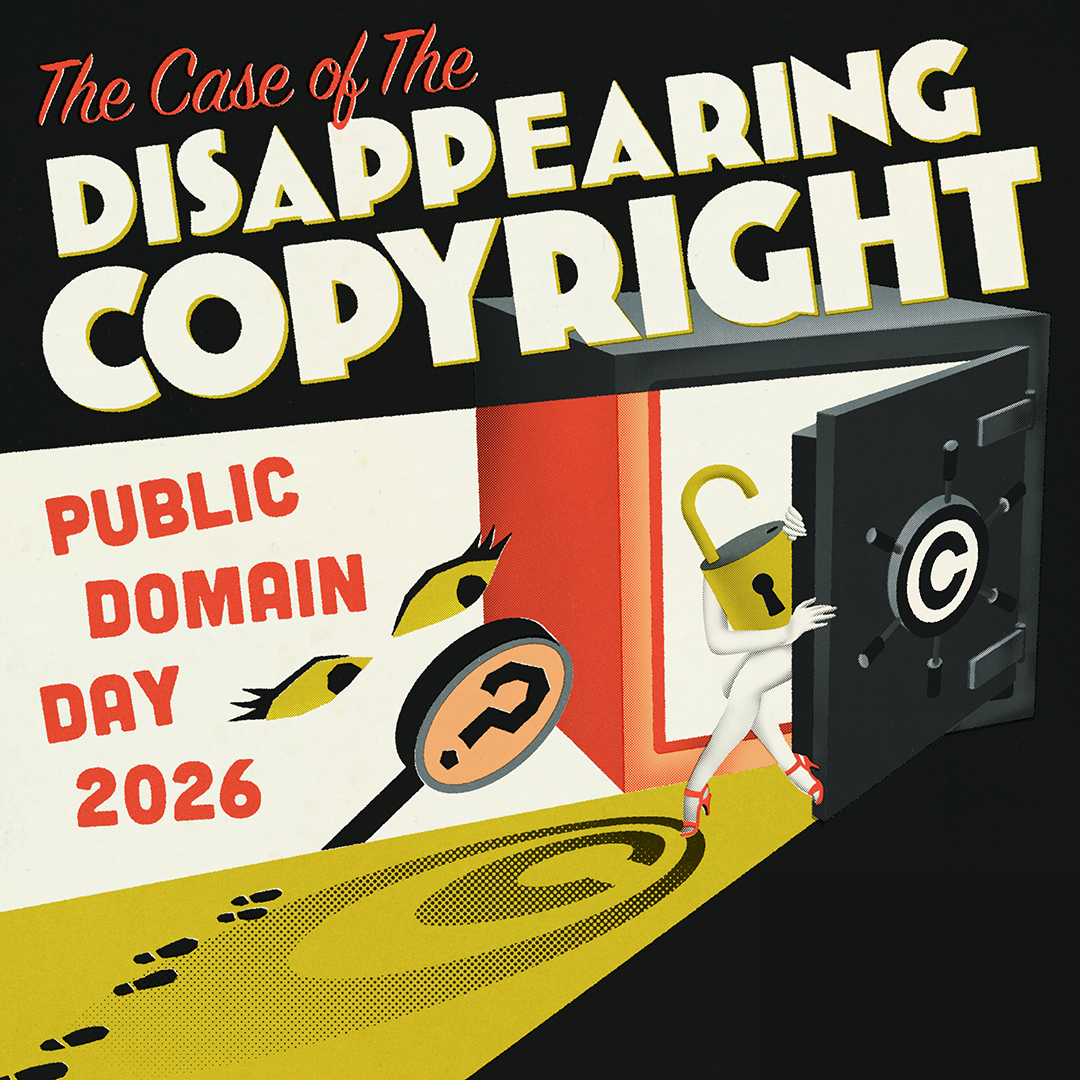
In our daytime virtual session, we invited audiences to step into The Case of the Disappearing Copyright, a playful, thought-provoking celebration of the works newly freed into the public domain. Watch the recording.

Our in-person party turned Public Domain Day into a lively celebration of art, film, and the public domain. Artist in residence Cindy Rehm shared The Seers, her public-domain–inspired work, followed by a screening of the winning films and honorable mentions from the Public Domain Film Remix Contest. Watch the livestream.
-

SPARC and Curationist Join Widening Effort to Protect Our Future Memory
Two more organizations—SPARC and Curationist—have decided to sign the Statement on Four Digital Rights for Memory Institutions Online, demonstrating its broad appeal to memory institutions of different stripes.
SPARC and Curationist represent key collaborative institutions from library world and the museum space, respectively. SPARC is an umbrella advocacy group with more than 250 North American research libraries and academic organizations as its members; Curationist, a digital platform helping museums and archives open their collections to each other and to the world.
Notwithstanding their distinct areas of focus, SPARC and Curationist are dedicated memory institutions, specializing to meet the needs of their patrons, members, and users, but never forgetting their shared goal of preserving culture and providing equal access to knowledge. That is why both are concerned about the effect that outdated laws are having on cultural heritage organizations in the digital age—and why they’ve joined Our Future Memory’s fight to protect memory institutions’ absolutely vital operations, in a media environment where affordable access to trustworthy information is at a premium.
“Curationist is signing this statement because the future of cultural memory depends on the ability of museums, libraries, and archives to operate fully and responsibly in the digital world,” said Executive Director Christian Dawson. “These rights are not abstract ideals. They are the practical foundations that allow institutions to preserve knowledge, provide access, and collaborate across borders. Our work exists to help make these rights real in practice, and we are proud to stand with a global community committed to protecting the past to power the future.”
To be sure, these “practical foundations” should not be controversial. They reflect the historical operations that have made libraries, archives, museums, and other memory institutions such an essential part of our information ecosystem. The Statement calls for legal assurances of memory institutions’ right and ability to:
- Collect digital materials
- Preserve digital collections
- Provide controlled digital access
- Cooperate across institutions
Thanks to SPARC and Curationist, the coalition to protect our future memory just got a bit bigger.
Ready to Join?
Your organization can join the movement and sign the Statement by going to the Our Future Memory website.
Want to learn more?
Register and join our informational webinar this Tuesday, January 27: “Protect Our Future Memory: Join the Call for Library Digital Rights.”
-
Weekly Roundup: Jan 23
On Tuesday, Nathan Yaffe explained how immigration agencies’ are now openly defying federal courts. In more than 1,600 habeas cases, federal judges have ruled that ICE is breaking the law by imposing blanket mandatory detention on people in immigration proceedings. Yet ICE continues to enforce the policy, effectively nullifying judicial oversight through sheer scale. Perhaps most worrisome…
-

Kakao Entertainment Behind the Bato.to Piracy Crackdown, Operator Identified
For fans of manga and manhwa comics, Bato.to has been an icon for many years.
The pirate site has reportedly changed owners over the years, but through the main site and dozens of mirrors, it kept its many millions of monthly visitors on board.
Since last November, the site has not been running smoothly, however. Several moderators reported that the site’s operator, Larry, had become unreachable, which resulted in various technical problems.
Batoto Communities Shut Down
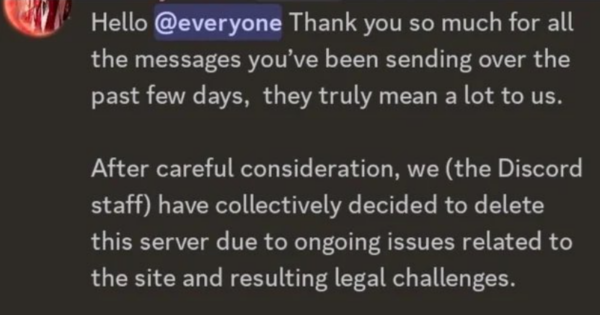
Earlier this week, the trouble appeared to worsen when the official Batoto Discord server, run by the moderation team, announced that it would shut down as well, citing legal challenges and ongoing issues with the site. This effectively confirmed that the site’s moderators were throwing in the towel.
Legal challenges 
Not much later, the official Batoto subreddit followed the same route. While it would not shut down completely, the moderators officially cut its ties with anything piracy or Batoto-related.
“Due to recent legal developments, it is clear that all activity, discussion, or support related to the former website and its services has permanently ended,” the subreddit mods wrote.
“Out of respect for creators, rights holders, and applicable laws, this subreddit will no longer be affiliated with, connected to, or associated with the website in any way.”
Subreddit Compliance 
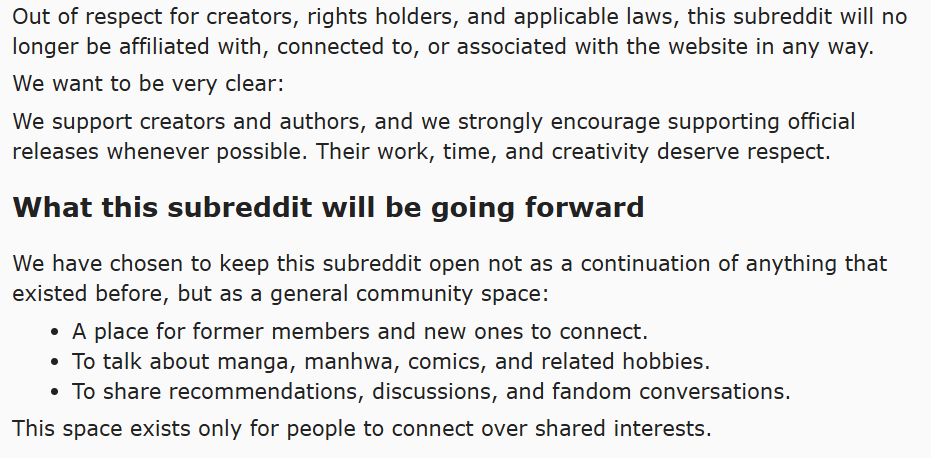
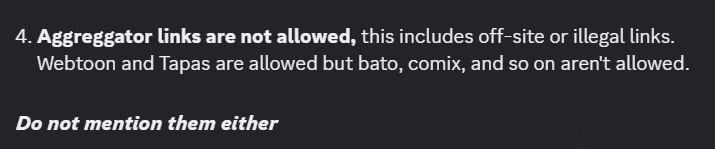
The seemingly obligatory mention of supporting legal services suggests that this soft shutdown was also the result of legal action. In fact, it appears that Batoto-related people and communication channels are targeted across the board.
This includes newly launched Discord channels. Only those who abide by a strict set of rules to ban any type of infringement appear to survive. This includes the newly launched Yoru reading community, which specifically prohibits illegal content, pointing people to official Webtoon and Tapas releases instead.
Kakao Entertainment Takes Credit
While it is clear that legal pressure is being applied, the source remained unmentioned. Today we can officially confirm that Kakao Entertainment is driving the action.
Through its dedicated anti-piracy enforcement arm, P.CoK, the South Korean entertainment giant is categorically targeting Bato.to and many related people and services.
The most significant blow to the operation is the identification of Bato.to’s founder and core developer. P.CoK confirmed to TorrentFreak that they have tracked the individual to their country of residence, where legal proceedings are now active.
Responding to this threat, the P.CoK team tackled the problem from multiple sides. In addition to preparing a lawsuit against the operator, it went after other key channels, including the aforementioned communities on Reddit and Discord.
“We adopted a strategy that categorizes individuals involved in the operation into multiple tiers and applies tailored countermeasures to each group. Legal proceedings are currently underway in the country of residence of the founder and core developer,” P.CoK notes.
The P.CoK team 
Cease and Desist
The people in lower tiers, including admins and moderators, were also identified. These all received personalized cease-and-desist letters, urging them to shut down their operation, or else.
“We have identified the majority of individuals who are directly or indirectly involved in the operation—such as sub-developers, moderators, and community administrators—and have sequentially issued Cease and Desist (C&D) letters to them,” P.CoK told us.
These cease-and-desist notices came with the relevant legal justification and a specific set of actions these people were expected to take. That likely means showing respect for rightsholders, as we have seen in a few of the public responses.
New Targets?
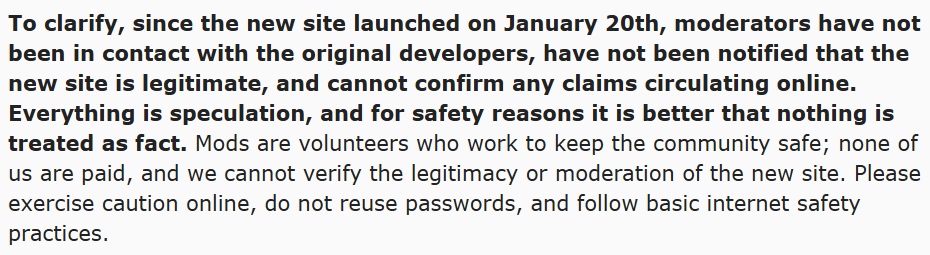
A final update by the subreddit team confirms the pressure from Kakao Entertainment. Clearly worried that ‘Reddit mods could be next,’ the subreddit was set to restricted.
The subreddit also clearly distances itself from a new Batoto-‘inspired’ site that surfaced online this week.
New? 
P.CoK, which has a history of unconventional but effective anti-piracy actions, will undoubtedly keep an eye on any new sites that emerge. At the same time, it is also going after MangaPark and AniXL, which have repeatedly been linked to Batoto. In fact, the anti-piracy group notes that new legal proceedings are already being prepared.
“We are aware that some of these individuals are also involved in the operation of MangaPark and AniXL, and we are preparing strong legal actions against Mangapark as well as newly established Bato-affiliated sites,” P.CoK concludes, suggesting that their work is not done yet.
From: TF, for the latest news on copyright battles, piracy and more.
-
MAHA Gave Us MAGA 2.0. Remember the Enablers.
When the history of this sad era is written, MAHA doctors will be disgraced pariahs and cautionary tales. Everyone else should be remembered based only on whether they tried to put the brakes on MAHA/MAGA however they could or whether they slammed the accelerator.
The post MAHA Gave Us MAGA 2.0. Remember the Enablers. first appeared on Science-Based Medicine.
-
Re-Evaluating the “Worst Director of All Time”Will Sloan is a film critic and writer whose work has appeared in The New Yorker, Jacobin, and the Toronto Star. He is the co-host, with Luke Savage, of the podcast Michael and Us, which examines politics and ideology through popular film and television.