Author: tio

  • Fediverse Report – #121

    Developers of the WordPress ActivityPub talks about how they plan to make WordPress websites a full member of the fediverse, videos of FediForum available, and bridging to Bluesky op a per-server basis.

    I also run a weekly newsletter, where you get all the articles I published this week directly in your inbox, as well as additional analysis. You can sign up right here, and get the next edition this Friday!

    Connected Places is the new source that helps you better understand the new social web. It is a rebrand of the Fediverse Report website, to make it clearer that connected places is the place to go for news and analysis about the open social web, the fediverse, the ATmosphere and a variety of other online spaces that form part of this connected web of social platforms.

    The News

    Fediforum has published the videos of the keynotes and the software demos. For a list of all the demos, you can check out the website. Some thoughts on some of the demoes that stood out to me. For some of the other cool demos (such as Bounce and Bandwagon), check out last week’s news.

    • The keynote by Christine Lemmer-Webber talks about how the social media style of the 2010s is no longer good enough. With this, she refers to both the fediverse as well as Bluesky. Lemmer-Webber makes the case we live in an age of surveillance, and both Bluesky and the fediverse do not meet the need for safety and privacy that comes with that. She says that shame is not an effective way to get people to use better platforms, and that we need to bring joy to the new platforms. Lemmer-Webber is now working on different protocols with the Spritely Institute, that use Object Capabilities. I’ll go into more detail on that once Spritely gets closer to public usage, but to hugely oversimplify: with Object Capabilities, you can enforce who has access to your data that you send out. Seeing one of the co-authors of ActivityPub actively advocating for further development of new open protocols indicates to what extend the space of the open social web is still in active development.
    • BadgeFed is a platform for issues badges using the Open Badges standard and ActivityPub protocol, where the badges can later be verified cryptographically. There are some interesting parallels with how people are developing badges on ATProto, and it seems to me that both networks are now in the stage that there are solid proofs that you can build systems for credentials on decentralised protocols. The next stage is seeing how people will start using these new systems.
    • For developers: ActivityFuzz is an upcoming project from Darius Kazemi, and builds upon the Fediverse Schema Observatory. These tools give a much greater insight into how all the different fediverse projects have implemented ActivityPub in practice, and shows all the differences. This makes building fediverse platforms that are compatible with other platforms more accessible.
    • Gobo is a client that allows people to post to multiple different platforms, including Mastodon and Bluesky. One of the challenges with cross-posting tools is that these platforms have different character limits, which Gobo has some nice ways of setting the cutoff-point for a longer text thats different for each platform.
    • Encyclia is a recently-announced project to make ORCID (Open Researcher and Contributor ID) records connected to the fediverse, with the demo providing a first view of what this looks like in practice.
    • The Build Your Own Timeline Algorithm takes your Mastodon timeline and uses various customisable algorithms to create custom clusterings for the post, allowing you to sort your timeline into various different topics.

    The team implementing the ActivityPub plugin for WordPress has posted a blog with a roadmap what they are working on. The team has plans to majorly expand the plugin, and make WordPress a full member of the fediverse. So far, the interaction has mainly focused on publishing to the fediverse, which will now be expanded to also be able to follow, read and interact with the rest of the fediverse directly via a WordPress account. The main feature will be a reader experience, which is effectively a timeline feed within WordPress. It places WordPress into even more direct competition with Ghost, who also offers a timeline reader as part of their ActivityPub integration.

    The Social Web Foundation released a draft of their work to implement end-to-end encrypted (E2EE) messaging over ActivityPub. Their plan uses Messaging Layer Security (MLS), a protocol for encrypting messages, that is designed to be used in combination with other protocols for sending the encrypted messages. One of the parts that is missing for ActivityPub is the ability to send real private messages to each other, and an integration with MLS can help with that. It might take a while before it gets there, this first version of the draft is now ready for proof-of-concept implementations and interoperability testing.

    Bridgy Fed, the bridging software that connects ActivityPub with ATProto, has gotten an update where server admins can opt-in to the bridge for their entire server. For some context: Bridgy Fed was originally designed to be opt-out, meaning that every fediverse account could automatically be bridged to the Bluesky network and visa versa. After massive pushback from the fediverse community, this was changed to opt-in, where people have to actively take action to have their account be connected to the other network. The debate laid bare to what extend the fediverse struggled with being a decentralised network, where decentralised means that there are different communities with values that at times are incompatible with each other. Instead the debate got largely framed in terms of what the value (opt-in or opt-out) should be for the entire network. However, with this latest update individual communities can now be independently decide for themselves if they want to be connected to other protocols by default.

    The Links

    That’s all for this week, thanks for reading! You can subscribe to my newsletter to get all my weekly updates via email, which gets you some interesting extra analysis as a bonus, that is not posted here on the website. You can subscribe below:

    Connected Places is the new source that helps you better understand the new social web. It is a rebrand of the Fediverse Report website, to make it clearer that connected places is the place to go for news and analysis about the open social web, the fediverse, the ATmosphere and a variety of other online spaces that form part of this connected web of social platforms.

  • App crowdfunding — Let’s go live!

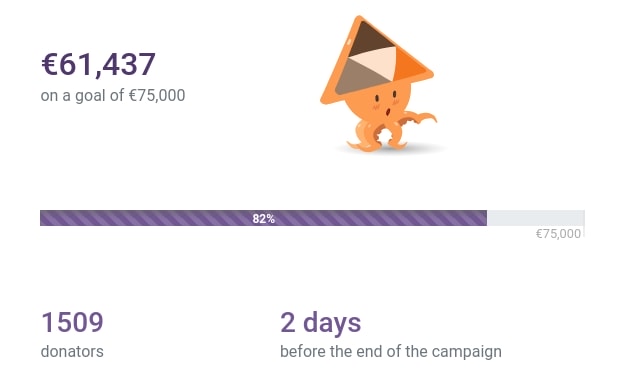
    We have just reached €55,000 in contributions for the PeerTube app crowdfunding!
    We were not certain to reach it but you followed us until now… that means a lot to us, thank you very much! 🥰

    Thanks to this completed goal, we will be able to work with peace of mind on every improvements we wanted to make to the application this year! 🎉

    📹 Broadcast live streams using PeerTube app

    Whether you want to cover an event happening in your street or to share your road trip with your community, you will soon be able to do so directly from the mobile app!

    In addition to making broadcasting easier (no more need for computer or OBS), this enhancement will let you be more spontaneous: you will soon be able to start your live streams on the fly, in just a few seconds…! 🥳

    For those of you who have been following the PeerTube project for a long time, maybe you remember we have already funded an app dedicated to PeerTube live streams, soberly called PeerTube Live.
    At the time, we called on an external developer to work on this app: we never thought that one day we would maintain our own mobile app!
    Today, we can’t imagine not integrating this major feature for videomakers into our app. Fortunately, we will be able to draw on the previous work to implement it, even if that will still be a lot of work!

    🫶 Next goal: Support Framasoft

    We can imagine many of you have questions about this goal.

    If you didn’t know, PeerTube is developed by a small french non-profit called Framasoft (yeah, this is us!).
    Our mission is to raise awareness about digital issues and cultural commons: to help people all around the world (even if we mostly work in France) to have a critical look on our digital society by sharing keys to understanding.

    However, we define ourselves as being an organization “that does”. We like to think but above all we seek to build solutions that enable everyone to take ownership on these issues and become emancipated.

    That is why we built PeerTube: to allow everyone to get back control on their videos.

    That is also why we have been running the “De-google-ify” campaign for the past 11 years, providing alternative services to those offered by Big Tech. These services, which are free and accessible to all, are among the largest non-commercial services in the world!

    Finally, we opened Framaspace for the same reason: to provide a free collaborative space (based on Nextcloud) for small non-profits and collectives.

    We seek to equip those who wish to build a fairer and more equitable world.

    Of course, even though all of our services are free, they still have a cost. We have to pay each month for our 10 employees and the whole infrastructure we maintain.
    To do so, our business model is based on solidarity: that’s donations from thousands of people (mostly based in France) that fund us! That’s thanks to all these people that PeerTube was born, that 2,000 collectives can enjoy Framaspace today or that more than 2,000,000 of people can freely use our services each month!

    By supporting Framasoft, you support both PeerTube and all our other projects.
    By doing so, you allow us to help to (digitally) empower those working for a better world.

    To support Framasoft and help us to continue to act, you can:

    Support PeerTube

  • ATmosphere Report – #120

    WordPress plugins on ATProto, managing digital badges and attestations, and more.

    I also run a weekly newsletter, where you get all the articles I published this week directly in your inbox, as well as additional analysis. You can sign up right here, and get the next edition tomorrow!

    Connected Places is the new source that helps you better understand the new social web. It is a rebrand of the Fediverse Report website, to make it clearer that connected places is the place to go for news and analysis about the open social web, the fediverse, the ATmosphere and a variety of other online spaces that form part of this connected web of social platforms.

    The News

    The Linux Foundation has announced FAIR, a package manager project for WordPress. It is “a federated and independent repository of trusted plugins and themes for web hosts, commercial plugin and tool developers in the WordPress ecosystem and end users.” To achieve this independent and federated repository of tools for the WordPress ecosystem, FAIR uses ATProto underneath. FAIR has build their own protocol, the FAIR protocol, on top of ATProto. It uses DID PLC as an identifier for the packages, and ATProto for indexing and discoverability. As the project has just launched and some of the final parts are still being ironed out there are no packages yet that use the FAIR system. As such I cannot give yet a good context for what discoverability of WordPress packages over ATProto actually looks like. The chaos of the last year around the management of WordPress shows a need for decentralised repository of packages and plugins, and FAIR does already show that ATProto can be much more than only a microblogging network.

    Gnosco is a new tool for digital badges and attestations on ATProto. It acts as a secure middleman between the application that issues the badge and your PDS. This allows applications to create a signed record to award a badge of attestation for a user. This badge is then not yet placed into the user’s PDS, but instead held in escrow by Gnosco. Users can then log into Gnosco with their ATProto account and review the badges. If they approve, the signed badge then added to their own PDS.

    Gnosco took me a while to wrap my head around what the tool is and what it does, but it tackles the following problem. Badges and awards and other attestations need to be accepted and signed by both the issuer and the receiver. But not for all attestations that are issued it is known in advance if the user actually wants to receive this attestation and store it on their PDS. So there needs to be a way for the user to accept or reject a badge or attestation that is issued. Gnosco provides this interface that is platform-neutral, where users can accept and reject any attestation or badge.

    Photo-sharing platform Grain now has their own moderation system on their own infrastructure. Grain is building a social photo-sharing network on ATProto that is separate from Bluesky, using their own lexicon. One reason why image-sharing platforms so far tend to have been alternate Bluesky clients is that means that the client does not have to be responsible for moderation. For Grain, the goal is to build their own independent social network, and thus their own moderation system is mandatory as well. The Grain developer also released a stand-alone app to embed Grain galleries on your own website.

    Blacksky is proposing to make a soft-fork of the Bluesky client for the Blacksky community. With their own forked app, Blacksky can set some default values that benefit their community, such as setting the default feed to the Blacksky Trending feed, and setting the Blacksky moderation as default moderation. The organisation is looking for 2500 USD in recurring monthly donations, and they are close to reaching that goal.

    ATProto chatroom app Roomy has released the another alpha version. Besides offering public chatrooms, Roomy continues to experiment with features for collecting and aggregating chat messages into longer-lived places for text. In this update they included ‘boards’, where people can create simple markdown pages as well as collect ‘threads’ that are pulled out of the chat log. Roomy is on the bleeding edge of technology when it comes to using ATProto, by combining it with Conflict-free Replicated Data Type (CRDT). The Roomy blogs go into more detail on why they are building the architecture this way, but the current practical problem is that CRDTs are new enough that what Roomy needs is still in development.

    Tech updates and news

    • ATStudio is a new developer-focused tool that allows people to interact with ATProto. It allows you to “experiment with the protocol and debug code paths by making direct XRPC requests and executing @ATProtocol SDK methods using the integrated dashboard.”
    • Boost Blue is a new Bluesky client for Android and iOS, that has a few in-demand features that the main Bluesky client is missing, such as repost muting by user, drafts and bookmarks.
    • Bluesky’s latest update adds a ‘share’ button on every post, and an announced update to get notification on likes on reposts is pushed back to the next update which contains more notification filters.
    • An update by Skylight on how they are building their algorithm.
    • Work on the Deer client is paused for the summer.
    • Graze announced they are backing Party Starter with a 1k USD grant, a “toolkit for creating short-lived, location-aware events”. Not much else is known yet about Party Starter.
    • A “minor change to the PLC Directory service, with the aim of expanding compatibility with non-atproto apps and services”.
    • A tool to run raffles on Bluesky posts.
    • A new PDS browser with a retro interface.

    The Links

    That’s all for this week, thanks for reading! If you want more analysis, you can subscribe to my newsletter. Every week you get an update with all this week’s articles, as well as extra analysis not published anywhere else. You can subscribe below, and follow this blog @fediversereport.com and my personal account @laurenshof.online on Bluesky.

    Connected Places is the new source that helps you better understand the new social web. It is a rebrand of the Fediverse Report website, to make it clearer that connected places is the place to go for news and analysis about the open social web, the fediverse, the ATmosphere and a variety of other online spaces that form part of this connected web of social platforms.

  • Fediverse Report – #120

    Fediforum happened this week, porting your social graph cross-protocol with Bounce, Bonfire gets closer to release, a prominent Lemmy server shuts down, and much more.

    I also run a weekly newsletter, where you get all the articles I published this week directly in your inbox, as well as additional analysis. You can sign up right here, and get the next edition this Friday!

    Connected Places is the new source that helps you better understand the new social web. It is a rebrand of the Fediverse Report website, to make it clearer that connected places is the place to go for news and analysis about the open social web, the fediverse, the ATmosphere and a variety of other online spaces that form part of this connected web of social platforms.

    FediForum and related announcements

    The FediForum unconference was this week, with three days of sessions, keynotes and demos. The event was originally scheduled for April, but got cancelled at the last minute due to drama around transphobic statements made by one of the co-organisers. The individual in question left FediForum, and instead FediForum set up an advisory board with a number of community members. This edition of FediForum had keynotes for the first time, by ActivityPub co-creator Christine Lemmer-Webber, author Cory Doctorow, and Ian Forrester, who lead a Mastodon instance at the BBC. There were also a large number of demos (list here) and unconference sessions about a wide variety of subjects. I’ll write more about both the demos and the keynotes once the videos of them will become available online, likely next week.

    Bounce is a newly-announced tool that allows people to migrate their social graph across protocols. It is made by A New Social, the organisation behind Bridgy Fed. The ability to port a social graph from AT Protocol to ActivityPub reshapes what is possible within the Open Social Web. For that reason, I think Bounce is a meaningful release, with its power mainly being in altering the shape of these networks. I wrote an essay on that this week that goes into the philosophical side of Bounce. For more practical information I can recommend this coverage by TechCrunch and The Verge. Meanwhile, A New Social’s CTO Ryan Barrett has shared all the updates and new features that have happened to Bridgy Fed over the recent months.

    Music sharing platform Bandwagon shared more information during Fediforum on their development work, and how they are working on integrating album sales. A dev blog by Bandwagon recently shared their plans on adding a premium subscription, and how album sales work. During a Fediforum session, developer Ben Pate shared some screenshots on what this looks like. WeDistribute has a deep dive into Bandwagon and the current state of development based on the latest FediForum session.

    Bonfire is an upcoming fediverse platform that has slowly been reaching the end of the line for development, and they announced the release candidate version of Bonfire 1.0. It is a framework and platform for building communities on the fediverse, and has a large variety of features and extensibility. One of the standout features is circles and boundaries. Circles allow users to define lists of accounts, and boundaries allows users to determine on a per-post basis to what circles each post gets shared. This creates a significant amount of flexibility on how to handle private posts, something which is in huge demand within the open social web. Bonfire also gives users a large amount of control over how they see and filter their feed. For more of a philosophical take on that, I recently wrote about how Bonfire’s approach on custom feeds compares to Bluesky’s approach. The developers are inviting people to install their own instance and experiment with the new features. It is unknown when Bonfire will be ready for a full 1.0 release. For another look at Bonfire, TechCrunch also covered the story.

    Filmmaker and fediverse evangelist Elena Rossini has released her fediverse promotion video, which was highly anticipated by the community. The video can be viewed here, and tells the story of why the fediverse matters for a lay audience. The video is worth paying attention to for two reasons: first of all, it is a well-produced promo video for the fediverse that explains some of the core ideas in an accessible manner. Secondly, the video has gotten a huge amount of support from within the fediverse community, with a large number of prominent people within the community supporting Rossini’s work. One of the challenges of analysing a decentralised community is that there is no singular decentralised community, there are a wide variety of different groups and cultures. However, by seeing how and who responded positively to the video, it becomes clear that Rossini’s video does represent a dominant and popular understanding of what the fediverse is, and why it matters. In that way, analysing the video does provide good insight into the one of the more dominant and popular cultures of the fediverse.

    Shutdown of Lemm.ee and opportunity for PieFed

    Lemm.ee, one of the biggest Lemmy servers, is shutting down at the end of June. The team says: “The key reason is that we just don’t have enough people on the admin team to keep the place running. Most of the admin team has stepped down, mostly due to burnout, and finding replacements hasn’t worked out.” This has some significant impact on the wider Threadiverse community, as the lemm.ee hosted a significant number of popular communities. This makes server shutdowns on Threadiverse platforms signficantly more impactful, as they also impact people who do not have an account on the platform. Community migration is challenging, and there are no specific tools to help with a community with migrating to a different server.

    The shutdown of the Lemm.ee server provides an opportunity for PieFed, a link-aggregator platform similar to Lemmy. PieFed is over a year old, that has seen significant development and new features beyond Lemmy, but has not managed to gain traction yet, with growth of users being slow. However, now that communities on the lemm.ee. server need to find a new place, PieFed is emerging as one of the main destinations. In turn, this is giving PieFed some much need promotion and awareness within the Threadiverse community, with PieFed doubling the number of accounts within a week. Lemmy clients are also starting to add support for PieFed, with the Lemmy client Interstellar already supporting PieFed. PieFed also uploaded two PeerTube video walking through all the moderation and administration features the platform has.

    Platform updates

    Ghost’s work on implementing ActivityPub is getting close to an official release. In their latest update, Ghost said that their ActivityPub integration will be part of the Ghost 6.0 release, which will come in ‘a few weeks’. The team has been working on ActivityPub for over a year, and have grown from 3 people to 8 people now working on their social web integration. For Ghost, the ActivityPub integration is more than just another connector, describing it as ‘a statement that the open web still matters’.

    Mastodon is planning to release a new update, version 4.4, with the first beta now available. Some of the new features include the ability to set more feature content on user profiles, more list and follow management tools. For admins, there are better tools for setting legal frameworks, moderation tweaks and more. The biggest feature of the patch is that it will display quoted posts. The highly requested feature will only be fully available in version 4.5, which will include the ability for users to create quoted posts. Mastodon CTO Renaud Chaput says that he expects version 4.4 to be released at the end of June, with version 4.5 scheduled a few months later in September of October. The organisation also shared their monthly engineering update for May.

    PeerTube released their latest version, 7.2, with a new design for video management and publication pages. PeerTube also now has more features for handling sensitive content. Creators can now add an explanation of why the content is marked as sensitive. Users also have more flexibility with how they want sensitive content to be handled, with various different configurations between hiding, blurring or warning about a video with sensitive content. PeerTube is also running a crowdfunding campaign for the mobile app, which has now crossed the halfway mark at 35k EUR. This milestone is for video management from the mobile app, with the next milestone being for livestream support in-app. The PeerTube app developer also shared a blog post with his thoughts on the technical framework considerations for building the app.

    Hollo is a single-user microblogging platform, and their latest release has a significant number of new features, including better OAuth and various upgrades to the UX. Developer Hong Minhee also announced that independent fediverse developer Emelia Smith will join as a co-maintainer for Hollo.

    The Links

    That’s all for this week, thanks for reading! You can subscribe to my newsletter to get all my weekly updates via email, which gets you some interesting extra analysis as a bonus, that is not posted here on the website. You can subscribe below:
    Connected Places is the new source that helps you better understand the new social web. It is a rebrand of the Fediverse Report website, to make it clearer that connected places is the place to go for news and analysis about the open social web, the fediverse, the ATmosphere and a variety of other online spaces that form part of this connected web of social platforms.

  • By Default, Signal Doesn’t Recall

    By Default, Signal Doesn’t Recall

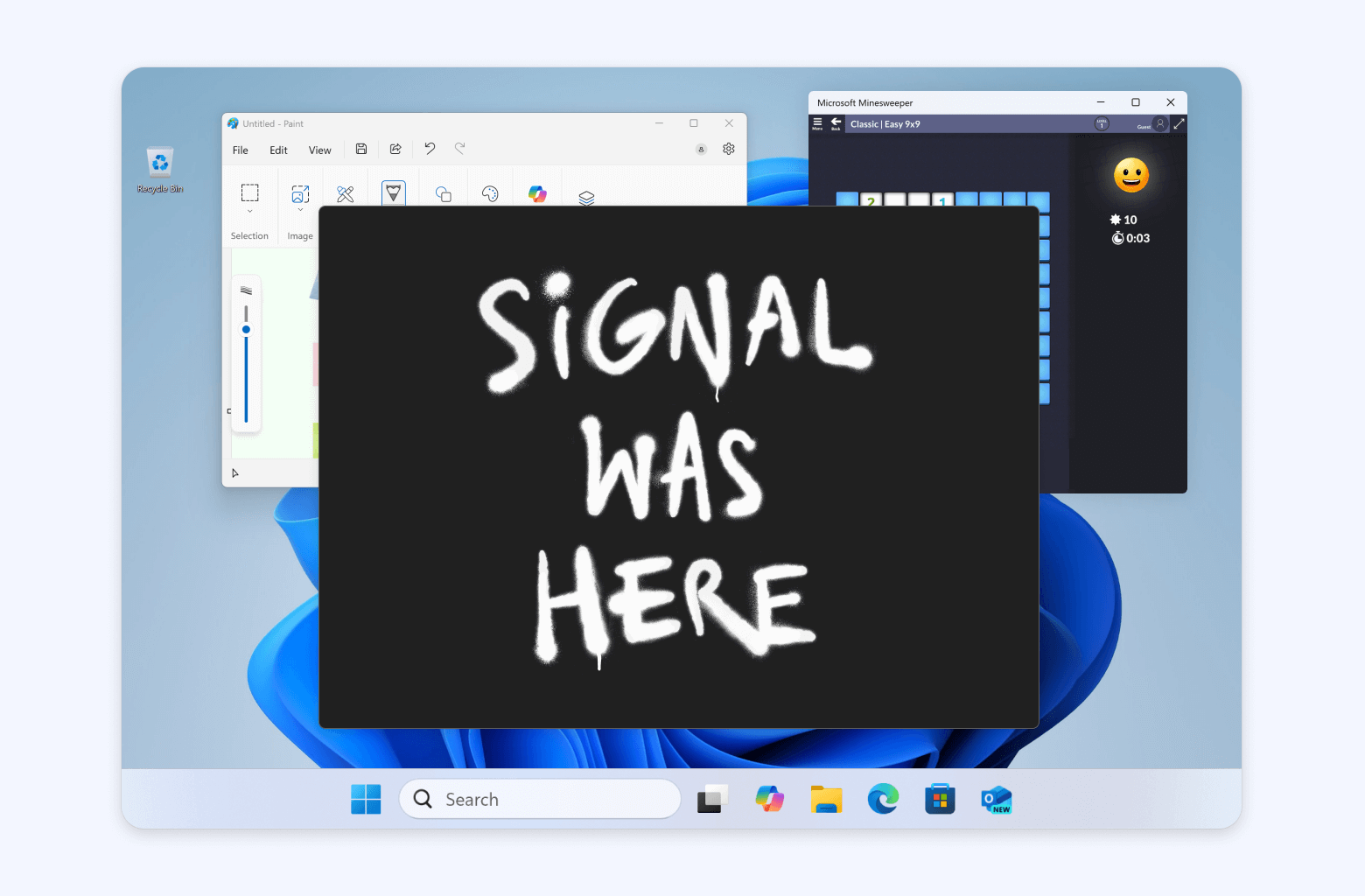
    Signal Desktop now includes support for a new “Screen security” setting that is designed to help prevent your own computer from capturing screenshots of your Signal chats on Windows. This setting is automatically enabled by default in Signal Desktop on Windows 11.

    If you’re wondering why we’re only implementing this on Windows right now, it’s because the purpose of this setting is to protect your Signal messages from Microsoft Recall.

    Read more…

  • LibriVox

    Free public domain audiobooks read by volunteers from around the world.

  • Amazon tightens the digital handcuffs

    One of the most noteworthy events in the history of Digital
    Restrictions Management (DRM) was Amazon’s Orwellian deletion of
    George Orwell’s 1984 from its customers’ e-readers. Ever since then,
    it’s been a touchstone of anti-DRM activism, giving users yet
    another reason to avoid the “Swindle”, as if its proprietary
    software
    isn’t enough. Just last week, Amazon showed that its
    campaign against literacy is still very much alive by depriving
    users with older Kindles (i.e. loyal customers) of the ability to transfer
    e-books to their devices via USB. As the oldest models of the devices
    don’t have wireless cards, this was the only officially supported
    method of transferring new books over to the device. (Thankfully,
    free software able to do this exact thing has existed for years.)

    This isn’t the only hurdle Kindle users have had to suffer during the
    lifetime of the device. Amazon still encumbers books purchased through
    its site with DRM, putting artificial limitations on who you can
    share your book with and when. Without this basic commitment to
    shareability, something “dead tree” books have had since their
    inception, is it really any surprise that Amazon seems intent on
    adding to global e-waste by making these devices “officially” useless?

    Even if a user has a perfectly functioning device, which can transfer
    text files (also known as e-books) just as well as when it was first
    released, Amazon would have her limited to the books she’s already
    purchased. Imagine an old but sturdy bookshelf, one with plenty of
    unused space on it — and now imagine some petty bureaucrat coming in
    to tell you that you can’t put any more books on it. Amazon’s removing
    “download and transfer” makes just as little sense.

    Users deserve more. Not only should the programs which power their
    devices be free software, but they shouldn’t be arbitrarily
    limited in what they can do with files on their machines, no matter
    whether that file’s contents are home movies, tax documents, or the
    complete works of George Orwell. Given its origins as a bookseller,
    Amazon should know better; given its current status as a panoptic
    corporation, we can’t say we’re surprised.

    Keep doing the right thing. Purchase e-books from sellers that
    respect your freedom, and don’t support Amazon’s attack on reading.

  • Wishful thinking dressed up in scientific terminology: a reply to Awais Aftab

    Awais Aftab’s blog about the Sunday Times article on my new book, Chemically Imbalanced, was predictable. Like previous reactions to our serotonin paper, it illustrates how elements of the psychiatric profession attempt to control the message that gets out to the public. Aftab even subtitled his blog ‘British journalists and editors this is for you’. This process shapes what becomes accepted as scientific ‘knowledge’ in line with professional and commercial interests.

    After a few comments characterising me as a ‘contrarian,’ Aftab’s basic point about the science is simply this: although we haven’t found them yet, depression might be associated with specific brain processes, including those involving serotonin. And because it might be, we should assume it is. Hence he is perturbed by what he sees as a ‘general dismissal of the neurobiology of depression’.

    This argument also underpinned many of the original responses to our serotonin paper, but it inverts the most basic precepts of science. An idea or theory is unproven until it is proven, not the other way round. This has to be the case because anyone can propose anything- and they do. There are scores of theories about links between this or that biological process or chemical and depression. A psychiatrist posted a list of 59 of them on Twitter in 2022, and there are more.  

    Just as a quick aside, by questioning that there is a ‘neurobiological’ basis to depression, I am not suggesting that nothing is going on in the brain when people are depressed. The question is whether there is a specific brain mechanism that produces depression in the same way that there is a specific process that produces Parkinson’s disease, for example.

    What Aftab presents as alternative ways of understanding the relationship between serotonin and depression are not even testable theories, although the sprinkling of technical jargon (‘signalling’, ‘dysfunctions’) makes them sound impressive. He proposes, for example, that one way to think of the relationship is that ‘depression generally, or in subset of patients, involves alterations in the serotonin signalling system (e.g. in the distribution or sensitivity or certain sorts of serotonin receptors).’ But what subset of patients, and what sort of alterations of receptors? There is no agreement about whether there are certain subtypes of depression, let alone what they are, and no body of research that has tested serotonin functions in such groups.

    Then he suggests that ‘the serotonin system mechanistically links depressive symptoms and neurobiological dysfunctions in other aspects of brain functioning (e.g. neurogenesis or neuroplasticity)’. But how exactly? And, although there has been a lot of talk about the role of neurogenesis and neuroplasticity in depression of late, especially since we debunked the serotonin hypothesis, there is no real agreement about what these terms refer to or how you would even test them, let alone a convincing body of evidence.

    In other words, Aftab is putting forward unsubstantiated speculations and suggesting these are a good enough basis to accept the idea that depression is a neurobiological condition. In Chemically Imbalanced I call this ‘wishful thinking dressed up in scientific terminology.’

    Later on Aftab suggests that endocrine and inflammatory processes may be involved in depression- and again they might be, but there is little evidence that they actually are. I summarise research on the main contenders to the serotonin theory in the book, and conclude that ‘as soon as one theory is discredited, the advocates of the biological paradigm turn to another, putting forward a new set of ropey, inconclusive and ambiguous studies as putative evidence. Challenging the biological model of depression feels like a game of whack-a-mole: as soon as you put one theory to bed, another one sprouts up.’

    In relation to serotonin and depression, Aftab admits that ‘nothing conclusive has emerged that commands a strong consensus’ and that links are ‘not conclusively established’ and not ‘robust’. But he thinks there is animal research demonstrating an association between serotonin and mood, citing a review paper that I describe in the book. In fact, this paper shows that animal experiments are highly inconsistent – different studies produce contradictory results. However, you wouldn’t know this unless you read the paper carefully because the authors present a convoluted hypothesis to explain the inconsistencies that appears to suggest a role for serotonin, but is simply another example of ‘well, it might be this’.

    It is not true, therefore, that we ‘know’ that serotonin is involved in mood or behaviour. In the book I describe how there is evidence that serotonin has a detrimental effect on sexual behaviour, but that is about all we can say about its behavioural functions.

    When Aftab suggests that whether there is an alteration of the serotonin system in depression is still ‘an open scientific problem,’ he is technically correct. You cannot prove a negative in science. It’s worth remembering, however, that there have been six decades of research on the serotonin system in depression, and they have not revealed anything remotely conclusive. If you can’t give up on a theory after that, when can you? 

    Why does any of this matter? Because the idea that depression is a neurochemical or neurobiological condition creates the impression that treatments that modify the brain, such as antidepressants, ‘work’ by targeting and correcting the underlying mechanism (whether this mechanism is regarded as ‘abnormal’ or not is unimportant). This is the rationale that persuaded people that taking antidepressants is a sensible thing to do.   

    Aftab wants us to continue to assume this is the case, but we do not know whether such a mechanism exists and if so what it is. And for this reason, we do not know how antidepressants produce their effects.

    As I have said before, I expect the very small difference between antidepressants and placebos in clinical trials is not a pharmacological effect but a result of an amplified placebo effect due to people being able to guess what they are taking (as we showed in the TADS study of fluoxetine in adolescents). But let’s assume it is a pharmacological effect for a moment. Antidepressants are drugs that enter the brain and change our normal brain chemistry and activity – this is not in dispute – and these changes inevitably impact on our mental states. In other words, antidepressants have brain and mind-altering properties. If you give someone with depression a dose of a mind-altering drug, like heroin, they would most likely feel less depressed for a while. Antidepressants are not the same as heroin, and the alterations they produce are usually quite subtle, but most of them numb or restrict emotions to some degree, which might reduce depression scores.

    I am using ‘might’ here too, but this scenario needs to be ruled out before we can conclude that antidepressants ‘work’ by affecting a putative biological mechanism. The burden of proof needs to be on those who suggest that as well as their brain and mind-altering effects, antidepressants also target depression mechanisms. This view has quite different implications from taking a drug that numbs emotions by interfering with normal brain activity. The latter situation should rightly worry us because we haven’t properly researched what antidepressants do to the brain exactly or what the consequences are.

    Aftab finishes with some philosophical points. He characterises my views of depression as being a ‘normal reaction to adverse circumstances’ and asks ‘what is normal?’ I don’t believe I have ever said this because, like him, I recognise that some people have extreme emotional reactions that are out of the ordinary. It doesn’t follow, however, as he seems to suggest, that because something is out of the ordinary it should therefore be classified as a medical condition.

    He then asks whether it is valid to distinguish between the idea that ‘circumstances make us depressed’ and ‘chemistry makes us depressed’ and refers to a ‘rich body of philosophical literature’ on the topic. Indeed, I have written papers on this subject myself in the past, to which Aftab responded. I noted that although the ‘biopsychosocial model’ sounds appealing, when a specific biological process is really involved, as in Parkinson’s disease and other recognised brain diseases, it trumps other influences. I argued that ‘physiological states are different from meaningful states like beliefs, emotions and moods’. People can read my original paper here, Aftab’s response to me here, and my response to Aftab here. I concluded that ‘People with what we call mental disorders are trying to negotiate their individual circumstances in various human ways. They are not walking representations of “neurological mechanisms.”’

  • A Synchronized Start for Linked Devices

    A Synchronized Start for Linked Devices

    With Signal on Desktop and iPad, you can link your primary Android or iOS account with another device, letting you check and respond to messages in both places or conduct video meetings and calls from the comfort of a bigger screen.

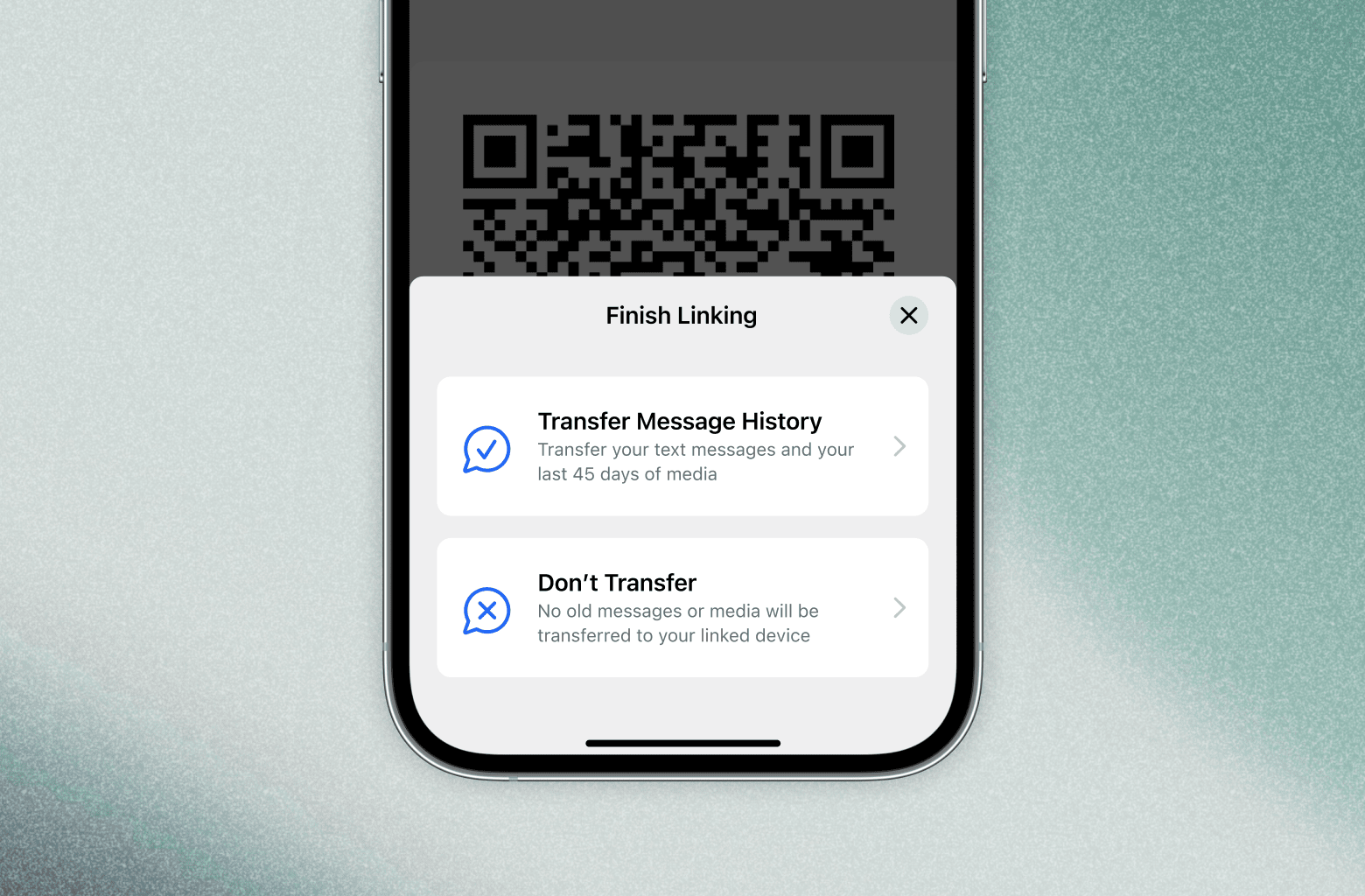
    Signal’s upcoming beta releases will also introduce the option to transfer your messages and media when you link your primary Signal device to a new Desktop or iPad. Instead of starting fresh, and having only new messages show up, you can choose to bring your chats and your last 45 days of media with you. Or, you can choose not to.

    Read more…

  • Keep putting pressure on Microsoft

    Grassroots organization against a corporation as large as Microsoft is never easy. They have the advertising budget to claim that they “love Linux” (sic), not to mention the money and political willpower to corral free software developers from around the world on their nonfree platform Microsoft GitHub. This year’s IDAD took aim at one specific injustice: their requiring a hardware TPM module for users being forced to “upgrade” to Windows 11. As Windows 10 will soon stop receiving security updates, this is a (Microsoft-manufactured) problem for users still on this operating system. Normally, offloading cryptography to a different hardware module could be seen as a good thing — but with nonfree software, it can only spell trouble for the user.

    As we mentioned in this year’s action announcement, we hope you took this opportunity to share the GNU/Linux operating system with someone you know and explained the concept of free software using this as an example of what we are up against.

    Seemingly small acts like these could start a journey towards freedom — in addition to saving yet another perfectly functioning computer from becoming e-waste. What’s crucial now is to keep putting pressure on Microsoft, whether that’s through switching to GNU/Linux, avoiding new releases of their software, or actions as simple as moving your projects off of Microsoft GitHub. If you’re concerned about e-waste or have friends who work to combat climate change, getting them together to tell them about free software is the perfect way to help our movement grow, and free a few more users from Microsoft’s digital restrictions.

    IDAD is just one of the important events the Free Software Foundation holds every year. Right now, we’re in our annual fundraiser, and need your help to continue our work against DRM and other forms of digital injustice. We appreciate any contribution you can make, whether that’s a financial one or just spreading the word.

    Will you consider becoming an FSF associate member if you aren’t one already? Like other social causes, our strength is in numbers. Your support directly helps us keep campaigning for another year.

    On another note, we realized in the course of planning that IDAD’s “moveable feast” isn’t the most conducive to satellite events or helpful for our partner organizations. We hear you. In January, we plan to announce the date of next year’s IDAD, one we intend to keep the same for as long as it serves the movement.

    If you participated in this year’s IDAD, whether as an individual activist or a supporting organization, thank you. The day itself may be over, but our work against digital restrictions still continues. Avoiding DRM is something each of us ought to do year round. We hope you’ll keep on supporting the Defective by Design campaign and the Free Software Foundation. We’re all in this together.