Facilitating the adoption of software is a long-term endeavour involving several stages. We are proud to present to you few of them that PeerTube has completed!
Emails in your language!
Until now, emails sent by PeerTube platforms were only available in English, regardless of the user’s language. This could cause confusion for non-native English speakers, making it difficult to use PeerTube in a professional context.
This was one of the most popular requests on our community suggestions page: it is now possible to translate emails into all the languages available on PeerTube! Some languages, such as French and Chinese, have already been fully translated, meaning you can now receive emails in these languages from this version onwards! We encourage the community to help us translate emails, as well as other parts of PeerTube, on our translation platform (contributing guide is available at https://docs.joinpeertube.org/support/doc/translation).
Configuring your platform
We have significantly enhanced the user experience and interface to assist administrators in configuring their platform.. The horizontal menu has been replaced with a new side menu for navigating between setting pages, which is more user-friendly.
A new configuration page called Customisation has been added, allowing admins to easily change their platform’s main colors and shapes. For example, it is now possible to replace PeerTube’s orange color with blue or make the buttons more rounded with just a few clicks. These new settings make it much easier to customise a PeerTube platform.
Another configuration page called Logo has also been added. This allows admins to configure the icons and logos displayed on their platform, including the header icon on the web and mobile versions, the favicon, the banner, the image displayed on social media, etc.
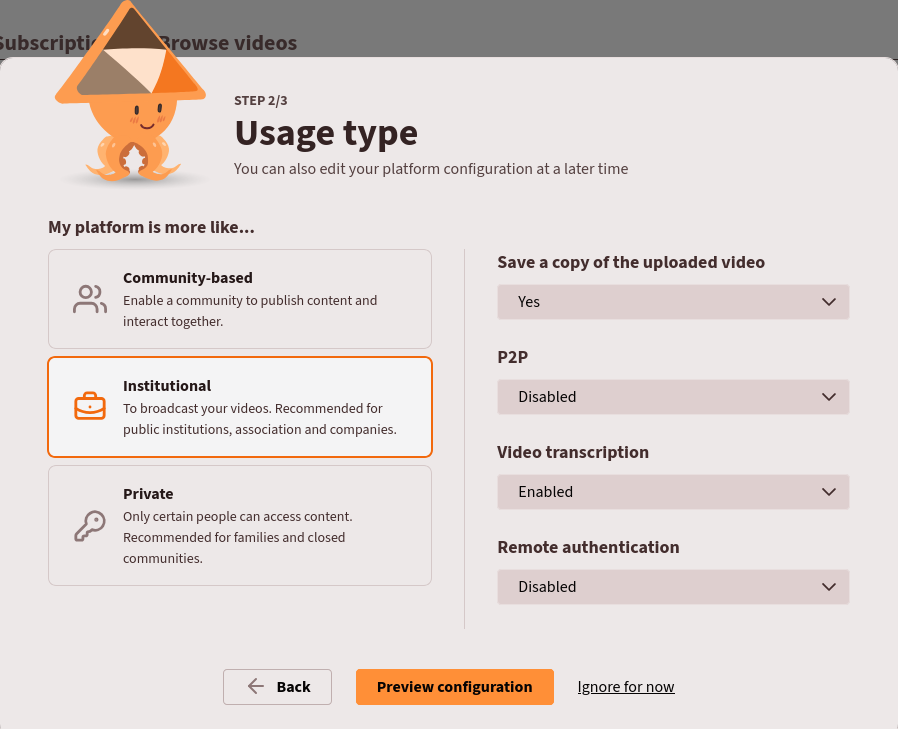
This new version also features a wizard to help admins configure their PeerTube platform. Once logged into your admin account, you can easily set up elements such as your platform’s name, description, logo and main color, as well as choosing a preconfiguration based on the type of platform you want to administer, such as private, community or institutional.
If you are caught up in the excitement of using your PeerTube instance during installation and do not feel like using the wizard, you can launch it later by going to your platform’s settings.
Schedule your live streams
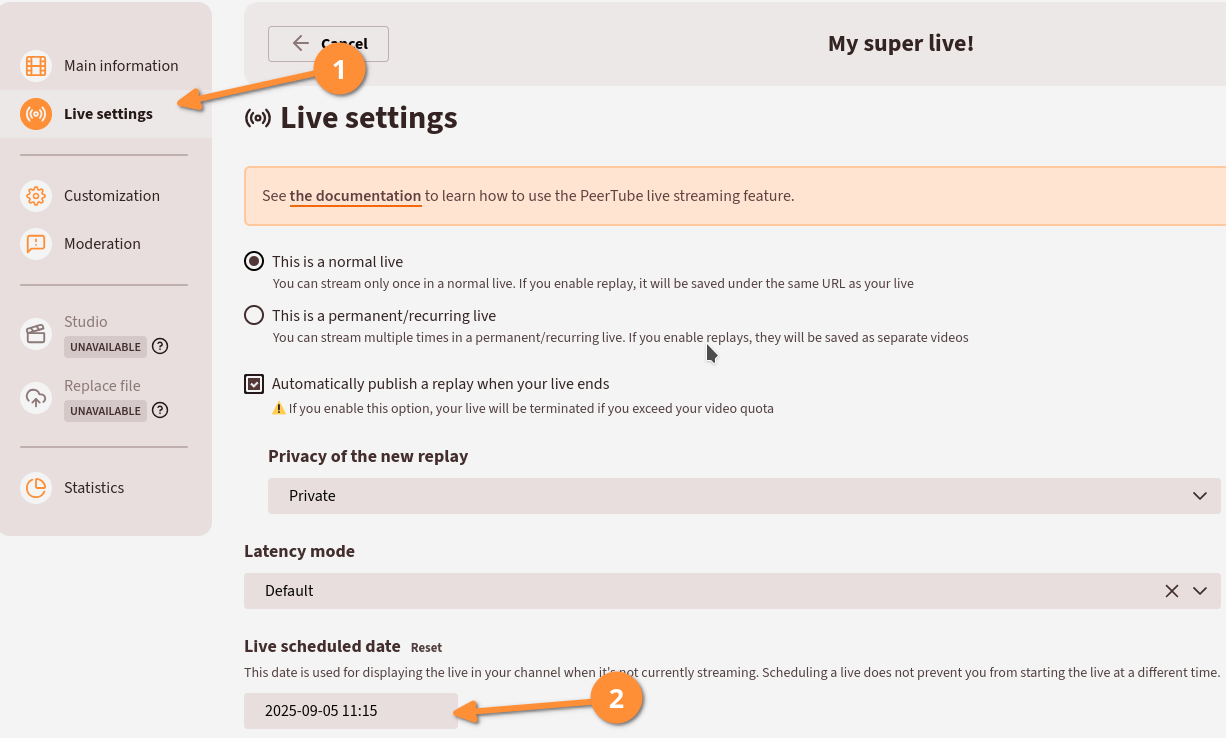
Thanks to a contribution (made in live on PeerTube), it is now possible to schedule streams. To do this, simply go to the live stream settings and enter the start date and time in the relevant section.
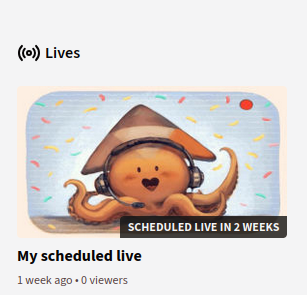
The scheduled date of the live stream will be displayed on the live stream page, as well as on the page listing a channel’s videos.
And much more!
As always, the new version brings many other features and redesigns, in addition to the new features described above. Among them:
The playlist management page has been redesigned to make it easier to use. It is also possible to choose the order in which playlists are displayed publicly within a channel.
Admins can now configure the default values for the “Licence”, “Visibility” and “Comment Policy” fields when publishing a video.
Users can list active login sessions and revoke them if necessary.
Feel free to share this information and suggest ideas. If you can, please make a donation to Framasoft, the non-profit organisation that develops PeerTube.
In the past, if you broke or lost your phone, your Signal message history was gone. This has been a challenge for people whose most important conversations happen on Signal. Think family photos, sweet messages, important documents, or anything else you don’t want to lose forever. This explains why the most common feature request has been backups; a way for people to get Signal messages back even if their phone is lost or damaged.
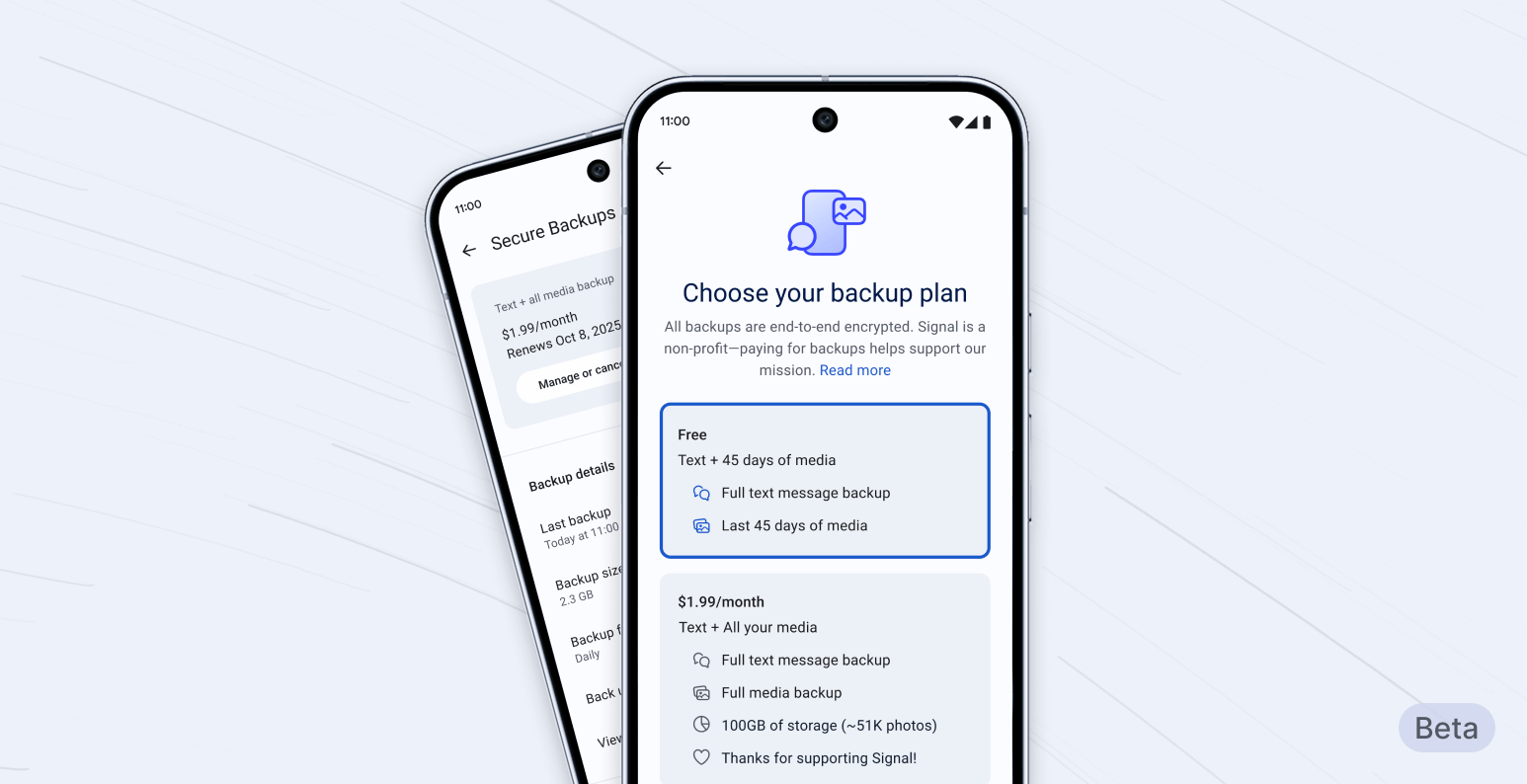
After careful design and development, we are now starting to roll out secure backups, an opt-in feature. This first phase is available in the latest beta release for Android. This will let us further test this feature in a limited setting, before it rolls out to iOS and Desktop in the near future.
This blog is co-authored with Dr Adam Urato, Maternal-Foetal Medicine specialist
Image: THINKSTOCK, from BBC.co.uk
You might think that telling women about the potential risks of taking antidepressants during pregnancy would be uncontroversial. You might think that a drug regulator considering the evidence on these risks would be uncontroversial. You would be wrong!
The medical establishment backlash to the recent FDA panel hearing has been extraordinary. The panel, convened by the new FDA chair, respected surgeon, Marty Makary, was set up to hear evidence on the potential risks of antidepressants during pregnancy and childbirth (the discussion can be viewed here). It is true that this was an unusual and, in my view, momentous event. In the past, drug regulators have generally kow-towed to drug company interests and medical establishment views, reassuring the public about the safety of drugs. But that has changed in the US, for now, and the panel included a range of experts, including the authors, who have been critical of the establishment line that antidepressants are safe and effective.
These statements are misleading and the FDA and the public deserve to judge for themselves whether the evidence suggests that using antidepressants in pregnancy is safe and worthwhile. This was the evidence that was put to the FDA in the recent panel.
The main argument of those who are keen to reassure women (including the representative of the establishment view on the panel itself, Dr Roussos-Ross), is that taking antidepressants is necessary because untreated depression presents risks to the mother and baby, and these are greater than the minimal risks associated with the drugs themselves.
There are two problems here. The first is that depression is associated with social deprivation, smoking, obesity and other factors known to be harmful in pregnancy, and these are not always adequately controlled for in studies reporting links between depression and pregnancy complications. The use of antidepressants is also sometimes ignored. For example, a typical study (cited in the Massachusetts General Hospital Center statement) claims depression during pregnancy is associated with low birthweight and pre-term birth (prematurity) but completely fails to examine the possibility that the use of antidepressants may have explained the results. Surely, in a contest between an emotional state and a foreign chemical for the cause of foetal abnormalities, the chemical should be the prime suspect?
One of us, Maternal-Fetal Medicine specialist, Adam Urato, has suggested the best explanatory framework for understanding the effects of antidepressants in pregnancy is the Harmful Chemical Model. In contrast to claims by antidepressant proponents, this suggests that taking antidepressants is ‘not like using insulin in pregnant diabetics’.
The second problem is the often-unspoken assumption that antidepressants have significant benefits in treating depression.
Yet, the way the benefits of antidepressants are presented is completely at odds with the data. At best, antidepressants show a very modest benefit over placebo in terms of reducing symptoms of depression after a few weeks of treatment. As I told the FDA panel, this is not in dispute. Meta-analyses of hundreds of trials consistently show that the average difference between antidepressants and a placebo is around 2 points on the 52-point Hamilton rating scale (the most commonly used depression rating scale). And despite decades of trying, no subgroup has ever been identified that shows a larger response. Trials involving people with anxiety show the same sort of very small difference. This is what the evidence shows, before it is massaged by categorising it into responders and non-responders or other manipulations that make the difference seem more impressive than it really is.
So the whole argument that antidepressants are necessary to prevent the complications of untreated depression is fallacious. Yes, it’s not great to be a depressed mother, and depressed pregnant women deserve compassionate care, but there are other ways to help people with depression, and antidepressants don’t appear to produce significant benefits for most patients in any case.
Moreover, antidepressants do not improve pregnancy outcomes by reducing the risks that are associated with depression (although likely caused by something else – social deprivation or antidepressant use, for example), such as pre-term birth and low birth weight. In study after study mothers taking antidepressants have worse pregnancy outcomes (i.e. more miscarriage, more preterm birth, more postpartum hemorrhage.) In some of these studies the researchers “adjust” or “correct” the data and the associations lose statistical significance, but virtually none of the available studies in almost four decades of research show improved pregnancy outcomes in women taking antidepressants.
So what about the claims that antidepressants are safe in pregnancy or that the risks are minimal?
In the early noughties one of us (Prof Moncrieff) reviewed a paper on the links between congenital abnormalities and paroxetine. There was evidence of a small increased risk of cardiac malformations in the babies of mothers who had taken paroxetine during pregnancy. She recommended that the paper advised against using this antidepressant in pregnancy because although the effect was small, and uncontrolled confounding factors may have contributed, this had to be balanced against the lack of significant benefits from taking antidepressants. The editor told the authors of the paper to ignore her.
A couple of years later, the FDA issued an advisory warning about the risk of birth defects, particularly congenital cardiac malformations, associated with paroxetine. The manufacturer changed the labelling of paroxetine to a category D (positive evidence of foetal risk).
Debate has raged since then about whether other antidepressants, or antidepressants as a whole, are associated with congenital abnormalities. First of all, it is important to note that there are many studies that find that women who take an SSRI or an SNRI are more likely to have a baby with a birth defect, especially a heart defect, including carefully conducted studies by researchers from the CDC (the US Centres for Disease Control and prevention). Second, animal models and preclinical research suggests that serotonin plays a key role in embryonic development, including the development of organ systems, and in the structure and function of the placenta. Therefore drugs that disrupt normal serotonin activity, are biologically plausible candidates for producing foetal malformations and other adverse effects on foetal development.
However, as advocates of the drugs rightly point out, women who take antidepressants may be at an increased risk of having a foetal abnormality in the first place, because they are more likely, for example, to have a physical health condition, to be a smoker or to be taking other medication. Adjusting for these factors reduces the strength of the associations between antidepressants and birth defects in some studies.
Yet, in other studies associations persist after adjustment, and are sometimes even strengthened, which just illustrates that the process depends on what you adjust for, exactly, and how.
Some of these studies attempt to control for the presence or severity of depression for example, but it’s not clear that this is a legitimate thing to do, or that it has been done in a way that enables the effects of antidepressants and the effects of having depression or another mental disorder to be distinguished.
‘Confounding’ factors do likely account for some of the association between antidepressants and birth defects, but it is dangerous to assume they account for all of it, given that the link is found so consistently, and the effects of adjustment are so varied. Nevertheless, the increased risk of birth defects is generally low. This is why the efficacy of the drugs is a critical consideration. If they worked amazingly, then a given patient might find a small elevation of risk to be acceptable. But they don’t.
Incidentally, some risks are strongly elevated. A recent CDC analysis using the US birth defect register found that the odds of anencephaly and craniorachischisis was raised 9.14 times in women taking venlafaxine.
Antidepressants have been linked with numerous other adverse effects on pregnancy and subsequent child development. These include miscarriage, premature birth and post-natal haemorrhage. The UK regulator, the MHRA, issued a warning about the risks of post-partum haemorrhage in 2021, pointing out that ‘SSRIs and SNRIs are known to increase bleeding risks due to their effect on platelet function’.
There is also evidence that antidepressants may be implicated in serious pregnancy complications such as pre-eclampsia and placental abruption.
Again, it has been suggested that some of these effects may be due to the effects of depression or other factors that are more frequent in depressed women. One study found that the association between antidepressants and miscarriage, for example, was weaker when the analysis was restricted to depressed women alone than when looking at a population level. However, miscarriage rates were still increased in antidepressant users compared to non-users to a small, but statistically significant extent. A study looking at pre-term birth found the rate of prematurity was still substantially elevated in women who took SSRIs (at 24.4%) compared with the rate in women with a mood disorder who did not take antidepressants (7.9%).
Although some effects remain uncertain, and are likely to be small, animal research in sheep, as well as rats and mice, confirms that antidepressants, including SSRIs, are associated with negative outcomes including foetal malformations, prematurity, decreased birth weight, and higher rates of infant death.
Some complications are common. Up to a third of babies born to women taking SSRIs during the last weeks of pregnancy show what’s euphemistically called ‘poor neonatal adaptation’. This syndrome is characterised by breathing and feeding problems, increased or decreased muscle tone, constant crying, hypoglycemia, vomiting and temperature instability. When severe it can involve respiratory distress, dehydration and convulsions. It may be a withdrawal syndrome, like those of babies born to mothers addicted to opioids, or it may be a manifestation of the toxicity of the drugs as they are slowly excreted from the baby’s system. Ultrasound studies suggest babies are affected while they are still in the womb, showing heightened motor activity and disrupted sleep. Official literature plays this syndrome down and reassures people that symptoms are ‘transient and resolve spontaneously.’ It can be serious, however, and a small follow-up study detected that babies who had suffered this syndrome had problems with social behaviour two and six years later.
A rare but dangerous complication called persistent pulmonary hypertension of the newborn is also associated with antidepressant use in pregnancy. This involves a failure of the vessels in the lungs to relax, thus hindering oxygen reaching the lungs. It has a 5-10% death rate and is quite, but not very, rare (occurring in about 2 out of every 1000 live births). The use of antidepressants increases the number of babies who get it by about 3 to 3.5 per 1000 births. A significant proportion (around 13% in one study) of babies exposed to antidepressants during pregnancy will show respiratory distress and need acute delivery room resuscitation.
There is also a body of evidence on the health and development of the children of women who have taken antidepressants during pregnancy. Many studies suggest that these children are more likely than the average child to be diagnosed with autism or to show problems with language and behaviour. Again, this research may be influenced by other factors, such as autistic traits in mothers themselves, but some large, well-adjusted studies suggest a link. For example, a study published in the BMJ found that children exposed to antidepressants during pregnancy had increased rates of autism compared to the children of women who had a diagnosis of a mental disorder but did not take antidepressants. Moreover, animal research provides compelling evidence of a drug-related effect . Studies show that maternal use of SSRIs reduces the social interactions and play of the offspring, along with general activity levels and exploratory behaviour.
In contrast, official advice and media coverage has focused on reassuring the public that benefits of antidepressants outweigh the risks of the drugs in pregnancy. But this has it wrong. First off, benefits in mood appear minimal and benefits in pregnancy outcomes haven’t been shown. But even more importantly, it’s the mother herself who must weigh the risks and decide for herself whether to take the drugs. Dismissing the risks and reassuring women that these drugs are ‘safe’ is a paternalistic approach that obscures the central role of the pregnant woman herself.
Dr. Oz recently advocated “cooperation” with food companies to “make America healthy again.” His call for “cooperation” was really a threat, and his message to poor Americans has been that you don’t deserve healthcare unless you prove yourself “worthy.”
CoMaps is a community-driven, free and open-source, offline navigation app that uses map data from OpenStreetMap (OSM). The app is designed to function without internet connectivity by downloading maps for offline use. CoMaps emphasizes privacy, transparency, and community collaboration, aiming to provide a navigation solution that is not only easy to use, but also respects user data and fosters open participation.
Fediverse Report is now Connected Places! You can read more about this in the announcement post. For this week’s news, Mastodon announces and retracts a new ToS for mastodon.social, Threads continues their streak of implementing ActivityPub in the most confusing way possible, and Wanderer is a new fediverse platform for sharing your hiking and biking trails.
I also run a weekly newsletter, where you get all the articles I published this week directly in your inbox, as well as additional analysis. You can sign up right here, and get the next edition this Friday!
Connected Places is the new source that helps you better understand the new social web. It is a rebrand of the Fediverse Report website, to make it clearer that connected places is the place to go for news and analysis about the open social web, the fediverse, the ATmosphere and a variety of other online spaces that form part of this connected web of social platforms.
The News
Mastodon introduced a new Terms of Service for the mastodon.social and mastodon.online instances, and then retracted the new ToS after criticism from the community about some of the conditions that are in the ToS. Mastodon announced the new ToS with a summary email that explained that the new ToS would “explicitly prohibit the scraping of user data for unauthorized purposes, e.g. archival or large language model (LLM) training. We want to make it clear that training LLMs on the data of Mastodon users on our instances, is not permitted.” It would also set a minimum age of 16 for everyone, and clarified rights regarding content licensing. There were multiple points of criticism with the ToS:
It made the IP license grant irrevocable, and not even deleting the post or account would revoke the IP license.
It had a binding arbitration waiver, which tech writer Cory Doctorow argued hard against.
To whom do these terms actually apply? Federation is complicated, and the legal framework for how federation interacts with user content rights is untested. Two different posts (1, 2) go into some of open questions regarding how the ToS interacts with federation.
Mastodon CEO Eugen Rochko noted in the Mastodon Discord that “the lawyers don’t have experience with federated platforms”, which points to the challenge of writing a ToS for federated platforms. Rochko also said that he has taken up on Doctorow’s offer to have lawyers of the Electronic Frontier Foundation get involved. The first two concerns listed above seem fairly straightforward to handle. However the question of how Terms of Service apply in a federated network seem more complicated to resolve, as it is unclear if there is even a broad agreement on how the ToS should function in a federated context, let alone how to translate that into legalese.
Meta, the company that relentlessly removes friction from their social apps to maximise engagement, has moved fediverse posts on Threads to a separate ‘fediverse’ feed. Posts from fediverse accounts will only appear in this new fediverse feed, and will not appear in the regular timelines on Threads. You can not reply on posts from the fediverse with your Threads account, Threads engineer Peter Cottle says that this feature (lol) is an ‘eventual goal’. The fediverse feed on Threads also shows top-level posts, not replies and reposts. Cottle says that this is to create a ‘cleaner product experience’. You can now also search for fediverse accounts in Threads, before this update users had to wait for a post by a fediverse account showed up in their feed so they could click on the profile and hit follow. David Imel from the MKBHD and Waveform channels asked Cottle about Threads’ plans for account portability, noting that this was an important point made by Threads’ Adam Mosseri. Cottle says that this is “top of mind for us”, but that they do not have a concrete timeline for this. Threads’ fediverse integration is also still not available in the EU, with no clear indication if or when it will launch in the region.
Wanderer is a platform for managing and sharing your hiking, running and biking trails. It is self-hosted and open source, and the latest update for Wanderer has added ActivityPub, making it decentralised and federated as well. There is a demo instance of Wanderer available to try out what the platform actually looks like. Wanderer also has the option to import trails from other platforms like Strava and Komoot. Wanderer does face a familiar challenge that goes for a new type of platforms on the fediverse however: how does it bootstrap itself into becoming a community?
Mastodon shared an update on their strategy for 2025. The organisation said they are still working on new non-profit organisation in Europe that will own the Mastodon assets. When Mastodon announced this in January 2025 they also said that the current CEO Eugen Rochko would step down and work on product strategy. The latest update by Mastodon does not share any news on a potential new CEO. Growth his one of the three key pillars of Mastodon’s strategy for 2025, and they are working on making Mastodon more accessible for general users, as well as some features that other organisations have asked for, such as greater customisation for instances. Regarding financial sustainability Mastodon said that they are working on offering additional commercial service, and that they’ll announce more on that soon.
Related to Mastodon growing into a more mature and sustainable organisation, they also announced this week that Mastodon is registered as a digital public good. This registration is part of the Digital Public Good Alliance, a large multi-stakeholder organisation. In a speech during the United Nations Office for Digital and Emerging Technologies‘s Open Source Week, Mastodon Board of Director member Hannah Aubry explains what it means for Mastodon to meet the DPG Standard: “adhering to privacy best practices, doing no harm, and contributing to the UN’s Sustainable Development Goals. And it aids us in our mission to empower public institutions to speak directly to their citizens and constituents, without the filter of a corporation.”
PieFed is officially out of beta, and has released the 1.0 version. The Reddit-like platform has grown significantly over recent weeks. Popular Lemmy instance Lemm.ee announced they would be shutting down, and PieFed has been one of the main recipients of users and communities looking for a new place. Lemmy app Voyager is also in the process of adding support for PieFed to the app. The growth of PieFed in recent weeks is instructive for understanding how community growth within the fediverse actually happens. PieFed has been around for over a year, with a compelling feature set (especially regarding moderation, as well as clustering communities in feeds and topics), but had a low adoption rate. It took an exogenous event for people to actually take the effort to give PieFed a serious consideration and migrate away from Lemmy to a different platform.
Framasoft has successfully completed their crowdfunding campaign, raising over 75k EUR. The large majority of the funds are for further development of the PeerTubeapp , such as playing video on background, adding support for live streaming, and managing videos within the app. The final part of the campaign funds is for the support of the Framasoft organisation itself. Framasoft says that most new features will likely be released late this year or next year. Live broadcast is currently already in development and is scheduled to launch “fairly quickly”.
In Other News
Wafrn is a Tumblr-like platform with native support for both ActivityPub and ATProto. The platform developers have released an Android app for Wafrn on F-Droid.
Manyfold is a fediverse platform for hosting and sharing 3D printer files, providing an alternative to platforms like Makerworld and Thingiverse. Manyfold was already available for self-hosting, and the 3dprint.social is the first publicly available instance that is now open for joining as well.
FediThreat is a newly announced open source content moderation API for the fediverse by Pixelfed and Loops developer Daniel Supernault. There is not much publicly known yet on how FediThreat actually works. The project is scheduled for July.
The Event Federation project shares what they’ll be working on in the future to make events more accessible within the fediverse.
Media discourse about how Bluesky is dying, a new type of moderation relay by Blacksky, and backing up your ATProto account with bsky.storage.
I also run a weekly newsletter, where you get all the articles I published this week directly in your inbox, as well as additional analysis. You can sign up right here, and get the next edition tomorrow!
Connected Places is the new source that helps you better understand the new social web. It is a rebrand of the Fediverse Report website, to make it clearer that connected places is the place to go for news and analysis about the open social web, the fediverse, the ATmosphere and a variety of other online spaces that form part of this connected web of social platforms.
The News
US and UK media outlets (1, 2, 3, 4) have published various opinion articles these weeks about how Bluesky is dying, a narrative well-supported by the fact US Vice President JD Vance has joined Bluesky this week. The opinion pieces, as well as Vance joining Bluesky, illustrates that Bluesky has grown to the point where it is both part of mainstream culture, as well as one of the new battlegrounds for the culture wars. Bluesky does have an issue with retention rates, with the monthly active user numbers dropping by around 30% in the last three months. While this drop in user numbers is held up as the reason for the ‘Bluesky is dying’ discourse, the main frustration in the articles is about Bluesky, culture and audience. Sarah Perez wrote a response for TechCrunch, arguing that the main point of Bluesky is the open network and technology that it enables. While the protocol indeed matters, the main conflict is about the social capital and culture that Bluesky is creating, and who has influence over it. The impact on current culture and politics that Bluesky is having is illustrated by Wired’s coverage of the Tesla Takedown protest, documenting how a single post on Bluesky had led to widespread continuing protests.
Blacksky has build a moderation relay, which takes all moderation actions by all labelers on the network, and bundles them into a single relay output. As Blacksky founder Rudy Fraser explains: “With this update, folks building custom feeds can leverage moderation actions from the whole network more easily in their algorithms. Wanna exclude twitter screenshots, transphobia, AND anti-blackness from your feed? rsky-relay is now a one-stop-shop for all of those labels.”
Blacksky also has reached their fundraising goal, and they will launch a Blacksky app. Some of the features for the Blacksky app will be the ability to set defaults for the Blacksky community, such as using the Blacksky moderation labeler by default and having the Blacksky Trending feed as default. Blacksky is also requesting feedback from the community on what they want from the app.
Bsky.storage is a new service that allows people to store an hourly backup of their ATProto PDS. It also can generate a recovery key that allows people to take back control over their account even when they have lost access to that account or Bluesky becomes unavailable. Bsky.storage is made by Storacha, which stores the data on a decentralised storage network with IPFS and Filecoin. ATProto gives people the ability to take full control over their account’s PDS, and it feels like the design space that this allows has only just starting to be explored. Bsky.storage is such an example, the ability to always take back control of your account even when the service provider goes offline or becomes adversarial, is something genuinely new for the space of social networks.
Publishing platform Leaflet has added the ability subscribe to publications via ATProto. Writers can create Bluesky posts with every new post, and when the audience subscribes to a publication, Leaflet generates a custom Bluesky feed for them that contains only the posts from all Leaflet publications they subscribed to. Leaflet is further exploring how to use the social graph for more ways to keep up to date with Leaflet. They are also working on email subscriptions, placing it in closer competition with other newsletter platforms such as Substack and Ghost.
On the topic of email subscriptions, subs.blue is a new tool to create email notifications on ATProto. It allows people to create an email channel. When other people subscribe to that channel, they get email notifications for posts in that channel, on the email address that they registered their ATProto account with.
OAuth remains one of the more challenging technical parts of ATProto to implement. Bluesky engineer Devin Ivy posted an article that explains some of the design considerations that the team has made in their OAuth implementation design. Bluesky PBC also shared some of the improvements to OAuth that they are making. Relevant for non-developers: the time it takes before you need to log in again to a client is now two weeks, where it used to be one week. For developers that do use OAuth, check out the entire post.
UFOs is a new dashboard and API for exploring the ATmosphere, measuring the activity of all the lexicons on the network. In practical terms, this gives visibility into which apps are used on the network, and how often. It shows unusual activity (such as blocks on Bluesky being up 100% day over day), as well as giving insight into what other apps are used. It shows how incredible dominant Bluesky is over the ATmosphere, and how much of a hard time other apps have getting traction. UFOs also gives an indication of how mass adoption of the open social web has some interesting side effects as well, such as that statistics about user behaviour becomes publicly visible for everyone. UFOs also has an API, and it is part of microcosm, a larger collection of projects by developer @phil that build on the aggregate data of the ATProto firehose.
Smol.life is a new fork of the Bluesky web client, that has additional integrations with other ATProto apps. It has a section for games, where you can play Skyrdle and at://2048. These are two web-based games that have ATProto integrations, where you can keep track of your scores on your own PDS. Smol.life also has an integration with linkat.blue, a Linktree-clone on ATProto. This allows you to see someone’s linkat links while viewing their Bluesky profile on smol.life.
atproto-os is a virtual desktop that runs in your web browser, where the current state of your desktop (which applications are you currently running, etc) is stored on ATProto in your PDS. It uses Open Web Desktop, a larger project for running desktops on the web. As the project says: “Each window with its metadata can eventually be broadcast via #atproto Jetstream to update real-time data about whoever is on your desktop”. What a use case would be for broadcasting your current desktop applications to the entire public internet is somewhat less clear to me however.
The Links
Custom feed creator platform BlueskyFeeds.com is winding down due to the complexity of maintaining the project.
ATProto-powered publishing platform Leaflet writes about their tech stack.
Featureparity.blue keeps an overview of feature parity between Bluesky and X.
Git collaboration platform Tangled now has a commit tracker.
Bluesky will now warn users when they click on links that are known to be malicious.
Film review app Popsky can now automatically sync with your Letterboxd account.
That’s all for this week, thanks for reading! If you want more analysis, you can subscribe to my newsletter. Every week you get an update with all this week’s articles, as well as extra analysis not published anywhere else. You can subscribe below, and follow this blog @fediversereport.com and my personal account @laurenshof.online on Bluesky.
Connected Places is the new source that helps you better understand the new social web. It is a rebrand of the Fediverse Report website, to make it clearer that connected places is the place to go for news and analysis about the open social web, the fediverse, the ATmosphere and a variety of other online spaces that form part of this connected web of social platforms.
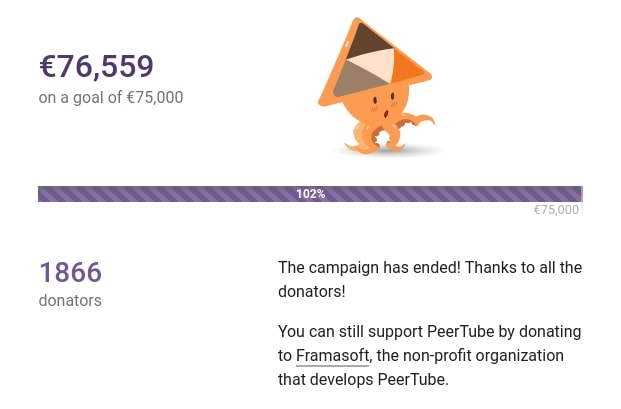
Thanks to your support, we achieved all three of our fundraising goals for developing features in the PeerTube application!
We now have the necessary resources to work on it during the year!
Throughout the campaign, your enthusiasm has truly warmed our hearts. We would like to thank everyone who contributed to its success, from those who talked about the campaign on social media, to the various news outlets that relayed the information to their audiences and the hundreds of people who made a donation!
Furthermore, through this crowdfunding campaign, we aimed to introduce PeerTube and Framasoft to individuals who may not be familiar with them, particularly in the English-speaking world. Thanks to your many voices and your help, we’ve succeeded!
You really are wonderful… thank you! ❤️
How your donations will help
Here is an overview of the features we’ll be able to develop, thanks to you:
FreePeerTube “Premium” enhancementsfor everyone, which allow you to play your video in background, download it, change its resolution, etc.
Adding a video manager to the application, enabling you to publish your videos directly from your smartphone!
We also had a fourth, slightly more “meta” objective: to support Framasoft.
We saw this objective as a bit of a bonus, which would of course help the PeerTube project, but whose main aim was to make Framasoft and its actions more visible. Emphasize that PeerTube is not just a technical project, but part of a broader vision that we have at Framasoft.
The vision of a digital environment that empowers everyone.
Despite the fact that this “meta” aspect didn’t seem directly related to PeerTube, you supported us in achieving it… and what a support it was!
On behalf of the entire Framasoft team, from the bottom of our hearts, thank you!
In a nutshell
During the three weeks of the campaign, the PeerTube project continued to live on via:
More recently, v7.2.1 was released, which fixed some issues and integrated new translations.
Our participation in two AMA (Ask Me Anything) on Lemmy and Reddit. These were high points for us and we were thrilled to be able to answer to questions we’d rarely been asked!
The publication of two articles in which we shared our experience developing the mobile app. Part 1 – Part 2
And now?
The rest of this year’s adventure is fully planned.
For the mobile app, we’ll be spending the rest of the year developing features you’ve enabled us to fund! While some of these will arrive fairly quickly, others, such as live broadcasts, are unlikely to be released before the end of the year or early next year.
On the PeerTube software side, we’ve already published the roadmap for 2025.
Many improvements are planned for the coming months!
Finally, we count on you to promote the PeerTube project, install the mobile app, and ensure that more people discover spaces where they can control their digital lives, including posting videos.
Thank you all for following us in this campaign, and thank you again for supporting us during it!
Without you, PeerTube would never have been possible. Thanks to you, we’ll put PeerTube in everyone’s pocket!