The latest release of Justice Department records tied to the Jeffrey Epstein investigation provide new details about the finances of a former Ukrainian model and now art adviser and collectorwho received at least $2.5 million in personal transfers from the American billionaire Leon Black between 2011 and 2015.
The email correspondence shows Epstein playing a significant role at least until 2018 in coordinating the financial affairs of Anastasiya Siroochenko, including liaising with accountants and auditors, overseeing tax documentation and tracking the movement of funds between her personal accounts and art-related companies.
An accountant overseeing her finances has resigned after raising concerns about how a property purchase has been handled, according to the cache of emails reviewed by Toronto Television’s OSINT unit.
Black, a co-founder of Apollo Global Management Inc, was a longtime Epstein client and paid him roughly $158 million for tax and investment advice, according to reporting by The New York Times.
The newly released records do not allege criminal wrongdoing by Siroochenko or Black, and they do not show Black directing or participating in the email exchanges. But they offer a detailed view of how Epstein operated as a financial intermediary, inserting himself into complex arrangements involving wealthy clients, younger associates and opaque financial structures, particularly in the art market.
Siroochenko, now 38, has built a public career in the art world, organizing exhibitions and serving on the boards of cultural institutions in New York, including the SculptureCenter and the Watermill Center..In 2015, she helped organize the exhibition Delirious Picasso in London while working through the art advisory firm House of Nobleman.
Emails indicate that Siroochenko met Epstein in 2010, when she was 22, while working as a model and exploring professional opportunities in New York. That year, she signed with MC2 Model Management — Miami, a modeling agency run by Jean-Luc Brunel, a close Epstein associate who later died in a French prison while awaiting trial for sex crimes and sex-trafficking charges.
Beginning 2011, Siroochenko’s financial activity started appearing regularly in Epstein’s correspondence. Between 2011 and 2015, Black and entities linked to him transferred at least $2.5 million to her personal accounts.
Accountants classified the payments as gifts, according to the emails, which show Epstein coordinating how the transfers were documented and described for tax and audit purposes.
In 2013, Siroochenko founded Sublime Art LLC, an art dealer and consulting company, and according to records, Black became a client of the firm, with invoices reflecting hundreds of thousands of dollars in art purchases.
Separate correspondence from 2017 describes a proposed commission agreement between Sublime Art and Narrows Holding LLC, a company associated with Leon Black. According to the Epstein files, Narrows held art owned by Black as collateral, and accounted for the vast majority of the loans tied to his art portfolio as of 2016, Forbes reported.
Under the 2017 agreement, Siroochenko’s company would receive $1.8 million for arranging the sale of a Paul Klee painting valued at $7.8 million, contingent on the completion of the sale. Epstein appears in the emails approving language and relaying information among parties, though the records do not establish whether the commission was ultimately paid.
The overlap between Siroochenko’s personal income from Black and her business dealings with him prompted concern among some accountants and auditors involved in her finances. In one email, an accountant warned that the arrangement could present a conflict of interest, noting that the gift deposits clearly identified Black as the source of funds while he was also the firm’s principal client.
Other correspondence shows disputes over property purchase in Lviv, Ukraine. One accountant later resigned, citing disagreements over the ownership and tax treatment of the Lviv property, according to the emails. Those also indicate that funds used to purchase the property were transferred from Siroochenko’s personal account to an limited liability company and categorized as a loan, and part of those funds was used to buy the property. Public records list her as the owner as of 2026.
The emails suggest Epstein took interest in ensuring that documentation related to the property was handled correctly for reporting purposes.
Some messages also suggest that funds moving through Siroochenko’s companies were, at times, discussed in connection with potential investments involving Black’s interests. The records do not show that such transactions were completed, nor do they establish that he directed these discussions.
Black stepped down from leadership roles at Apollo Global Management Inc. in 2021 following renewed scrutiny of his relationship with Epstein. He has acknowledged relying on Epstein for financial advice but claimed he was unaware of Epstein’s criminal conduct. In the past, three women had accused Black of sexual assault; he has denied the allegations, and a federal lawsuit brought by a woman identified as Jane Doe remains pending.
The documents form part of a broader body of material illustrating Epstein’s financial dealings with Black and others. Previous investigations found that Black transferred millions of dollars to multiple women connected to Epstein, some of whom were later identified in court filings as victims or associates of the convicted sex offender.
In a written response, Siroochenko said that her name “appears in the disclosed correspondence solely in connection with private financial, property, and legal matters from nearly a decade ago and has no connection to any criminal cases. References to me in the correspondence were strictly of a business nature.”
Siroochenko said she has worked in the international art field for many years and that her “professional activity has always been public and transparent” and that she has never been a subject of any criminal proceedings.
While the newly released records do not explain the purpose of the transfers to Siroochenko or establish illegality, they provide a detailed record of how Epstein embedded himself in financial relationships that blended personal payments, business transactions and tax planning — arrangements that, in some cases, unsettled professional advisers but nonetheless continued for years.
The files leave unresolved why such large sums changed hands and why Epstein played such an important coordinating role. But they add to the public record of how Epstein exercised influence far beyond his own finances, operating in ways that often relied on discretion, complexity and limited transparency.
Object permanence: Social media turned US parties into host organisms for third parties; “Citizens” are hired actors; Insured exoskeletons; Talking with Snowden and Gibson.
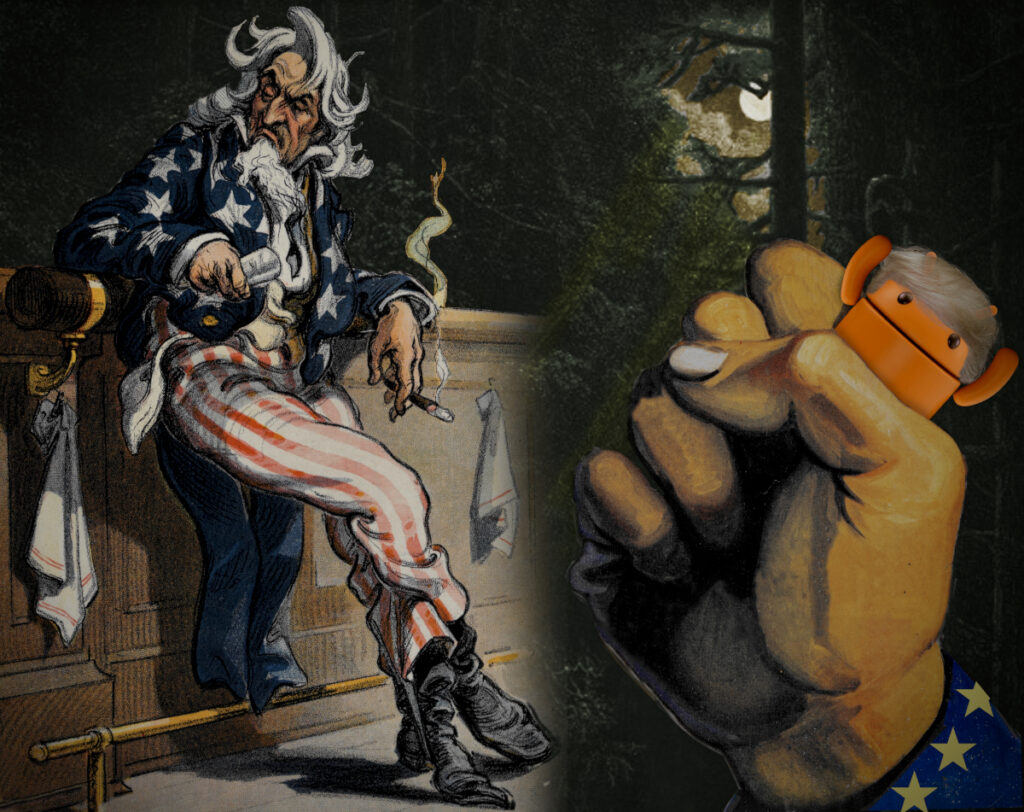
“Capitalist realism” is the idea that the world’s current economic and political arrangements are inevitable, and that any attempt to alter them is a) irrational; b) doomed; and c) dangerous. It’s the ideology of Margaret Thatcher’s maxim, “There is no alternative.”
Obviously this is very convenient if you are a current beneficiary of the status quo. “There is no alternative” is a thought-stopping demand dressed up as an observation. It means, “Don’t try and think of alternatives.”
The thing is, alternatives already exist and work very well. The Mondragon co-ops in Spain constitute a fully worked out, long-term stable economic alternative to traditional capitalist enterprises, employing more than 100,000 people and generating tangible, empirically measured benefits to workers, customers and the region:
Proponents of capitalist realism will tell you that Mondragon doesn’t count. Maybe it’s just a one-off. Or maybe it’s just not big enough. 100,000 workers sounds like a lot, but Amazon has over 1.5m employees and untold numbers of misclassified contractors who are employees in everything but name (and legal rights).
This is some pretty transparent goalpost moving, but sure, let’s stipulate that Mondragon doesn’t prove that there are broadly applicable alternatives to the dominant capitalism of the mid-2020s. Are there other examples of “an alternative?”
There sure are.
Let’s look at limited liability. Limited liability – the idea that a company’s shareholders cannot be held liable for the company’s misdeeds – is a bedrock of capitalist dogma. The story goes that until the advent of the “joint stock enterprise” (and its handmaiden, limited liability) there was no efficient way to do “capital formation” (raising money for a project or business).
Because of this, the only ambitious, capital-intensive projects were those that caught the fancy of a king, a Pope, or an aristocrat. But once limited liability appears on the scene, many people of modest means can jointly invest in a project without worrying about being bankrupted if it turns out that the people running it are crooks or bumblers. That lets you, say, buy a single share of a company without having to keep daily tabs on the management’s every action without worrying that if they go wrong, someone they’ve hurt will sue you for everything you’ve got.
Capital formation is a real thing, and limited liability unquestionably facilitates capital formation. There are plenty of good things in the world that exist because limited liability protections allowed everyday people to help bring them into existence. This isn’t just stuff that makes a lot of money for capitalism’s true believers, it includes everything from the company that makes the printing presses that your favorite anarchist zine runs on to the mill that makes the alloys for the e-bike you use to get to a demonstration.
This is where capitalist realism comes in. Capitalist realists will claim that there is no way to do capital formation for these beneficial goods without limited liability – and not just any limited liability, but maximum limited liability in which the “corporate veil” can never be pierced to assign culpability to any shareholder. The capitalist realist claim is that the corporate veil is like the skin of a balloon, and that any attempt to poke even the smallest hole in it will cause it to rupture and vanish.
But this just isn’t true, and we can tell, because one of the largest economies in the world has operated with a perforated corporate veil for nearly a century, and that economy hasn’t suffered from capital formation problems. Quite the contrary, some of the world’s largest (and most destructive) monopolies are headquartered in this country where the veil of limited liability is thoroughly perforated.
The country I’m talking about is Brazil, which has had limited limited liability since 1937:
As Mariana Pargendler writes for the LPE Project, Brazil put limits on limited liability to address a common pattern of corporate abuse. Companies would set up in Brazil, incur a lot of liabilities (say, by poisoning the land, water and air, or by stealing from or maiming workers), and then, when the wheels of justice caught up with them, the companies would fold and re-establish themselves the next day under a new name.
Like I say, this happens all over the world. It’s incredibly common, and even the pettiest of crooks know how to use this trick. I know someone whose NYC apartment was flooded by the upstairs neighbor, who decided that they didn’t need to worry about the fact that their toilet wouldn’t stop running – for months, until the walls of the apartment downstairs dissolved in a slurry of black mold. The upstairs neighbor owned the apartment through an LLC, which they simply folded up and walked away from, while my friend was stuck with a giant bill and no one to sue.
The limited liability company is the scammer’s best friend. In the UK, an anti-tax extremist invented a tax-evasion scam whereby landlords pretend that their empty commercial buildings are tax-exempt “snail farms” by scattering around some boxes with a few snails in them:
When this results in inevitable stonking fines and adverse judgments, the “snail farmers” duck liability by folding up their limited liability company after transferring its assets to a new LLC.
Capitalist realists will tell you that this is just the price of efficient capital formation. Without total, airtight limited liability – the sort that allows for this kind of obvious, petty ripoff – no one would be able to raise capital for anything.
Brazil begs to differ. In 1937, Brazil made parent companies liable for their subsidiaries’ obligations, with a system of “joint and several liability” for LLCs. This was expanded with 1943’s Consolidation of Labor Laws, and it worked so well that the Brazilian legislature expanded it again in 2017.
Remember back in 2024, when Elon Musk defied a Brazilian court order about Twitter, only to have Brazil freeze Starlink’s assets until Musk caved? That was the “joint and several” liability system:
As Pargendler writes, Brazil’s liability system “represented a distributive choice: prioritizing Brazilian workers’ ability to enforce their rights over foreign capital’s interest in minimizing costs through corporate structuring.”
Pargendler (who teaches at Harvard Law) co-authored a paper with São Paulo Law’s Olívia Pasqualeto analyzing the impact that Brazil’s limited liability system had on capital formation and corporate conduct:
Unsurprisingly, they find that there has been a steady pressure to erode the joint and several system, but also that some countries (the US and France) have a “joint employer” doctrine that is a weak form of this. Portugal, meanwhile, adopted the Brazilian system, 70 years after Brazil – this transposition of law from a former colony to a former colonial power is apparently called “reverse convergence”:
More countries in the global south have adopted regimes similar to Brazil’s, like Venezuela and Chile. Other countries go further, like Mozambique and Angola. Somewhere in between are other Latin American countries like Peru and Uruguay, where these rules have entered practice through judicial rulings, not legislation.
The authors don’t claim that perforating the corporate veil solves all the problems of exploitative, fraudulent or corrupt corporate conduct. Rather, they’re challenging the capitalist realist doctrine that insists that this system couldn’t possibly exist, and if it did, it would be a disaster.
A hundred years of Brazilian law, and Brazil’s globe-spanning corporate giants, beg to differ.
“Red Team Blues”: “A grabby, compulsive thriller that will leave you knowing more about how the world works than you did before.” Tor Books http://redteamblues.com.
“Chokepoint Capitalism: How to Beat Big Tech, Tame Big Content, and Get Artists Paid, with Rebecca Giblin”, on how to unrig the markets for creative labor, Beacon Press/Scribe 2022 https://chokepointcapitalism.com
Currently writing: “The Post-American Internet,” a sequel to “Enshittification,” about the better world the rest of us get to have now that Trump has torched America (1037 words today, 32992 total)
“The Reverse Centaur’s Guide to AI,” a short book for Farrar, Straus and Giroux about being an effective AI critic. LEGAL REVIEW AND COPYEDIT COMPLETE.
“The Post-American Internet,” a short book about internet policy in the age of Trumpism. PLANNING.
A Little Brother short story about DIY insulin PLANNING
This work – excluding any serialized fiction – is licensed under a Creative Commons Attribution 4.0 license. That means you can use it any way you like, including commercially, provided that you attribute it to me, Cory Doctorow, and include a link to pluralistic.net.
Quotations and images are not included in this license; they are included either under a limitation or exception to copyright, or on the basis of a separate license. Please exercise caution.
“When life gives you SARS, you make sarsaparilla” -Joey “Accordion Guy” DeVilla
READ CAREFULLY: By reading this, you agree, on behalf of your employer, to release me from all obligations and waivers arising from any and all NON-NEGOTIATED agreements, licenses, terms-of-service, shrinkwrap, clickwrap, browsewrap, confidentiality, non-disclosure, non-compete and acceptable use policies (“BOGUS AGREEMENTS”) that I have entered into with your employer, its partners, licensors, agents and assigns, in perpetuity, without prejudice to my ongoing rights and privileges. You further represent that you have the authority to release me from any BOGUS AGREEMENTS on behalf of your employer.
The 74-year-old mother of a prosecutor in Kyiv has acquired real estate with a market value of more than $1 million although she is retired in a country where the average pension does not exceed about $150 while still running her own business that has been producing losses, according to an investigation by the Ukrainian outlet hromadske.
Angelina Donchenko’s most expensive purchaseswere made while her son, Serhiy Pavchuk, has been serving as a senior official in the General Prosecutor’s Office overseeing organized-crime cases since at least 2021 the report said.
Journalists reported that Pavchuk uses the properties registered in his mother’s name and drives a car listed as hers. Much of what she acquired was bought below market value, and some structures appear to have been built without official registration, reporters found.
During her professional career, Donchenko ran several businesses which – according to tax reports seen by reporters – could not have accumulated enough money to purchase the properties at market value. Her current company engaged in wholesale trade in chemical products has mainly recorded losses.
The centerpiece of the family’s assets is property in an upscale gated development outside Kyiv. Land records cited by hromadske show that Donchenko acquired two adjoining plots there in July 2023 totaling about 2,000 square meters, paying roughly the equivalent of $71,000 at the time — far below the roughly $290,000 suggested by comparable listings.
Satellite imagery reviewed by reporters indicates that construction of a large house and auxiliary buildings on the site may have begun as early as 2019, with structures visible by 2020. Journalists said they found no registry entries for those buildings, meaning the structures do not formally exist on paper.
Architect Viktor Hleba estimated the land’s market value in 2023 at about $320,000 and the buildings at up to $800,000.
The outlet also reported that Donchenko purchased a 75-square-meter apartment in Kyiv in 2019 that Pavchuk is said to use. Official filings list its price at just over the equivalent of $76,000, while the developer’s prices at the time were closer to about $95,000, according to the report. That same year, a 2016 Toyota Camry was registered in her name18 at a declared value journalists said was below market19.
Questions about the source of funds intensified, hromadske reported, after Donchenko — whose business activity appeared limited — loaned roughly $200,000, in 2020 to a Lviv entrepreneur who later bought four apartments in historic buildings near the city center and pledged them to her as collateral through at least 2027.
Roman Verbovskyi, a lawyer with Ukraine’s Anti-Corruption Action Center, told the outlet that such arrangements can be used to convert questionable money flows into property if a loan is never repaid. Journalists said they were unable to obtain comment from Donchenko or Pavchuk’s wife.
In the prosecutor’s office’s response to journalists’ inquiries, prosecutor Serhiy Pavchuk insists that the property belonging to his mother was acquired with funds obtained from business activities—specifically, those of his mother and his late father.
Every year, the Office of the U.S. Trade Representative (USTR) invites governments and copyright holders to share input for its Special 301 Report, which identifies countries that fail to protect copyrights.
For many years, Ukraine was a regular entry on this list, seen as a safe haven for pirate sites by rightsholders. The IIPA, for one, called for sanctions and the suspension of trade benefits, while the MPAA and RIAA routinely flagged Ukraine-hosted sites in their annual filings.
In previous years, Ukraine has made progress on the anti-piracy front, but, since Russia’s full-scale invasion in February 2022, the USTR has suspended its annual review of Ukraine. The country had other, more existential priorities, after all.
However, that hasn’t stopped Ukraine from taking steps forward. In a 25-page submission ahead of the 2026 Special 301 Report, the Ukrainian government details a broad range of IP reforms it has pursued despite the ongoing war.
Paving the Way for Site Blocking
Among the most notable items in Ukraine’s submission is a set of proposed copyright amendments that would implement Article 8(3) of the EU’s Copyright Directive (2001/29/EC). The provision allows rightsholders to seek injunctions against intermediaries whose services are used by third parties to infringe copyright. This essentially is the framework for Europe’s ISP site-blocking efforts.
While Ukraine is not part of the European Union, it informed the U.S. that it will use this EU framework for the planned amendments, which are “intended to strengthen anti-piracy mechanisms, enhance the effectiveness of judicial enforcement, and ensure the prompt cessation of copyright and related rights infringements on the Internet.”
Notably, Ukraine’s submission doesn’t explicitly mention ISP blocking, but cites website owners and/or hosting service providers instead.
From Ukraine’s Submission
The proposals are part of a broader package of copyright amendments, which bring Ukraine’s policies in line with EU directives. Other changes address additional compensation for authors and performers, and an extension of the term of protection for performances and phonograms to 70 years.
A Decade of Broken Promises?
Ukraine has proposed site blocking legislation before. In October 2015, the Cabinet of Ministers approved a draft law that explicitly included provisions for “restriction of access” to infringing content, along with heavy fines for non-compliant services. At the time, officials said that the bill was designed to avoid U.S. economic sanctions and bring Ukraine’s legislation “into line with EU countries.”
That law never made it through parliament. However, the current proposals arrive in a different context. Ukraine is now an EU candidate country, actively preparing to bring their legislation in line with the EU. Meanwhile, the U.S. interests are also kept in mind. The submission notes that a representative of the American Chamber of Commerce in Ukraine is involved in the process too.
WIPO ALERT and the Ad-Revenue Approach
While ISP blocking is no reality yet, Ukraine already operates an active anti-piracy mechanism by taking part in WIPO ALERT, a program that targets the advertising revenue of pirate sites. In 2025, UANIPIO received 17 applications from rightsholders and included 15 websites in the national advertising blocklist, which is shared with the WIPO database.
Ukraine’s Clear Sky initiative, run by a coalition of local media companies, has been a driving force behind these efforts. The group has also pushed for the blocking of hundreds of pirate and pro-Russian streaming sites under Ukraine’s Media Law, which prohibits the distribution of “aggressor state” media services.
According to recent reports, more than 570 websites have been blocked by Ukrainian ISPs under this framework. That mechanism is rooted in national security and media regulation, not copyright law. The proposed EU Directive-based amendments would create a separate, copyright-specific site-blocking tool.
The American Irony
Ukraine and other countries are gladly reporting their pirate site blocking progress to the USTR, signaling the progress that they make when it comes to copyright protections. Interestingly, however, the United States itself still lacks a pirate site blocking regime.
Over the past year, several site-blocking bills have been proposed by U.S. lawmakers, Rep. Zoe Lofgren’s FADPA bill that was first announced in January 2025. However, these have yet to move forward.
We expect that the American proposals will move forward this year, as lawmakers previously indicated that they would like to see site-blocking legislation implemented during the current Congress session, which ends in a few months.
Meanwhile, Ukraine will continue to fight battles on multiple fronts. The 25-page USTR submission addresses a wide variety of IP enforcement efforts to show that, despite facing existential threats, Ukraine continues to pay attention to its place in the international IP system.
—
A copy of Ukraine’s USTR submission is available here (pdf).
From: TF, for the latest news on copyright battles, piracy and more.
The UN Emergency Relief Coordinator arrived in South Sudan on Friday to visit one of the most under-reported humanitarian crises in the world, as clashes between government and opposition forces continue in Jonglei state.
A sprawling online scam industry worth an estimated tens of billions of dollars a year is being powered by trafficked workers subjected to torture, sexual abuse and forced labour inside heavily guarded compounds in Southeast Asia, a new UN human rights report has found.
Four years into Russia’s full-scale invasion, millions in Ukraine struggle to keep the lights on and heat their homes, with the crisis taking a particular toll on women, humanitarians warned on Friday.
To stay up to date on our latest investigations, join Bellingcat’s WhatsApp channel here.
Child soldiers linked to Sudan’s warring factions have gained viral fame on TikTok, with their videos attracting millions of views.
A Bellingcat investigation has found that the young boys – widely referred to as “lion cubs” – have become celebrated figures of the rival groups that have been fighting for control of the country since 2023.
Many of the videos we reviewed show the children in military uniforms posing with fighters and senior officials from both sides of the conflict – the Rapid Support Forces (RSF) and the Sudanese Armed Forces (SAF). They are seen celebrating battlefield victories, delivering motivational speeches, and making violent threats. In some footage the children are armed.
Child soldier experts told Bellingcat that the visibility and popularity of this content, which portrays fighting as normal, celebrated and aspirational, could lead to the recruitment of more young people in the conflict.
Bellingcat flagged 12 TikTok accounts that had each posted viral content of child soldiers through the platform’s internal reporting mechanism. After more than 48 hours without action, we emailed TikTok to request comment, providing links to the reported content. This was done to give TikTok a further opportunity to review and remove the accounts, in order to minimise the risk of amplification by reporting on it.
Following our inquiry, TikTok removed seven of the reported accounts. The remaining active accounts continue to host more than a dozen videos featuring child soldier content, which, according to TikTok’s own guidelines, breaches its content policies.
Under the Paris Principles, to which Sudan is a state party, a child soldier is defined as a person under the age of 18 “who is or who has been recruited or used by an armed force or armed group in any capacity”, whether or not they are directly involved in hostilities.
Support Bellingcat
Your donations directly contribute to our ability to publish groundbreaking investigations and uncover wrongdoing around the world.
Bellingcat focused on two prominent “lion cubs” from opposing sides of the civil war to reveal how this content circulates across social media and gains traction – mostly on TikTok – despite platform rules that restrict content involving the exploitation and militarisation of children.
In some cases, the children film themselves near combat scenes, including in at least one instance with the bodies of recently deceased people. In others, they are filmed in choreographed appearances with high-profile commanders and political figures. The children are honoured as heroes by armed groups and their supporters, and their content is re-shared across hundreds of TikTok accounts, some of which have millions of followers.
Bellingcat is not including the names of the TikTok accounts or unblurred images of the children featured in the content due to their age. We also do not link to any of the accounts or posts to avoid amplification.
‘People Say I Will Die’: RSF Child Soldier
Bellingcat geolocated multiple TikTok videos showing an RSF “lion cub” – who appears to be a young teenager – celebrating the capture of the 22nd infantry division SAF base in Babanusa, a city in West Kordofan, in early December 2025.
The videos, posted by pro-RSF TikTok accounts and viewed millions of times, show the child’s movements on the ground in the aftermath of the takeover. In the weeks that followed, the child’s TikTok account gained tens of thousands of followers and recent posts amassed hundreds of thousands of views.
In a TikTok video posted to the child’s account on Jan. 1, 2026, in response to social media comments, the child says: “I see people on the [social] media saying that I will die. The person who dies is as if he has paid his debt” This video received more than 1,6 million views before TikTok removed the account following Bellingcat’s inquiry.
A video posted by a pro-RSF TikTok account in early
December, geolocated by Bellingcat, places the child at the
North entrance of the SAF base, holding an assault rifle and
celebrating alongside adult RSF fighters.
A second TikTok video shows him approximately 100 metres
away, running toward the base’s main entrance amid
audible gunfire, chanting “Allahu Akbar” and claiming the
takeover of the SAF’s 22nd Infantry Division.
A crowd gathered outside the main entrance is also
visible in the satellite image, consistent with RSF activity
in the immediate aftermath of the takeover.
In a third, particularly graphic TikTok video geolocated by
Bellingcat, the child films himself among what appears to be a group of close to ten dead bodies spread out on the ground inside of the SAF base.
Bellingcat identified objects consistent in size and placement with the grouping of bodies visible in the video on a high-resolution satellite image from Dec. 2. 2025.
Graphic imagery of bodies covered by Bellingcat. Number labels provided to show how we matched the positions of the bodies visible in the video to the satellite image.
The second TikTok video in which the child is running had been viewed more than two million times before it was removed. Its audio has since been reused in 200 additional videos on the platform, significantly amplifying its reach across pro-RSF networks.
A shorter version of the same audio appeared in more than 70 additional videos. These included dozens of AI-generated clips, characterised by an animated style and visible inaccuracies in uniform badges and flags. Many of these TikToks depicted the child alongside senior RSF figures, such as the group’s leader, known as Hemedti, and an officer known as Abu Lulu. On Feb. 19, 2026, Abu Lulu was placed under sanctions by the US Treasury Department for his actions during the RSF’s takeover of Al Fashir, as analysed by Bellingcat.
Screengrab showing AI-generated TikToks of the “lion cub” alongside well-known RSF figures including Hemdeti and Abu Lulu, accompanied by audio of the child’s voice.
The RSF “lion cub” appears in another TikTok video posted the day of Babanusa’s takeover, alongside what appear to be captured SAF soldiers whom he mocks as he leads chants praising the RSF. This post received hundreds of supportive comments, many of which appear to come from RSF fighters.
Footage posted on Dec. 5. shows the child being celebrated by RSF fighters as he sits on the shoulder of RSF commander Salih Al-Foti. Two popular pro-RSF TikTok accounts, with a combined 1,4 million followers, reposted the video with the caption: “Commander Colonel Salih Al-Foti honours the hero Al-Shibli [the lion cub]”.
In the video, Al-Foti praises the bravery of the “lion cub”, a term the commander uses three times as he describes how the child was on the battlefield during the first entry of the 22nd infantry division SAF base. “I see that the whole world is talking about this lion cub,” Al-Foti says in the video. He also states that the RSF does not recruit children or ask individuals of such a young age to fight, claiming instead that minors sometimes appear among RSF forces without prior knowledge or approval, acting voluntarily and fighting alongside adult fighters.
Subscribe to the Bellingcat newsletter
Subscribe to our newsletter for first access to our published content and events that our staff and contributors are involved with, including interviews and training workshops.
Al-Foti’s commanding role during the takeover of Babanusa is confirmed in an official RSF video in which he discusses the operation. Salih Al-Foti was previously named in a 2023 report by the UN Joint Human Rights Office in Sudan. The document cites testimonies accusing RSF forces under his command of intentionally killing civilians in Nyala based on tribal or ethnic affiliation. Following the RSF takeover of Babanusa, Al-Foti was promoted to the rank of Major General according to social media reports. The RSF “lion cub” congratulated him in a TikTok video posted on Jan. 10, 2026.
In response to Bellingcat’s findings, El Basha Tebeig, a media representative and advisor to RSF leadership, stated that the Rapid Support Forces maintains a dedicated human rights unit within its military structure and is committed to international humanitarian law and the Geneva Conventions, which prohibit the use of children in armed conflict. He said the RSF commander had issued standing orders prohibiting the participation of anyone under the age of 18 in military operations.
Tebeig told Bellingcat that the incident at the 22nd Division base in Babanusa, in which a young child appeared in videos following the capture of the base, was unrelated to the RSF. When asked why the child sat on the shoulders of RSF commander Salih Al-Foti, Tebeig responded: “The child was present with his father to celebrate the liberation of the 22nd Division in Babanusa, and it is quite normal for children and women to attend such celebrations to participate in the festive atmosphere.” He also said that allegations concerning the use of child soldiers formed part of efforts by hostile political actors to damage the RSF’s reputation, and reiterated that the RSF remains committed to not using children in armed conflict.
‘Kill Every Traitor and Coward’: SAF Child Soldier
Bellingcat also identified the social media accounts of a viral SAF child soldier with more than 700,000 TikTok followers. The account name includes the term Shibli (شبلي), meaning “lion cub,” and its bio describes it as the “official account” of the child, alongside a note inviting advertising inquiries. This child appears to be younger than the RSF “lion cub”.
Unlike the RSF-linked child, the videos posted to this account show no activity near a frontline and appear to be carefully staged. The boy’s videos, which have amassed millions of views, repeatedly feature him in the SAF uniform (with SAF insignia on his beret, Sudanese flags and SAF camouflage) alongside armed soldiers and senior military figures, often in ceremonial or public settings.
In one TikTok video viewed nearly nine million times before it was taken down, the child recites a poem mocking RSF leader Hemedti. In another video, which received four million views, he delivers a speech in which he affirms Sudan’s unity from a raised platform surrounded by soldiers.
Left: TikTok video with 1,3 million views showing the child alongside armed soldiers, in which he threatens the RSF. Right: The child holds the hand of Khaled Al-Aiser, Sudan’s Minister of Culture and Information.
The “lion cub” also appears alongside senior figures in the Sudanese government. In one TikTok video, viewed more than seven million times, he is seen with Khaled Al-Aiser, Sudan’s information minister, declaring: “Our age does not allow us to take part in the war or to be mobilised alongside the army. Yet we wish to go to the front lines, carrying the DShK and the Goryunov machine guns, and driving a battle tank … We are small children, but in anger we are like a volcano: we erupt and kill every traitor and coward.”
Another TikTok video shows him with Minni Minawi, the leader of the largest faction of the Sudanese Liberation Army and the current governor of Darfur, whom he praises in a poem. The child also appears alongside Major General Abu Agla Keikel, a former RSF commander who defected to the SAF and now leads a force known as Sudan Shield, which has been accused of human rights violations, while reciting poetry in support of the group.
Screengrabs of TikTok videos showing the child with Mini Minawi (left) and Abu Alga Keikal (right).
The visibility of child soldiers on both sides of the conflict has become a point of comparison and competition online. Several TikTok accounts, including a pro-RSF one with nearly one million followers, have posted videos inviting users to vote in the comments on which of the two viral child soldiers they support.
The two children are Sudanese, but who is braver?
video text
0 0 0 0
TikTok User The hero of Babnusa is well-known.
TikTok User The first one is a field man, and the second one is a media
man, but there’s no comparison at all. Shibli’s readiness is
unmatched!
الاول زول ميدان والتاني زول ميديا بس مافي مقارنة اصلا شبلي
الجاهزية كفو كفو كفو كفو كفو
TikTok User Al-Shibly Number 2 is just a performer. If you fired a
Kalashnikov near him, he’d probably bolt.
الشبلي رقم 2ده حكامه ساي لو ضربت جمبو كلاش ساي احتمال يفز
TikTok User 1
TikTok User Readiness cub
TikTok User 2222
TikTok User One cub is ready for action and the battlefield, while the
other is all talk.
شبل الجاهزية زول ميدان والتاني بتاع جعجعة
TikTok User Number 1, glory to you, Al-Shibli readiness
TikTok User Number 1, a champion, I swear!
TikTok User Shibli is ready
TikTok User The well-known needs no introduction, Shibli, readiness is
key
Interactive visual created by Bellingcat showing a TikTok post inviting users to vote by commenting “1” or “2”. Sample of representative comments selected from original post by Bellingcat.
Bellingcat reached out to the SAF for comment through multiple channels but had received no response by the time of publication.
Child Soldiers on Facebook
The Facebook pages of both the SAF and RSF-affiliated child soldiers are less active and popular, with each having about 7,000 followers. However, in contrast to the children’s own TikTok accounts, the content posted on the Facebook pages of the children themselves shows them carrying weapons.
In one video posted to the Facebook page of the SAF “lion cub”, he is shown holding an assault rifle while reciting a poem threatening the RSF, saying that “slaughtering with a knife is sufficient, without the need for bullets”. Another video, from April 2025, shows the child standing beside a destroyed tank in Khartoum International Airport (15.60108, 32.54597), declaring the city liberated.
Meanwhile, a Facebook story posted to the page of the RSF “lion cub” in December 2025 shows him posing with a light machine gun and wrapped with ammunition belts.
Screengrabs of Facebook posts showing the SAF-linked child (left) and the RSF-linked child (right) carrying weapons.Weapons highlighted by Bellingcat.
Although Bellingcat found evidence of child soldier content visible on other social media platforms, we focused on TikTok and Facebook due to the higher level of user engagement surrounding the individual “lion cubs”.
How ‘Lion Cub’ Content Encourages Recruitment
Experts told Bellingcat that videos showing child soldiers in conflict helped to encourage recruitment, with armed groups using visibility and praise to draw other young people in.
Michael Wessells, professor of Clinical Population and Family Health at Columbia University, is a psychosocial and child protection practitioner who advises UN agencies on child soldiers and the psychological impacts of war on children. He said the public celebration of the children in these videos can directly encourage recruitment.
“What seems to be going on is the recruitment of children by honoring children who are willing to fight,” Wessells said. “They are given names such as ‘lion cubs’ that honor their strength and warrior nature, while bringing them into the fold at an early age.”
Wessells warned that online praise and virality can strengthen violent identities and normalise participation in armed conflict, particularly among adolescents seeking recognition, belonging, and purpose. He said the online presence of child soldiers had increased their reach and influence as recruitment tools.
Mia Bloom, professor of Communication and Middle East Studies at Georgia State University, and a leading expert on the exploitation and recruitment of children by armed groups, said the public elevation of child soldiers also turns them into powerful role models, used to motivate both adults and youth to join armed groups.
“They’ve become famous, almost equivalent to Disney child stars in the US, where everybody knows their name,” Bloom told Bellingcat. “The message becomes: look how famous he got by doing that – maybe if I join the movement, I can also be famous.”
Bloom warned that this kind of visibility can trigger a well-documented copycat effect among young audiences. When children go viral for their association with armed groups, she said, it helps legitimise participation in violence and presents it as normal, celebrated, and aspirational.
On youth-oriented platforms such as TikTok, the viral child soldiers give armed groups what Bloom described as an “attractive face” for younger audiences, signalling that participation can bring status, recognition, and fame. In this way, the elevation of child soldiers as online celebrities risks encouraging other young people to emulate them, transforming children into powerful recruitment symbols.
Dr Gina Vale, who has published research on the Islamic State’s recruitment and use of child soldier “cubs” in propaganda, added that the prominent depiction of armed children at combat scenes makes for very effective propaganda. Vale explained that the images of militarised children are designed to be shocking and emotive, while conveying the power and control of an armed group over future generations.
Children Increasingly Drawn into Sudan’s Civil War
Bellingcat’s findings come amid longstanding concerns about the recruitment of child soldiers in Sudan’s civil war. In 2023, the UN Special Rapporteur on trafficking in persons, Siobhán Mullally, warned that unaccompanied and impoverished children were being targeted by the RSF, as worsening food shortages, displacement, and the collapse of basic services left them vulnerable to recruitment, including into combat roles.
The UN Human Rights Council Fact-Finding Mission for Sudan reported in October 2024 that the RSF had “systematically recruited and used children in hostilities”, including in combat roles and in activities such as manning checkpoints and recording and disseminating abuses on social media.
With regard to the SAF, the Fact-Finding Mission said it had received credible reports of children joining youth groups under the banner of “popular mobilization” following leadership calls to counter RSF advances. The mission reported that videos circulated online showed youth and children under 18 being trained by SAF officers, and that children were observed manning checkpoints in SAF-controlled areas. It said further investigation was required to determine whether children had been formally recruited and used by the SAF.
In January 2026, Volker Türk, the UN High Commissioner for Human Rights, said he was: “deeply alarmed by the increasing militarisation of society by all parties to the conflict, including through the arming of civilians and recruitment and use of children” following a five-day mission to Sudan. Witnesses interviewed by Reuters also described 23 incidents in which at least 56 children were abducted by the RSF and allied militias in attacks dating back to 2023.
Social Media Platforms ‘Falling Short’
TikTok’s Community Guidelines say the platform is intended to “bring people together, not promote conflict,” and that it does not allow content involving “threats, glorifying violence, or promoting crimes that could harm people”. TikTok’s Youth Safety policies further states: “We don’t allow content that could harm young people—physically, emotionally, or developmentally.”
Marwa Fatafta, a tech policy expert at digital rights organisation Access Now, told Bellingcat that the content identified in this investigation violates multiple TikTok policies. She pointed out that TikTok’s human rights commitments include the Convention on the Rights of the Child, which require states to take all feasible measures to ensure protection and care of children who are affected by armed conflict.
Fatafta added that content involving child soldiers is prohibited under TikTok’s Human trafficking and Smuggling policy. She noted that it may also violate platform rules on violence and criminal behavior, given that the use of child soldiers can constitute a war crime under international law.
Facebook’s Human Exploitation policy also prohibits content that facilitates or exploits people through forms of human trafficking, including the recruitment of child soldiers. However, Fatafta told Bellingcat that Meta’s enforcement falls short of its stated commitments, saying: “Meta’s approach to moderating content coming from armed conflicts remains severely inadequate, ad-hoc and non-transparent.”
Sarah T. Roberts, Director of the Center for Critical Internet Inquiry at UCLA, said that while companies face intense scrutiny over child sexual exploitation material, especially from EU and US regulators, content involving child soldiers does not carry the same regulatory consequences and is therefore more likely to be deprioritised.
“If they can’t see the value, the tendency within these firms is to want to reduce the costs,” Professor Roberts said. Roberts added that social media companies tend to focus on areas where regulatory pressure is strongest, saying: “Are they going to cut content moderation around child sexual exploitation, or will they let things go under the wire in parts of the world that don’t frankly matter to them?”
Sheldon Yett, UNICEF representative to Sudan, told Bellingcat: “Regardless of if a child is portrayed in uniform or otherwise, the recruitment of anyone under 18 is a grave violation of child rights. Social media platforms have an obligation to ensure effective content moderation to prevent platforms from being used to facilitate such exploitation. As this war grinds on into the third year, children in Sudan are particularly vulnerable, and social media platforms must do more to keep children safe.”
Responses to Bellingcat’s Findings
Bellingcat reported 12 TikTok accounts, as well as two viral audios featuring the RSF child soldier that had been used in more than 270 additional videos, through TikTok’s internal reporting mechanism. The reports were submitted under the category “Exploitation and abuse of people under 18,” which explicitly prohibits content that shows or promotes the recruitment of child soldiers.
The reported content included accounts of the child soldiers themselves, as well as ten additional RSF- and SAF-aligned accounts with large followings that had shared or amplified videos depicting the children.
After more than 48 hours had passed without action, Bellingcat contacted TikTok by email to request comment, providing direct links to the accounts and audios that had been reported.
Following our inquiry, TikTok removed seven of the 12 accounts flagged, including the pages of the child soldiers and both of the viral audios. In the remaining five cases, TikTok removed only the specific posts referenced in our correspondence, leaving the accounts active. At the time of publication, four of those accounts continued to host content depicting the child soldiers identified in this investigation. One video of the SAF “lion cub” has more than 3,5 million views and a separate account is still hosting nine videos of the RSF “lion cub” that have collectively been viewed hundreds of thousands of times.
In response to Bellingcat’s findings, a TikTok spokesperson said: “We’ve removed content and accounts that violated our strict rules against facilitating and depicting human trafficking, including child soldiers. Of the content we removed for breaking these Community Guidelines, 98,2% was taken down before it was reported to us.”
Bellingcat also reported three Facebook accounts through the internal reporting mechanisms, including accounts belonging to the two identified child soldiers and an account belonging to an RSF fighter with more than 10,000 followers that had posted multiple videos featuring the RSF “lion cub”. After more than 48 hours had passed without action, Bellingcat contacted Meta directly to request comment, sharing our findings and providing links to the reported accounts, which were subsequently removed.
In response, Meta said it had removed the content for violating its policies, stating: “We do not allow content, activity or interactions that recruit people for, facilitate or exploit people through the recruitment of child soldiers.” The company also pointed to a 2025 safety messaging campaign in Sudan aimed at raising awareness among young users about the risks of child soldier recruitment.
At the time of publication, one week after reaching out to TikTok and Facebook, more than a dozen posts featuring the “lion cubs” remained accessible across both platforms simply by searching for the boys’ names.
This investigation was carried out in close cooperation with Radio Dabanga.
Merel Zoet, Galen Reich and Carlos Gonzales contributed to this report.
Riccardo Giannardi, a member of Bellingcat’s Volunteer Community, contributed research to this piece.
Bellingcat is a non-profit and the ability to carry out our work is dependent on the kind support of individual donors. If you would like to support our work, you can do so here. You can also subscribe to our Patreon channel here. Subscribe to our Newsletter and follow us on Bluesky here and Mastodon here.
On Tuesday, Victor Pickard argued that American media is not experiencing a single crisis, but rather cascading layers of capitalist, oligarchic, and authoritarian media capture. He offers a framework for teasing apart these discrete layers and considers what interventions are necessary to create a more democratic media system. On Thursday, Mariana Pargendler and Olívia Pasqualeto explained how…
The hero of Babnusa is well-known.
The first one is a field man, and the second one is a media
man, but there’s no comparison at all. Shibli’s readiness is
unmatched!
الاول زول ميدان والتاني زول ميديا بس مافي مقارنة اصلا شبلي
الجاهزية كفو كفو كفو كفو كفو
Al-Shibly Number 2 is just a performer. If you fired a
Kalashnikov near him, he’d probably bolt.
الشبلي رقم 2ده حكامه ساي لو ضربت جمبو كلاش ساي احتمال يفز
1
Readiness cub
2222
One cub is ready for action and the battlefield, while the
other is all talk.
شبل الجاهزية زول ميدان والتاني بتاع جعجعة
Number 1, glory to you, Al-Shibli readiness
Number 1, a champion, I swear!
Shibli is ready
The well-known needs no introduction, Shibli, readiness is
key