Open Infrastructure Map is a view of the world’s infrastructure mapped in the OpenStreetMap database.
This data isn’t exposed on the default OSM map, so I built Open Infrastructure Map to visualise it.
Open Infrastructure Map is a view of the world’s infrastructure mapped in the OpenStreetMap database.
This data isn’t exposed on the default OSM map, so I built Open Infrastructure Map to visualise it.
SAN FRANCISCO – U.S. technology companies should be legally accountable in U.S. courts for building tools that purposefully and actively facilitate human rights abuses by foreign governments, the Electronic Frontier Foundation argued in a brief filed Friday to the U.S. Supreme Court.
The brief filed in the case of Cisco Systems, Inc., et al., v. Doe I, et al. urges the high court to uphold the U.S. Court of Appeals for the 9th Circuit’s 2023 ruling that U.S. corporations can be held liable under the Alien Tort Statute (ATS) – a law that lets noncitizens bring claims in U.S. federal court for international law violations – for taking actions in the U.S. that aided and abetted persecution and torture abroad.
“This is not a case about a company that merely provided routers or other general-purpose technologies to a foreign government. It is about a company that purposefully and actively assisted in the persecution of a religious group,” the brief says. “There is a growing set of companies—including American companies—that provide surveillance technologies that are vulnerable to, and indeed are being used to, support gross human rights abuses. Because of this, the outcome of this case will have profound implications for millions of people who rely on digital technologies in their everyday lives, including to practice their religion.”
The “Golden Shield” system that Cisco custom-built for the Chinese government was an essential component of persecution against the Falun Gong religious group—persecution that included online spying and tracking, detention, and torture. Victims reported that intercepted communications were used during torture sessions aimed at forcing them to renounce their religion. Falun Gong victims and their families sued Cisco in 2011 and a federal district judge dismissed the case in 2014. The case was delayed three times as the Supreme Court considered three prior ATS cases.
The 9th Circuit appeals court – after proceedings including an amicus brief from EFF – reversed that lower decision, holding that U.S. corporations can be held liable under the ATS for aiding and abetting human rights abuses abroad. It also held that a company does not need to have the “purpose” to facilitate human rights abuses in order to be held liable; it only needs to have “knowledge” that its assistance helped in such abuses. It then held that the plaintiffs’ allegations showed that Cisco’s actions met both standards. The court also held that the fact that a technology has legitimate uses does not shield a company from liability for other uses that led to human rights abuses when the standards of international law are met. Taken cumulatively, Cisco’s actions in the U.S. were sufficient to allow the case to proceed, the 9th Circuit ruled.
Cisco appealed to the Supreme Court, which granted review in January. The case, No. 24-856, is scheduled for argument on April 28.
Cisco Systems is just one of many U.S. companies that make surveillance systems, spyware, and other products used by governments to violate people’s human rights.
“This Court must not shut the courthouse door to victims of human rights abuses that are actively powered by American corporations,” the brief says. “In the digital age, repressive governments rarely act alone to violate human rights. They have accomplices—including technology companies that have the sophistication and technical know-how that those repressive governments lack.”
For EFF’s amicus brief to the U.S. Supreme Court: https://www.eff.org/document/2026-03-27-eff-amicus-brief-cisco-v-doe-scotus
For EFF’s Doe I v. Cisco case page: https://www.eff.org/cases/doe-i-v-cisco
For the U.S. Supreme Court docket: https://www.supremecourt.gov/docket/docketfiles/html/public/24-856.html
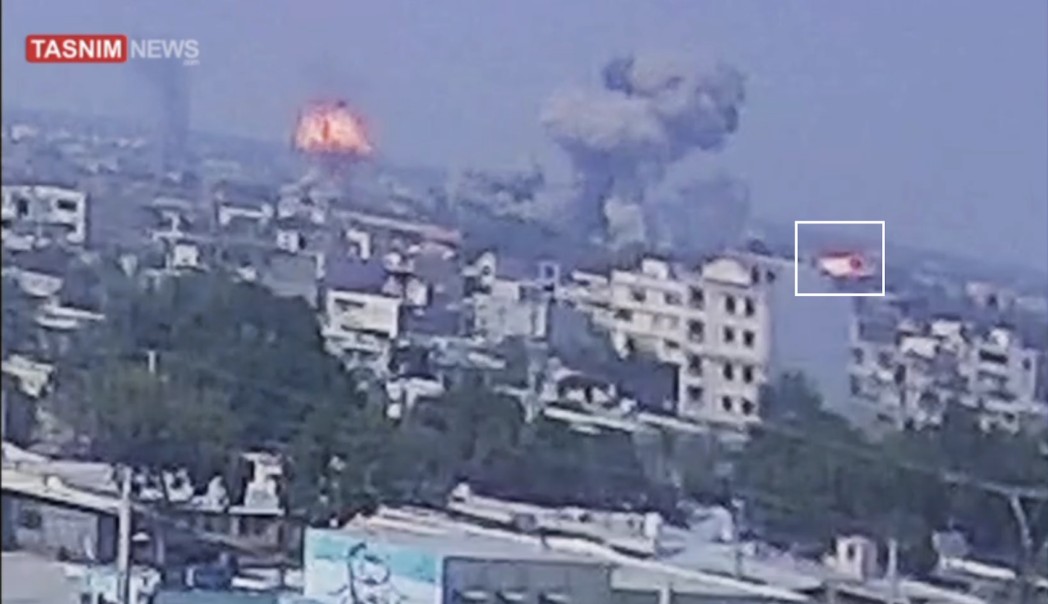
Bellingcat has geolocated and verified two new videos showing the deadly strikes that hit an Iranian Revolutionary Guard Corps (IRGC) compound, as well as an adjacent school, in the city of Minab in late February.
The new videos were released by Iran’s Ministry of Foreign Affairs and show multiple missiles hitting the complex.
One of the new videos shows the area around the school being struck, while the other shows a nearby IRGC clinic and two buildings within the IRGC facility being hit by Tomahawk missiles.
Visual and solar analysis of the videos appears to show there was a time gap between when each was filmed, suggesting that there were at least two waves of strikes carried out in the area.
Applying the same solar analysis techniques to social media footage that showed the school after it had been hit suggests the school was impacted during the first wave of strikes.
Previous investigations by Bellingcat and other news organisations showed a US Tomahawk missile struck the IRGC facility on Feb. 28.
The US is the only party to the conflict to possess Tomahawk missiles.
Media reports, including from the New York Times and Reuters, have since detailed that a preliminary investigation by the US military concluded it was likely a US strike that hit the Shajarah Tayyebeh elementary school.
According to Iranian media, at least 175 people were killed in the attack, including children.
The first video (video one) is filmed from just over 2.5 kilometres (1.5 miles) away from the IRGC base and shows at least 10 missiles impacting the area over a period of 50 seconds.
The first explosion is visible five seconds into the video. The area around where the school was located is struck at 14 seconds. This is the fourth explosion visible in the footage.
Another structure that was damaged in the strikes is situated approximately 100 metres away from the school in the same general area. It was therefore not possible to determine which exact structure was hit from this footage alone.
The second new video (video two) was filmed approximately two kilometres southeast of the school, and is of a higher quality than video one. This video shows three Tomahawk missiles in the moments before impact.

Video two includes annotations and pauses when each Tomahawk appears on screen.
A frame-by-frame analysis also shows what appear to be two minor visual glitches where some frames are transposed and annotations were added, highlighting when missiles can be seen.
The second impact seen in video two is the same as seen in footage released by Iranian media in early March, and previously reported on by Bellingcat and others, only from a different perspective.
Video two also only shows the southern part of the base, with its northern section not visible. The school is located on the northern edge of the base and is therefore not visible in video two.

Bellingcat asked the Iranian Ministry of Foreign Affairs why only part of the strike, as seen in video one, was released and if there was a longer version that may show further impacts. We did not receive a response before publication.
Bellingcat also asked the US Department of Defense whether it had any further information on the strike since its reported preliminary findings. It referred us to CENTCOM, which said: “We have nothing for you on this. The investigation is still ongoing.”
Bellingcat was able to geolocate and verify video one by tracing sightlines on satellite imagery to determine the camera’s location and identify objects such as buildings, trees and a water tower within the IRGC facility.
According to this analysis, video one was most likely filmed from an electric substation southeast of the school.

Once all key elements were identified and geolocated, we analysed each explosion that can be seen in the footage.
Fourteen seconds into video one, the fourth impact appears to hit the area immediately around the school, which was approximately 200 meters behind a water tower.
While the school was walled off and outside the IRGC facility, the water tower and another building (situated between the school and the water tower) are located within it.

Due to the relatively small distance between the school and the other IRGC building (roughly 100m), it was not possible to determine what structure was hit at the moment of the strike visible in video one.
More information, such as obtaining the entire strike video sequence, would be needed to fully determine which structure was hit in this footage. However, social media footage captured at the scene does suggest that the school was hit around this time.

For video two, we stitched together a rough panorama of what could be seen in the footage.
This made it possible to match up multiple buildings visible southeast of the IRGC base and school, while also building rough sightlines to show which part of the base was being filmed.

Bellingcat was able to narrow down the areas hit by the three missiles seen in video two by comparing it with the point of view of a short video released in early March, showing a Tomahawk hitting the complex, as well as with what could be seen in video one. Post-strike satellite imagery also helped confirm the buildings that were hit in the footage.
We were thus able to determine that video two shows an IRGC clinic and two buildings within the IRGC compound being hit.

The Iranian Ministry of Foreign Affairs has claimed that two waves of strikes occurred.
Initial analysis did suggest that video one and two appeared to be filmed at different times as the strikes visible in each clip cannot be synced up.
Solar data also gives clues as to the time each was taken, suggesting that there was a time gap of at least an hour between the strikes seen in the two videos.
According to the New York Times, the strikes were first reported on social media just after 11:30 am.
Solar data, derived by the direction of shadows visible in video one and simulated via the SunCalc platform, appears to indicate it was filmed between 10:30 and 11:30am.

Analysing the shadows seen in the earlier March video using the same method, appears to show that it was filmed between 13:30 and 14:30.
This would seem to indicate that video two and the earlier March video were likely filmed after video one.

Solar data from a video posted to Telegram showing the smouldering school, and damage to the nearby IRGC building about 100m away, shows that it was recorded around the time of the first video.

This, therefore, appears to confirm that the school was impacted before the wave of attacks seen in video two.
Iranian media previously released images of munition remnants they claim they recovered from the school.
Bellingcat was not able to verify where the remnants were originally found, but was able to identify them as Tomahawk missile remnants. The New York Times also confirmed this identification by matching the contract number on a remnant to a contract for the Tomahawk missile.
Bellingcat’s Carlos Gonzales, Jake Godin and Trevor Ball contributed research to this article.
Bellingcat is a non-profit and the ability to carry out our work is dependent on the kind support of individual donors. If you would like to support our work, you can do so here. You can also subscribe to our Patreon channel here. Subscribe to our Newsletter and follow us on Bluesky here, Instagram here, Reddit here and YouTube here.
The post Two Waves of Bombing: New Videos Reveal Further Details About Iran Girls’ School Strike appeared first on bellingcat.

When watching the Brett Kavanaugh hearings in 2018, author Pagan Kennedy began reflecting on her own experience of sexual assault as a child, perpetrated by a neighborhood boy—one who grew up to become yet another high-powered man in Washington. With the memory in the forefront of her mind and Dr. Christine Blasey Ford on screen, she catalogued in her head the number of inventions that made sexual assault easier for perpetrators to commit: driver’s side car door locks, sedative drugs, and so on. As far as anything invented to defend targets of such violence, the first thing Kennedy could think of was the rape kit.

With U.S. sanctions lifted, international mining companies are poised to dive back into the vast reserves of Venezuelan gold buried beneath the country’s lush southern jungles.
But it’s unclear how they plan to deal with the armed groups that run the mines, and experts warn that it will be difficult to eradicate them without triggering violence.
Following nationalization 15 years ago, Venezuela’s gold sector has become rife with environmental and human rights abuses under the watch of a mix of local criminal gangs and Colombian guerillas who run the trade. Many international brokers won’t touch gold from Venezuela, with much of it now smuggled out of the country and rebranded with a different origin.
But after capturing former Venezuelan President Nicolas Maduro earlier this year, the U.S. has lifted sanctions to allow gold imports, and the current Venezuelan government is eager to capitalize on the opportunity. A new mining bill vowing to clamp down on illegal mining and clean-up the sector has passed its initial vote in Venezuela’s legislature.
Washington has said that any gold imports will have to “meet standards of U.S. law,” and that companies will be required to provide “supply chain due diligence plans to determine the chain of custody of the gold.”
Experts warn this will be difficult as long as militias remain in control of the mines.
Currently, the supply chain is a “black hole” of “blood gold laundering” where illegal and legal gold sources intermingle, said Cristina Burelli, an analyst with the Venezuelan nongovernmental organization SOS Orinoco.
“A very complex, difficult job of dismantling the criminal structure that exists there has to happen first,” she said.
Bram Ebus, a researcher with the U.S.-based non-profit International Crisis Group, said there is no way to enter the sector without “confronting armed actors willing to use local populations as human shields, or extort foreign corporations.”
For any foreign companies involved, this means that “financing terrorist organizations becomes a plausible risk.”
The process is nevertheless moving at what one U.S. official has dubbed “Trump speed,” with global commodities trader Trafigura having already signed a multimillion-dollar deal with Venezuela’s state-owned gold mining company, CVG Minerven, at the start of the month.
The deal was inked four days before Washington issued General License 51, which officially unblocked the gold trade.
“This agreement complies with a licence issued by the Office of Foreign Assets Control of the US Department of the Treasury,” Trafigura said in an emailed response to questions from OCCRP.
When asked about how the company would make sure the gold they trade was not tainted by conflict or rights abuses, they said: “We are working with our counterparty jointly to implement a responsible sourcing programme.”
A person familiar with the matter, who withheld their name as they were not authorized to speak to the media, told OCCRP Trafigura would not have signed on without already having received the required licenses from OFAC.
They added that Trafigura needs “assurances” that any gold imports will be free from human rights and labor violations, because U.S. customs will be “very strict” on what they let through.
Meanwhile, a person close to another major mining company, Gold Reserve, told OCCRP that the firm is starting negotiations with the Venezuelan government to reclaim the operations it lost to nationalization.
The individual, who was not authorized to speak to journalists, said the major challenge to returning will be securing the blessing of leaders of the local armed groups: “This is a project of national interest [and] without them, it’s going to be difficult.”
Gold Reserve did not respond to requests to comment, though its CEO Paul Rivett previously told Bloomberg that the company plans to quickly make efforts to reclaim gold and copper concessions that were seized by the Venezuelan state.
The London Bullion Market Association, a gold certification agency, said it is “closely monitoring the updates in relation to sanctions on Venezuelan gold” and did not comment directly on the ethical issues around the supply chain.
A spokesperson for Venezuela’s government did not respond to a request for comment before publication. The office of U.S. Interior Secretary Doug Burgum did not respond to a request for comment before publication.
Speaking from Caracas on March 4, Burgum hailed the unblocking of sanctions on Venezuela’s gold as a strategic necessity to break China’s global monopoly on critical minerals.
But no one has explained how the Venezuelan government plans to regain control of the Orinoco Mining Arc, a zone that was created by Maduro in 2016 for the extraction of gold, coltan, and diamond, and makes up 12 percent of the country’s territory.
The draft Venezuelan law rebrands the mining zone as an investment opportunity, and calls for a new mining security force to dismantle illegal operations and combat illicit mining extraction.
But it avoids any mention of the armed gangs or guerrillas who control the territory.
In the last decade, local gangs, criminal syndicates, military units, and Colombian guerillas maneuvered for control of the mines, according to multiple reports, including one from the International Crisis Group.
The United Nations High Commissioner for Human Rights has also documented serious human rights abuses in the region, including sexual exploitation and trafficking.
A former miner who worked in Venezuela’s gold belt, and who requested anonymity for security reasons, described a system of state complicity in corrupt, lawless fiefdoms that any foreign company will have to negotiate with to access the mines.
He said that gold miners pay a 10 percent tax on daily profits from each mine to the boss of local criminal gangs known as ‘sindicatos.’ The boss then pays the government “its share and the government stays out of it,” the former miner said.
The sindicatos organize light municipal work and prevent violence, the miner explained. He added that army and government officials receive a cut from gold sales, but do not police the mines.
“If those systems — those sindicatos — didn’t exist, there would be robberies, kidnappings, chaos, fighting,” he said.
The draft mining law being fast-tracked in Caracas allows for international arbitration to settle disputes — a large incentive for companies like Gold Reserve to return.
Gold Reserve, initially a Canadian company that is now headquartered in Bermuda, started mining in Venezuela in the 1980s but was kicked out in 2011 when former President Hugo Chavez nationalized the mines, and declared all gold state property. The company then pursued the state for more than $1 billion in lost investments.
Gold Reserve’s major area of exploitation in Venezuela covered the Brisas and Las Cristinas deposits, which hold an estimated 52 million gold ounces. Combined, the deposits make up the largest gold-mining project in South America, and the fourth‑largest globally, according to company documents.
In 2016, the company reached a partial agreement with Maduro’s government to resume operations, but the joint‑venture never materialized and Gold Reserve parted ways with Venezuela once again.
But Washington’s moves to allow gold imports, along with Venezuela’s expected legislation, are opening the door for Gold Reserve and other companies anew.
According to the person close to Gold Reserve who spoke to OCCRP, the negotiations to restart operations are “just beginning.”
In November 2017, financier Jeffrey Epstein wanted to know whether an assistant had found him any young women in Europe. “No one new this trip?” he asked in an email.
“The new one I like is in Paris,” came the reply from Julia Santos. “We are supposed to Skype again this evening … She is my new favorite as of now.”
In fact, the name “Julia Santos” was a pseudonym, an apparent reference to a character from the ‘90s soap opera All My Children. The email account was used by a group of female assistants Epstein had organized to recruit young women for his circle of models and potential sexual targets.
This is according to a woman who admits to being one of the recruiters: Svetlana Pozhidaeva, 42, a onetime Russian model who worked for Epstein for years until his death in 2019. Pozhidaeva spoke to OCCRP for hours over the course of three days of interviews this week, addressing reports in Russian media, including OCCRP’s partner Important Stories, that her father was connected to the intelligence apparatus.
That reporting — which Pozhidaeva denies — has attracted interest and fueled speculation on social media, in part because Pozhidaeva moved among the titans of American finance during her time with Epstein, even twice meeting an up-and-coming Elon Musk.
Speaking to OCCRP, Pozhidaeva painted a picture of constant abuse during her time with Epstein, saying that the financier bullied, dominated, and manipulated her. “I was struggling with insomnia, eating disorders,” she said. “I was like throwing up after every single meal.”
“I’m not denying that I was recruiting women,” Pozhidaeva said. “That’s the most embarrassing and shameful and most regretful thing that happened.” But she said she had trouble seeing beyond her abuse, which also took on a physical dimension: “[Epstein] started physically abusing me when I first visited him in Florida,” she said. “I did not know a single person in the U.S. … It was really far away from my family.”
Still, Pozhidaeva’s background, and her relationship with Epstein, is starkly different from that of many other women who became ensnared in his alleged sexual trafficking network, a recently released trove of emails from the U.S. Justice Department shows. The emails show the well-educated Pozhidaeva being treated as a valuable asset: Epstein organized her appearances at elite forums like the U.N. and Davos, introduced her to powerful people, and at one point paid her $8,333 per month.
Reporters from several outlets have recently unearthed evidence suggesting that Pozhidaeva’s father Yury Pozhidaev, a retired lieutenant colonel in the Russian military, is a career intelligence officer: In a December 2015 email, Pozhidaeva wrote Epstein that, on a trip to the United States, her father had regaled her boyfriend with stories of his “FSB pa[s]t.” Yury Pozhidaev’s most recent employment history — as a security specialist on strategic state projects — also points towards an intelligence career. And according to a leaked courier database, he has communicated with the FSB pension office.
The emails show that Pozhidaev’s father visited Epstein in his Palm Beach mansion with her mother, who wrote the financier a rapturous thank-you email in which she described him as the “Great Getsby (sic).” Ahead of their visit, the younger Pozhidaeva received over $237,000 in her bank account from Epstein’s offshore Butterfly Trust, the transaction marked “for the family.” (She maintains that this was a loan.)
No evidence has emerged that Epstein discussed any sensitive matters with Pozhidaeva’s father. But the Epstein files show that he pursued relationships with senior Russian officials.
For example, Vitaly Churkin, Russia’s long-serving UN ambassador until his death in 2017, was a friend and visitor to the financier’s Manhattan home, according to the Department of Justice files and Pozhidaeva. The files also show Epstein hosted the ambassador during a period when he headed UN Security Council meetings and mentored his son Maxim, helping him seek work on Wall Street.
And the files show that Epstein grew close to Sergey Belyakov, a former Russian deputy economic development minister and graduate of the FSB Academy. Belyakov ran the prestigious St. Petersburg International Economic Forum, and at Epstein’s request wrote a letter of recommendation for renewal of Pozhidaeva’s U.S. visa, saying she helped plan the agenda.
That was an embellishment requested by Epstein, Pozhidaeva told OCCRP, noting she attended the forum but played no role in organizing it.
After Epstein’s death, Pozhidaeva said she spoke to the media several times on condition of anonymity. But when the Trump administration released 3.5 million documents in the so-called Epstein Files earlier this year, it failed to redact her name. (It has since done so at the request of her and others identifying as victims.)
That led her to go public in a recent interview with the Wall Street Journal, seeking control of the narrative about her. For that story, her father denied any connection to the FSB, offering to take a polygraph test to end speculation. (He did not respond to OCCRP’s requests for comment.)
In her interviews with OCCRP, Pozhidaeva flatly denied her father’s FSB ties, saying her email had been a reference to a misguided attempt to impress her boyfriend. She attributed her father’s career moves to his expertise in the Persian language and said that he only received a regular military pension.
Turning to her life with Epstein, Pozhidaeva explained that she had been charmed after a chance meeting with him in late 2007 or early 2008, was hired by his modeling agency, and became his assistant a few years later. Over the following decade, she said, she stayed on his now-infamous island, met foreign leaders at his Paris home, and scoped out a palace in Morocco that he ultimately did not buy. But she also said Epstein objectified her, pressured her to lose weight, and manipulated her to such an extent that she misled even her parents.
“They thought I had the best job in the world, that I have the best life,” she said. “I would send them pictures with Bill Gates, and [former Norwegian diplomat] Terje Rød-Larsen, all the famous people I had pictures with, and say I’m in meetings with all those people. But I wasn’t really in the meetings. I was waiting behind closed doors and taking the plates out when the meeting was over.”
“He told me that he would teach me real business,” Pozhidaeva said of Epstein. “And as soon as I started asking: Shall I start taking English communication classes, or maybe accent reduction classes, anything to improve professionally? He said, well, you should start learning how to do massage. And that was the only class he encouraged.”
Today, Pozhidaeva lives in the United States, works in finance, and has started a new life under a new name. OCCRP is not publishing her name and location at her request over concerns for her safety. She said she is in touch with many survivors and is working to build a library of resources for fellow Epstein victims.
During the Soviet era, Pozhidaeva’s family counted among a privileged elite. Her maternal grandfather, Marcel Platonov, was a military surgeon and gynecologist who participated in the infamous Soviet operation that triggered the 1962 Cuban Missile Crisis. He was granted an apartment in the House on the Embankment, a Stalin-era building on the Moscow River infamous for hosting the cream of the Soviet elite.
Pozhidaeva’s parents, Yury and Irina, graduated from the Military Institute of Foreign Languages in Moscow, whose alumni often served in the KGB’s First Chief Directorate, which is responsible for foreign intelligence, or as military attachés.
Her father was trained as a Persian-language military interpreter. In 1978, on the eve of the Soviet invasion of Afghanistan, he was sent to the country as part of an advisory corps.
Little else is known about his career with the Soviet military. Pozhidaev left the armed forces in the late 1990s and spent several years selling coffee and wine. But in December 2017, the retired lieutenant colonel started working for a subsidiary of Rostec, an anchor of Russia’s military-industrial complex. His work often took him to Tehran, where the company was helping install energy infrastructure.
The following year, Pozhidaev was named deputy head of security for the Iranian division of Russian Railways, which was working on a strategic transport corridor in the region. In 2020, Pozhidaev concurrently became deputy general director for security at Caspian Services, the main contractor for Russia’s transport ministry on the same project.
OCCRP described Pozhidaev’s biography to several experts on the Russian security services, who pointed out that such positions are typically reserved for formally retired security service officers who continue to report to their agency, a position known in Russian as “seconded personnel” (APS). Orders assigning such officers are signed by the FSB director.
“He is part of a total model of the post-Soviet FSB, in which they alternate between the private sector and serving state projects overseas, where their language skills and knowledge of the environment help serve the Russian state and its interests,” said Louise Shelley, an professor emerita at George Mason University in Virginia and longtime expert on Soviet and Russian affairs. “He fits a profile.”
Aside from Yury Pozhidaev’s employment history — and his daughter’s emailed reference to his FSB past — reporters from the Russian outlet Explainer found another tie to the agency. According to a leaked courier database, they reported, he sent several pieces of correspondence to the pension department of the FSB Directorate for Moscow and the Moscow Region in 2022.
Asked about this, Pozhidaeva said her father had to communicate with pension authorities to claim a retirement benefit: yearly visits to sanatoriums. She did not explain why he was writing to an FSB office, rather than to the defense ministry. He did not respond to emailed questions from OCCRP.
Pozhidaeva’s own background drew the attention of Russian media. Her resume, found in the files, shows that she received her undergraduate and Masters degrees from the Moscow State Institute of Foreign Relations, an elite springboard for careers in diplomacy and intelligence. She learned multiple foreign languages and interned at the Russian foreign ministry, the oil giant Lukoil, and Russian investment firms.
Despite this privileged background, she stressed in her interview with OCCRP that she had long felt insecure about her family’s financial status as compared to wealthier classmates, that she grew up in a building without an elevator, and that she never owned a car while in college.
In her mid-20s, Pozhidaeva pivoted to a career as a runway model. She was introduced to Epstein in Paris and was brought to the United States by the modeling agency MC2 Model Management, funded by Epstein but run by a disgraced associate.
Afterwards, Pozhidaeva’s visa was sponsored directly by an Epstein foundation. Her attorney, Brad Edwards, noted that Epstein routinely recruited foreign models who wanted to stay in the U.S. and held their visa status over their heads to trap them in his network.
He also used other coercive tactics, Edwards said. “If [the women] had any medical issues, [Epstein] made sure they went to his doctors. Those doctors provided the records to him, not even to the women,” Edwards said.
But Pozhidaeva’s story is complicated by the copious evidence in the Epstein Files that she actively recruited young women for the financier.
The emails show her actively helping women in Ukraine and elsewhere get passports or Schengen visas. “That’s the Kiev contact I like a lot, very sweet and might be naughty too,” she wrote in one email about a prospect.
Another email shows her sending a nude photo of a candidate to Epstein. In others, she disparages potential candidates: “Bad skin, huge boobs, said [she was] 24yo,” she wrote about one young woman.
Ali Hopper, a counter-trafficking expert and policy advocate who frequently testifies before federal and state legislatures in the United States, says that people these situations often reside in a gray area between being a victim and victimizer.
“When a victim is pulled into a trafficking operation and later takes on a role recruiting, managing, or profiting off other victims, that shift matters,” she said. “You can hold two truths at once: they were victimized, and they later contributed to the victimization of others.”
Almost seven years after Epstein’s controversial death in a Manhattan jail cell, Pozhidaeva said he still haunts her.
“Sometimes I even feel like he’s alive, you know, I still have nightmares he’s alive,” she said.
Does she think he hanged himself with bedsheets? Pozhidaeva is unsure.
“It’s hard to imagine him being so brave to take his life. Because it’s not like he had a gun and shot himself or took a pill and fell asleep,” Pozhidaeva said. “It’s a very wild way of taking his life.”
Zack Kopplin contributed reporting.
Hours after being sworn in as Nepal’s new prime minister on Friday, Balendra Shah, a 35-year-old rapper and structural engineer, announced that his government would pursue criminal charges against the country’s former leadership for their role in a deadly crackdown on youth-led anti-corruption protests last year.
The bold move, announced Friday following the first meeting of the newly formed cabinet, signals a seismic shift in the Himalayan nation’s political landscape. Shah’s Rastriya Swatantra Party (RSP) swept into power in a landslide election following the so-called “Gen-Z” protests that toppled the political establishment.
Sworn in by President Ramchandra Paudel at the presidential palace amid the chanting of Buddhist monks and Vedic recitations by 108 young Hindu priests, Shah takes office with a sweeping mandate for accountability. In a staggering victory, he defeated the former prime minister, K.P. Sharma Oli, by nearly 50,000 votes in Jhapa-5.
Now, Shah’s government is turning its sights directly on Oli and his top deputies.
The new cabinet’s first official act was a commitment to fully implement the findings of a high-level state commission which investigated the violent suppression of the September 2025 uprisings.
According to the report seen by OCCRP, the commission recommended criminal prosecution against Oli, former Home Minister Ramesh Lekhak, and former Inspector General of Police Chandra Kuber Khapung.
Sasmit Pokharel, the new Minister for Education, Science, and Technology and the government’s newly appointed spokesperson, told journalists that relevant agencies have been directed to “immediately implement” the commission’s recommendations. He added that a special study committee will be formed to specifically address the disciplinary actions of the security agencies.
The September 2025 protests, which initially began as a peaceful youth movement opposing the government’s sweeping ban on 26 social media platforms, left 76 people dead and more than 2,500 injured.
The commission’s report accuses the former leaders of “extreme reckless negligence.” It found that they acted as “mere spectators” during a continuous four-hour clash outside the Federal Parliament on Sept. 8, allegedly failing to order a cease-fire or implement harm-minimization measures as security forces used indiscriminate, lethal force against the crowds.
If convicted of criminal negligence resulting in mass casualties, the former prime minister and his top security officials could face three to 10 years in prison and fines of up to 100,000 rupees.
The crisis ultimately spiraled into nationwide chaos on Sept. 9. While the commission acknowledged it could not fully investigate the sheer scale of the ensuing riots, it noted that the movement was quickly co-opted by organized criminal elements. Petroleum products were used to set fire to the Parliament, the Supreme Court, and other government buildings.
The report offered a scathing assessment of the country’s security and intelligence apparatus, blasting the National Investigation Department for failing to track the digital planning of the riots on platforms like Discord. Noting that security forces “fired blindly” due to a lack of institutional guidelines, the commission outlined an urgent blueprint for police reform, mandating the immediate implementation of strict rules of engagement and scenario-based training.
For Shah and his young cabinet the commitment to the report is part of a broader anti-corruption crusade. The RSP campaigned on a promise to investigate the assets of senior officials and reopen corruption scandals dating back to the restoration of democracy in 1990.
“If anyone asks you for a bribe, tell the police,” Sudhan Gurung, Minister for Home Affairs told journalists and government officials on Friday after assuming his new role. “There will be zero tolerance for corruption.”