Blog

  • PeerTube v8.1 is out!

    PeerTube v8.1 is out!

    A host of improvements, refinements, bug fixing… Let’s see what this minor version has in store for you!

    Better podcast support

    Since PeerTube v7.1, there’s been support for podcasts, but apps haven’t been playing well with HLS files generated by PeerTube. This new version of PeerTube lets admins force the creation of an optimized audio file and fixes most issues reported with podcasts.

    Rework of image management

    PeerTube’s image management (for avatars, thumbnails, favicon, etc.) dates back to the early daysof the project and needed a major overhaul to adapt it to changes in the project and the Web.
    Over the past few weeks, we have worked extensively to completely overhaul the system and make it both more efficient and more robust in the face of change.

    Among these developments are improved video thumbnail quality (if your administrator has regenerated it), particularly for podcasts, support for WebP and PNG image formats for video thumbnails, and a preparatory work to enable images to be moved to object storage in the future.

    These improvements are part of our ongoing efforts to optimize PeerTube’s performance in order to facilitate the scaling of platforms.

    Restricting embeds to chosen domains

    From now on, video creators will be able to restrict the domains on which their videos can be embedded.
    This enables institutions, media outlets and other organisations to exercise greater control over access to their videos and integrate PeerTube more efficiently into their existing publishing process.

    Added playback speed x3.0

    Unlike some alternatives to PeerTube, you don’t need a premium account here to enjoy x3 playback speed!
    With this new version of PeerTube, you’ll no longer experiment this feeling of slowness when watching a video! You can now watch videos at the ultrasonic speed of your brain and listen to the sweet melody of voices under helium!

    Lucide is now the default player

    Lucide is the new player that came with PeerTube v8. It’s now the standard player for all new PeerTube installations.
    If you’ve already got a PeerTube platform and you want Lucide to be the default player, you can enable it in the customization settings of your platform.

    And more…

    Notable new features include also an improved user experience with notifications grouped by date, an improved experience for managing a channel collaboratively, increased compatibility with other Fediverse softwares, and improved video SEO.

    Finally, we have optimized the management of the transcoding queue to enable faster publishing and improved the robustness of channel synchronisation again (thanks to community feedback)!
    Of course, many other improvements have been made in this version and you can view the complete list of changes on the dedicated page.
    All of these changes have been made possible thanks to the feedback you have provided, either by reporting an issue on the software repository or by sharing your ideas on our dedicated platform!

    If you’re running a platform, please read the important notes carefully before upgrading.

    Thanks to everyone for following the PeerTube project over the years! If you wish and are able to, please, consider making a donation to Framasoft (the non-profit organization that develops PeerTube) to support the project!


    Support Framasoft

  • Copyright Bullying vs. Religious Freedom

    The government should not help a religious institution to punish or deter members from inquiring about their faith. Yet, once again, the Watch Tower Bible and Tract Society is trying to use flimsy copyright claims to exploit the special legal tools available to copyright owners in order to unmask anonymous online speakers. And, once again, EFF has stepped in to urge the courts not to give Watch Tower’s attempts the force of law, with the help of local counsel Jonathan Phillips of Phillips & Bathke, P.C.

    EFF’s client, J. Doe, is a member of the Jehovah’s Witnesses who became interested in the history of the organization’s public statements, and how they’ve changed over time. They created research tools to analyze those documents and ultimately created a website, JWS Library, allowing others to use those tools and verify their findings through an archive that included documents suppressed by the church. Doe and others discovered prophecies that failed to come true, erasure of a leader’s disgrace, increased calls for obedience and donations, and other insights about the Jehovah’s Witnesses’ practices. Doe also used machine translation on a foreign-language document to help the community understand what the church was saying to different audiences and also to help understand potential changes in the organization’s attitudes towards dissent.

    Within the church, dissent or even asking questions has often been punished by labeling members as apostates and ostracizing—or “disfellowshipping”— them. As a result, Doe and others choose to speak anonymously to avoid retaliation that could cost them family, friend, and professional relationships.

    There is no law against questioning the Jehovah’s Witnesses. Instead, Watch Tower argues that Doe’s activities constitute copyright infringement and seeks to use the special process provided in the Digital Millennium Copyright Act (DMCA) to unmask them. It sent DMCA subpoenas to Google and Cloudflare, seeking information that would help them uncover Doe’s identity.

    The problem for Watch Tower is that Doe’s research and commentary are clear fair uses allowed under copyright law. The First Amendment does not permit the unmasking of anonymous speakers based on such weak claims. Indeed, the First Amendment protects anonymous speakers precisely because some would be deterred from speaking if they faced retribution for doing so.

    EFF stands with those who question the claims of those in power and who share the tools and knowledge needed to do so. We urge the judges in the Southern District of New York to quash these improper subpoenas and not allow copyright to be used to suppress important, legitimate speech.

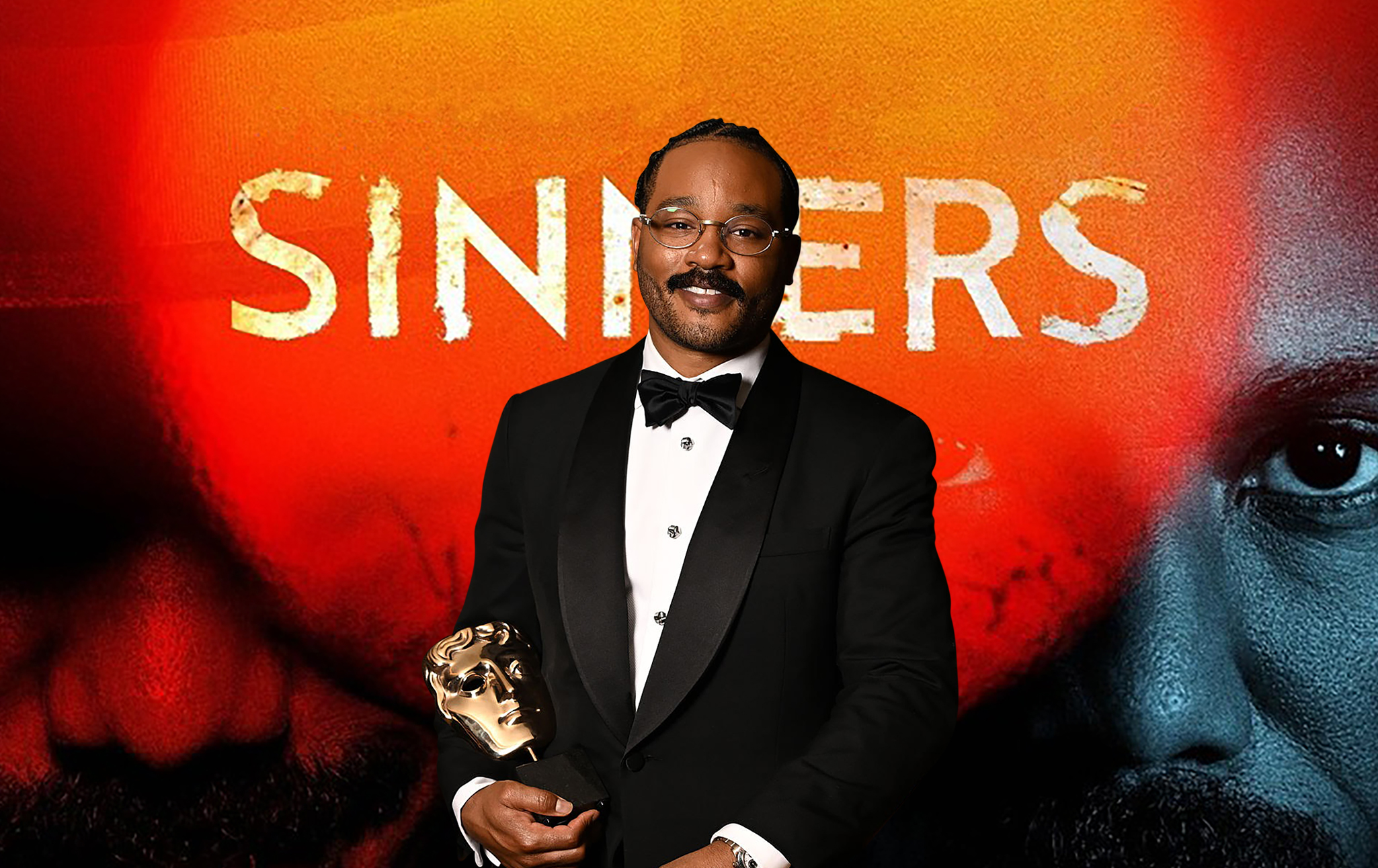
  • “Sinners” Offers a False Vision of Empowerment

    “Sinners” Offers a False Vision of Empowerment

    As a professor of African American history, whenever I come across a black-oriented historical movie, the first thing I think about is whether the film makes my job harder or easier. Films like A Soldier’s Story, Glory, 12 Years a Slave, and Free State of Jones have enriched our understanding of the complexities driving American race relations. These movies—along with independent films like Nothing But a Man and Killer of Sheep and David Simon’s brilliant television drama, The Wire—offer explorations of human frailties and vulnerabilities that are alive to the possibilities available to human beings in their distinct times and locations. As good art invariably does, each takes some artistic license. However, the filmmakers’ sensitivity to context helps them avoid the kinds of anachronistic cliches and character archetypes that treat contemporary values and aspirations as eternal truths.

  • Think Twice Before Buying or Using Meta’s Ray-Bans

    Over the last decade or so, the tech industry has tried, and mostly failed, to make “smart glasses”—tech-infused glasses with cameras, AI, maps, displays, and more—a thing. But over the past year, products like Meta’s Ray-Ban Display Glasses and Oakley’s Meta Glasses have gone from a curious niche to the mainstream

    Before you strap a dashcam to your face and sprint out into the world filming everything and everyone in your life, there are some civil liberties and privacy concerns to consider before buying or using a pair.

    Meta is the biggest company that makes these sorts of glasses and their partnerships with Ray-Ban and Oakely are the most popular options, so we’ll be mostly focusing on them here. Others, like models from Snapchat are similar in form but far less ubiquitous. But Meta won’t hold this space for long. Google’s already announced a partnership with Warby Parker for their “AI-powered smart glasses,” and there are rumors around a competing product from Apple

    With that, let’s dive into some of the considerations you should make before purchasing a pair.

    If You’re Thinking About Buying Smart Glasses

    You’re likely not the only one who can see (and hear) your footage

    The photos and videos you record with most smartglasses will likely be stored online at some point in the process. On Meta’s offerings, unless you are livestreaming, media you capture when you press the camera button is kept on the glasses until you import them onto your phone, but media is imported automatically by default into the Meta AI mobile app, which is required to set up the glasses. 

    You can’t use any AI features locally on the glasses. So anytime you use AI features, like when you say, “Hey Meta, start recording,” the footage is fed to Meta. You can use the glasses without the Meta AI app entirely, but considering you can’t easily download footage from the glasses to your phone without it, most people will likely use the app.

    Some videos are fed to Meta for AI training, and we know at least in some cases that those videos go through human review. An investigation by Swedish newspapers found that workers were reviewing and annotating camera footage, which includes all sorts of sensitive videos, including nudity, sex, and going to the bathroom. Meta claimed to the BBC that this is in accordance with its terms of use, all in the name of AI training, which states:

    In some cases, Meta will review your interactions with AIs, including the content of your conversations with or messages to AIs, and this review may be automated or manual (human).

    This all means that Meta and their third-party contractors will have access to at least some of what you record, and it’s very hard as a user to know where footage goes, who will have access to it, and what they will do with it. When you save footage to your phone’s camera roll, which is where the Meta AI app stores content, that might also be sent to Apple or Google’s servers, depending on your settings. Employees at these companies can then possibly access that media, and it could be shared with law enforcement.

    The recorded audio from conversations with Meta AI are also saved by default, and if you don’t like that, tough luck, unless you go in and manually delete them every time you say something.

    Filming all the time is even more privacy invasive than you think

    A common argument in favor of using the cameras in smartglasses is that phones and cameras can do this too, and it’s never been a problem. 

    But smartglasses are designed to resemble regular glasses, to the point where most reviews point out how friends didn’t notice that they had cameras embedded in them. They’re designed to be invisible to those being recorded outside of a small indicator light when they’re recording video footage (that cheap hacks can disable). Whereas it is often obvious that a person is recording if they pull their phone out of their pocket and point it at someone else.

    They’re designed to be invisible to those being recorded outside of a small indicator light when they’re recording video footage

    Moreover, constant recording of everything in public spaces can create all sorts of potential privacy problems, some more obvious than others. This is another way that cameras on glasses are different from cameras on phones: it is far easier to constantly record one’s whereabouts with the former than the latter. If you continuously record, maybe you just happen to catch someone entering their passcode or password onto their phone or computer at a coffee shop, or broadcast someone’s bank details when you’re standing in line at an ATM. That doesn’t even begin to get into when smartglasses are intentionally used for less socially responsible means. And some people may forget to turn off their smartglasses when they enter a private space like a bathroom.  

    And if you find yourself caught on someone’s camera, there’s not much you can do in recourse. If you do notice a stranger recording you, it’s up to you to intervene and ask not to be included in that footage, which can easily turn awkward or confrontational.

    Our expectations of privacy shift when we’re in public, but bystanders in many cases will still have privacy interests. Public spaces are a place where you will be seen, but that shouldn’t mean it’s suddenly okay to catalog and identify everyone.

    Consider the company’s the track record and public statements

    Meta, Google, Apple—perhaps one benefit of all the major tech companies entering this market is that we already have a good idea of how much they tend to respect the privacy of their users or the openness of their platforms. Spoiler, it’s often not much.

    Meta has a long history of privacy invasive technologies and practices. We’ve heard rumblings that Meta hopes to add face recognition to its smartglasses, preferably, “during a dynamic political environment where many civil society groups that we would expect to attack us would have their resources focused on other concerns.” Yikes. This is a monumentally bad idea that should be abandoned by Meta and any of its competitors considering a similar feature. But regardless of whether they launch this feature, it’s a pretty clear indication of where Meta wants these sorts of devices to go. 

    If You Have Smartglasses Already

    Opt out of sharing with Meta where you can

    You can disable a couple of the features where unnecessary data is sent to Meta. In the Meta AI app, under the device settings, there’s a privacy page where you can disable sharing additional data, and more importantly, turn off “Cloud media,” where your photos and videos are sent to Meta’s cloud for processing and temporary storage. 

    Decide your use-case and stick to it

    These glasses can be useful for filming a variety of activities. We’ve seen fascinating scenes of tattoo artists doing their work (with client’s permission), and it doesn’t take a stretch of the imagination to see how people might use it to film extreme sports. Even on an everyday level, you might find them useful for capturing holidays, birthdays, and all sorts of other private occasions. 

    But if you buy these glasses for a specific, mostly private purpose, it is probably best to stick to that, instead of wearing them everywhere and recording everything you do.

    Follow the rules of a businesses and social expectations

    You often have a right to record in public spaces, but that doesn’t mean other people will like it. Businesses, including restaurants and stores, may want nothing to do with continuous filming and may either post a sign asking you not to use smartglasses, or ask you to stop. This may reflect the preferences not just of the business owner, but the people around you. And don’t use glasses to record when you enter other people’s private spaces like bathrooms or changing rooms.

    It’s also a good idea to check in with friends and family before tapping that record button at a social gathering. Some people may not be as comfortable with these glasses as they are with other recording equipment.

    Consider blurring strangers if you’re going to upload video

    Blurring video footage isn’t an easy task, but if you’re considering uploading footage from something like a protest, it may be worth the effort to do so (apps like Meta’s Edits simplify this process, as do some other video sites, like YouTube). Some people don’t want the government to see their faces at protests, and might be afraid to attend if other people are uploading their faces.

    Some people don’t want the government to see their faces at protests, and might be afraid to attend if other people are uploading their faces.

    It would be better if Meta leveraged its AI features to offer this sort of feature automatically, especially with livestreaming. It’s not that outlandish of a request, as it seems like the company tries to blur faces automatically in footage it captures for annotation, though it’s not always reliable. After all, Google began redacting faces in Street View years ago, following privacy concerns from groups like EFF.

    Resist face recognition

    Adding facial recognition technology to smartglasses would obliterate the privacy of everyone. We cannot let companies push face recognition into these glasses, and as a user, you should make your voice clear that this is not something you want.

    Smartglasses don’t have to be used to decimate the privacy of anyone you encounter during the day. There are legitimate uses out there, but it’s up to those who use them to respect the social norms of the spaces they enter and the people they encounter.

  • The Government Must Not Force Companies to Participate in AI-powered Surveillance

    The rapidly escalating conflict between Anthropic and the Pentagon, which started when the company refused to let the government use its technology to spy on Americans, has now gone to court. The Department of Defense retaliated by designating the company a “supply chain risk” (SCR). Now, Anthropic is asking courts to block the designation, arguing that the First Amendment does not permit the government to coerce a private actor to rewrite its code to serve government ends.

    We agree.

    As EFF, the Foundation for Individual Rights and Expression, and multiple other public interest organizations explained in a brief filed in support of Anthropic’s motion, the development and operation of large language models involve multiple expressive choices protected by the First Amendment. Requiring a company to rewrite its code to remove guardrails means compelling different expression, a clear constitutional violation. Further, the public record shows that the SCR designation is intended to punish the company both for pushing back and for its CEO’s public statements explaining that AI may supercharge surveillance practices that current law has proven ill-equipped to address.

    As we also explain, the company’s concerns about how the government will use its technology are well-founded. The U.S. government has a long history of illegally surveilling its citizens without adequate judicial oversight based on questionable interpretations of its Constitutional and statutory obligations. The Department of Defense acquires vast troves of personal information from commercial entities, including individuals’ physical location, social media, and web browsing data. Other government agencies continue to collect and query vast quantities of Americans’ information, including by acquiring information from third party data brokers.

    A growing body of social science research illustrates the chilling effects of these pervasive activities. Fearing retribution for unpopular views, dissenters stay silent. And AI only exacerbates the problem. AI can quickly analyze the government’s massive datasets or combine that information with data scraped off the internet, purchased through the commercial data broker market, or from local police surveillance devices and use all of that data to construct a comprehensive picture of a person’s life and infer sensitive details like their religious beliefs, medical conditions, political opinions, or even sex partners. For example, an agency could use AI to infer an individual’s association with a particular mosque based on data showing that they visited its website, followed its social media accounts, and were located near the mosque during religious services. AI can also deanonymize online speech by using public information to unmask anonymous users.

    It is easy to conceive how an agency, a government employee with improper intent, or a malicious hacker could exploit these capabilities to monitor public discourse, preemptively squelch dissent, or persecute people from marginalized communities. Against this background and absent meaningful changes to the governing national security laws and judicial oversight structure, it is entirely reasonable for Anthropic—or any other company—to insist on its own guardrails.

    Without action from Congress, the task of protecting your privacy has fallen in large part to Big Tech—something no one wants, including Big Tech. But if Congress won’t do it, companies like Anthropic must be allowed to step in, without facing retribution.

  • Downton Abbey and the Myth of the Good Aristocrat

    Downton Abbey and the Myth of the Good Aristocrat

    God, I hate Downton Abbey. The beloved ITV post-Edwardian period drama and domestic PBS mainstay is purported to be ending with a third theatrical release, closing as I write. Created by the Right Honourable peer Julian Fellowes—who is also the sole scriptwriter—the series is beloved among masses of good-hearted PBS viewers for its lovely photography, exquisite locations, fine cast, and great performances.

  • Claude Is No Peacenik

    Last month, AI supergiant and Department of Defense contractor Anthropic found itself embroiled with the Pentagon over the use of its AI for military purposes. On Feb. 14, Axios reported that the Pentagon was considering severing ties with Anthropic, which insisted on guardrails for its use of AI by the military. The conflict became public two days after the press revealed the American military used Anthropic’s Claude AI to help capture Venezuelan President Nicolás Maduro.

    Tensions soon boiled over. Anthropic pushed back, and on Feb. 24, U.S. Defense Secretary Pete Hegseth issued an ultimatum: allow unrestricted use of Anthropic’s platform by the Department of Defense or get canceled. Trump followed suit, threatening to ban all federal agencies from using Anthropic’s technology and label the company a supply chain risk. On March 5, the Pentagon followed through, stating it has “officially informed Anthropic leadership the company and its products are deemed a supply chain risk, effective immediately.” This marks the first time such a sanction has been applied to a U.S. company. In response, Anthropic is suing the Pentagon over the risk label.

    According to the company’s public relations, many media accounts and some tech workers, the episode is proof that the corporation aims to “do good” and put people over profits.

    Anthropic remains woven into the fabric of the American Empire.

    But is this really true? Is Anthropic really concerned with the lives shattered by U.S. militarism, and the American Empire in general, or is it pushing familiar Big Tech public relations asserting commitments to humanitarian values?

    The answer is unquestionably the latter. Anthropic, which was founded in 2021, was happily offering its services to the military prior to this episode; and it is not in any meaningful way “resisting” the Pentagon. Anthropic remains woven into the fabric of the American Empire by virtue of its attempt to colonize the global AI economy in conjunction with other U.S. tech giants. This cannot be separated from the military applications of its technology.

    Let’s dig in.

    Partners in militarism: Anthropic’s services to American Empire are not new

    In Nov. 7, 2024, Palantir proudly announced “a partnership with Amazon Web Services (AWS) to provide U.S. intelligence and defense agencies access to the Claude 3 and 3.5 family of models on AWS.” The partnership would “[allow] for an integrated suite of technology to operationalize the use of Claude within Palantir’s AI Platform (AIP).” The arrangement, Palantir stated, “will equip U.S. defense and intelligence organizations with powerful AI tools that can rapidly process and analyze vast amounts of complex data.”

    Palantir played a central role assisting the U.S. military for its operations in the Middle East. It provided a “God’s-eye view” of Afghanistan and a data processing backbone for U.S. intelligence in Iraq. After building big data analytics systems on the battlefield, it sold its tools back to U.S. police departments, what’s sometimes called the “imperial boomerang.”

    On July 14, 2025, Anthropic proudly announced a $200 million contract with the Department of Defense to “advance U.S. national security.” Details, while vague, included “Exchanging technical insights, performance data, and operational feedback to accelerate responsible AI adoption across the defense enterprise.”

    In reality, Anthropic openly embraces U.S. militarism and American supremacy.

    This forms the backdrop for Anthropic’s recent “resistance” to the Pentagon. But what does that “resistance” entail? The company only stipulated two “restrictions” on the use of its technology by the U.S. military. First, that Anthropic not be used to guide autonomous weapons (meaning, a human must pull the trigger if munitions are fired). And second, that Anthropic not be used for the mass surveillance of Americans. The rest of the world is, apparently, fair game.

    In reality, Anthropic openly embraces U.S. militarism and American supremacy. It has no problem with the well-documented history of U.S. war crimes, the devastation to populations throughout the world and the crimes of its military allies, such as Israel, receiving its advanced weaponry.

    This helps explain why Anthropic’s AI is now being used for “intelligence assessments, target identification and simulating battle scenarios” in Iran. The company “was a step ahead of its rivals,” such as Google, OpenAI and xAI, “thanks to its partnership with Palantir,” the press reported.

    While this controversy unfolded, Anthropic also dropped its promise to keep a high bar on general safety measures. According to this provision, the Responsible Scaling Policy, Anthropic would refrain from training an AI system unless it could guarantee in advance that its safety measures were adequate. The AI giant decided to remove this restriction because it would disadvantage them against competitors like OpenAI.

    U.S. economic domination goes hand-in-hand with war

    There is another theme on which the left is near-universally silent: the economic dominance of the United States in the global economy. The tech pseudo-left has, at times, been vocal about Big Tech services provided to the U.S. military. This dates back to protests at Google in 2017 against its development of drone analytics for the military via Project Maven. Yet this ignores the fact that American economic supremacy goes hand-in-hand with war. In the aftermath of World War II, elite policy planners wrote that the U.S. owns about half the world’s wealth, but only houses 6.3% of the world’s population, a disparity which “cannot fail to be the object of envy and resentment.” The goal was to “maintain this position of disparity,” a task that required dispensing with “the luxury of altruism and world-benefaction.”

    To ignore Anthropic’s role in “maintaining this disparity,” with its $380 billion market cap and CEO worth $7 billion, is to pretend that the left hand doesn’t know what the right hand is doing. Wars waged by the United States and its allies are largely a violent means to preserve the economic “disparity” between the U.S. and the rest of the world. Under this neo-colonial arrangement, the Global South is to fulfill its role as supplier of raw materials and cheap labor, while the U.S. monopolizes the most lucrative parts of the global economy, with Big Tech at the helm. In other words, the American war machine is unleashed on societies in order to maintain the globally unequal exchange and division of labor.

    Anthropic and its allegedly “ethical” CEO Amodei, are full-throated American supremacists

    Anthropic offers no objections to a global status quo where the United States, which now has 4% of the world’s population, one third of the wealth, and almost half the financial assets, continues to exploit the poor people of the world. Rather, it holds that democracies “must work together to ensure AI development strengthens democratic values globally by maintaining technological leadership to protect against authoritarian misuse.” This tracks with the New Cold War ideology of its high-profile CEO, Dario Amodei, a China hawk who pits the “democratic” West against the authoritarian Chinese. In January, Amodei said Trump’s decision to allow the sale of some AI chips to China is akin to “selling nuclear weapons to North Korea.”

    Just one year prior, following the release of DeepSeek-R1 in 2025, Amodei penned an article calling for export controls on China so that the U.S. and other “democratic nations” can maintain a “unipolar world” where “only the U.S. and its allies” have the cutting edge AI models and “take a commanding and long-lasting lead on the global stage.”

    If Amodei were even slightly humanitarian in his worldview, he would publicly oppose the flagrant violations of international law, war crimes, genocidal violence of the U.S. and its allies, and sever ties with the military. Instead, the company boasts it is “very proud” to work with the Department of War. “Our most important priority right now,” Anthropic stated last week, “is making sure that our warfighters and national security experts are not deprived of important tools in the middle of major combat operations.”

    In other words, Anthropic and its allegedly “ethical” CEO Amodei, are full-throated American supremacists bolstering the U.S. Empire, and its violent wars, at the highest level. The most recent “stand” against the Pentagon is pure theater.

    The post Claude Is No Peacenik appeared first on Truthdig.

  • Newsom Picks a Dogfight With Trump and RFK Jr. on Public Health

    SACRAMENTO, Calif. — California Gov. Gavin Newsom has positioned himself as a national public health leader by staking out science-backed policies in contrast with the Trump administration.

    After Health and Human Services Secretary Robert F. Kennedy Jr. fired Centers for Disease Control and Prevention Director Susan Monarez for refusing what her lawyers called “the dangerous politicization of science,” Newsom hired her to help modernize California’s public health system. He also gave a job to Debra Houry, the agency’s former chief science and medical officer, who had resigned in protest hours after Monarez’s firing.

    Newsom also teamed up with fellow Democratic governors Tina Kotek of Oregon, Bob Ferguson of Washington and Josh Green of Hawaii to form the West Coast Health Alliance, a regional public health agency, whose guidance the governors said would “uphold scientific integrity in public health as [President Donald] Trump destroys” the CDC’s credibility. Newsom argued that establishing the independent alliance was vital as Kennedy leads the Trump administration’s rollback of national vaccine recommendations.

    More recently, California became the first state to join a global outbreak response network coordinated by the World Health Organization, followed by Illinois and New York. Colorado and Wisconsin signaled they plan to join. They did so after Trump officially withdrew the United States from the agency contending that it had “strayed from its core mission and has acted contrary to the U.S. interests in protecting the U.S. public on multiple occasions.” Newsom said joining the WHO-led consortium would enable California to respond faster to communicable disease outbreaks and other public health threats.

    California became the first state to join a global outbreak response network.

    Although other Democratic governors and public health leaders have openly criticized the federal government, few have been as outspoken as Newsom, who is in his second and final term as governor and considering a run for president in 2028. Members of the scientific community have praised his effort to build a public health bulwark against the Trump administration’s slashing of funding and rollback of vaccine recommendations.

    What Newsom is doing “is a great idea,” said Dr. Paul Offit, an outspoken critic of Kennedy who as a vaccine expert formerly served on the Food and Drug Administration’s vaccine advisory committee but was removed under Trump in 2025.

    “Public health has been turned on its head,” Offit said. “We have an anti-vaccine activist and science denialist as the head of U.S. Health and Human Services. It’s dangerous.”

    The White House did not respond to questions about Newsom’s stance and HHS declined requests to interview Kennedy. Instead, federal health officials criticized Democrats broadly, arguing that blue states are participating in fraud and mismanagement of federal funds in public health programs.

    HHS spokesperson Emily Hilliard said the administration is going after “Democrat-run states that pushed unscientific lockdowns, toddler mask mandates, and draconian vaccine passports during the covid era.” She said those moves have “completely eroded the American people’s trust in public health agencies.”

    Public health guided by science

    Since Trump returned to office, Newsom has criticized the president and his administration for engineering policies that he sees as an affront to public health and safety, labeling federal leaders as “extremists” trying to “weaponize the CDC and spread misinformation.” He has excoriated federal officials for erroneously linking vaccines to autism, warning that the administration is endangering the lives of infants and young children in scaling back childhood vaccine recommendations. And he argued that the White House is unleashing “chaos” on America’s public health system in backing out of the WHO.

    Newsom declined an interview request. A spokesperson, Marissa Saldivar, said it’s a priority of the governor “to protect public health and provide communities with guidance rooted in science and evidence, not politics and conspiracies.”

    The Trump administration’s moves have triggered financial uncertainty that local officials said has reduced morale within public health departments and left states unprepared for disease outbreaks and prevention efforts. The White House last year proposed cutting HHS spending by $33 billion, more than a quarter of its budget, including $3.6 billion from the CDC. Congress largely rejected those cuts last month, although funding for programs focused on social drivers of health such as access to food, housing and education were axed.

    The White House is unleashing “chaos” on America’s public health system in backing out of the WHO.

    The Trump administration announced that it would claw back more than $600 million in public health funds from California, Colorado, Illinois and Minnesota, arguing that the Democratic-led states were funding “woke” initiatives that didn’t reflect White House priorities. Within days, the states sued and a judge temporarily blocked the cuts.

    “They keep suddenly canceling grants and then it gets overturned in court,” said Kat DeBurgh, executive director of the Health Officers Association of California. “A lot of the damage is already done because counties already stopped doing the work.”

    Federal funding has accounted for more than half of state and local health department budgets nationwide, with money going toward fighting HIV and other sexually transmitted infections, preventing chronic diseases and boosting public health preparedness and communicable disease response, according to a 2025 analysis by KFF, a health information nonprofit that includes KFF Health News.

    Federal funds account for $2.4 billion of California’s $5.3 billion public health budget, making it difficult for Newsom and state lawmakers to backfill potential cuts. That money helps fund state operations and is vital for local health departments.

    Funding cuts hurt all

    Los Angeles County public health director Barbara Ferrer said if the federal government is allowed to cut that $600 million, the county of nearly 10 million residents would lose an estimated $84 million over the next two years, in addition to other grants for prevention of HIV and other sexually transmitted infections. Ferrer said the county depends on nearly $1 billion in federal funding annually to track and prevent communicable diseases and combat chronic health conditions, including diabetes and high blood pressure. Already, the county has announced the closure of seven public health clinics that provided vaccinations and disease testing, largely because of funding losses tied to federal grant cuts.

    “It’s an ill-informed strategy,” Ferrer said. “Public health doesn’t care whether your political affiliation is Republican or Democrat. It doesn’t care about your immigration status or sexual orientation. Public health has to be available for everyone.”

    A single typical case of measles requires public health workers to track down 200 potential contacts, Ferrer said.

    Public health doesn’t care whether your political affiliation is Republican or Democrat.

    The U.S. effectively eliminated measles in 2000 but is close to losing that status as a result of vaccine skepticism and misinformation spread by vaccine critics. The U.S. had 2,281 confirmed cases last year, the most since 1991, with 93% in people who were unvaccinated or whose vaccination status was unknown. This year, the highly contagious disease has been reported at schoolsairports, and Disneyland.

    Public health officials hope the West Coast Health Alliance can help counteract Trump by building trust through evidence-based public health guidance.

    “What we’re seeing from the federal government is partisan politics at its worst and retaliation for policy differences, and it puts at extraordinary risk the health and well-being of the American people,” said Georges Benjamin, executive director of the American Public Health Association, a coalition of public health professionals.

    Robust vaccine schedule

    Erica Pan, director of California’s Department of Public Health, said the West Coast Health Alliance is defending science by recommending a more robust vaccine schedule than the federal government. California is part of a coalition suing the Trump administration over its decision to rescind recommendations for seven childhood vaccines, including for hepatitis A, hepatitis B, influenza, and COVID-19.

    Pan expressed deep concern about the state of public health, particularly the uptick in measles. “We’re sliding backwards,” Pan said of immunizations.

    Sarah Kemble, Hawaii’s state epidemiologist, said the state joined the alliance after hearing from pro-vaccine residents who wanted assurance that they would have access to vaccines.

    California is part of a coalition suing the Trump administration.

    “We were getting a lot of questions and anxiety from people who did understand science-based recommendations but were wondering, ‘Am I still going to be able to go get my shot?’” Kemble said.

    Other states led mostly by Democrats have also formed alliances, with Pennsylvania, New York, New Jersey, Massachusetts and several other East Coast states banding together to create the Northeast Public Health Collaborative.

    HHS’ Hilliard said that even as Democratic governors establish vaccine advisory coalitions, the federal Advisory Committee on Immunization Practices “remains the scientific body guiding immunization recommendations in this country, and HHS will ensure policy is based on rigorous evidence and gold standard science, not the failed politics of the pandemic.”

    Influencing red states

    For his part, Newsom has approved a recurring annual infusion of nearly $300 million to support the state Department of Public Health, as well as the 61 local public health agencies across California, and last year signed a bill authorizing the state to issue its own immunization guidance. It requires health insurers in California to provide patient coverage for vaccinations the state recommends even if the federal government doesn’t.

    Jeffrey Singer, a doctor and senior fellow at the libertarian Cato Institute, said decentralization can be beneficial. That’s because local media campaigns that reflect different political ideologies and community priorities may have a better chance of influencing the public.

    A KFF analysis found some red states are joining blue states in decoupling their vaccine recommendations from the federal government’s. Singer said some doctors in his home state of Arizona are looking to more liberal California for vaccine recommendations.

    “Science is never settled, and there are a lot of areas of this country where there are differences of opinion,” Singer said. “This can help us challenge our assumptions and learn.”

    The post Newsom Picks a Dogfight With Trump and RFK Jr. on Public Health appeared first on Truthdig.

  • Pluralistic: Ad-tech is fascist tech (10 Mar 2026)

    Today’s links


    Times Square, lit up by night. Every ad sprouts a giant CCTV bubble. A green smoke crawls over the landscape.

    Ad-tech is fascist tech (permalink)

    A core tenet of the enshittification hypothesis is that all the terrible stuff we’re subjected to in our digital lives today is the result of foreseeable (and foreseen) policy choices, which created the enshittogenic policy environment in which the worst people’s worst ideas make the most money:

    https://pluralistic.net/2025/09/10/say-their-names/#object-permanence

    Take commercial surveillance. Google didn’t have to switch from content-based ads (which chose ads based on your search terms and the contents of webpages) to surveillance-based ads (which used dossiers on your searches, emails, purchases and physical movements to target ads to you, personally). The content-based ads made Google billions, but the company made a gamble that surveillance-based ads would make them more money.

    That gamble had two parts: the first was that advertisers would pay more for surveillance ads. This is the part we all focus on – the collusion between people who want to sell us stuff and companies willing to spy on us to help them do it.

    But the other half of the bet is far more important: namely, whether spying on us would cost Google anything. Would they face fines? Would users collect massive civil judgments over these privacy violations? Would Google face criminal charges? These are the critical questions, because even if advertisers are willing to pay a premium for surveillance ads, it only makes sense to collect that premium if the excess profit it represents is larger than the anticipated penalties for committing surveillance crimes.

    What’s more, advertisers and Google execs all work for their shareholders, in a psychotic “market system” in which the myth of “fiduciary duty” is said to require companies to hurt us right up to the point where the harms they inflict on the world cost them more than the additional profits those harms deliver:

    https://pluralistic.net/2024/09/18/falsifiability/#figleaves-not-rubrics

    But the policymakers who ultimately determine whether the fines, judgments and criminal penalties outstrip the profits from spying – they work for us. They draw their paychecks from the public purse in exchange for safeguarding our interests, and they have manifestly failed at this.

    Why did Google decide to start spying on us? For the same reason your dog licks its balls: because they could. The last consumer privacy law to make it out of the US Congress was a 1988 bill that banned video-store clerks from disclosing your VHS rentals:

    https://pluralistic.net/2025/10/31/losing-the-crypto-wars/#surveillance-monopolism

    And yes, the EU did pass a comprehensive consumer privacy law, but then abdicated any duty to enforce the GDPR, because US Big Tech companies pretend to be Irish, and Ireland is a crime-haven that lets the tax-evaders who maintain the fiction of a Dublin HQ break any EU law they find inconvenient:

    https://pluralistic.net/2025/12/01/erin-go-blagged/#big-tech-omerta

    The most important question for Google wasn’t “Will advertisers pay more for surveillance targeting?” It was “Will lawmakers clobber us for spying on the whole internet?” And the answer to that second question was a resounding no.

    Why did policymakers fail us? It’s not much of a mystery, I’m afraid. Policymakers failed us because cops and spies hate privacy laws and lobby like hell against them. Cops and spies love commercial surveillance, because the private sector’s massive surveillance dossiers are an off-the-books trove of warrantless surveillance data that the government can’t legally collect. What’s more, even if the spying was legal, buying private sector surveillance data is much cheaper than creating a public sector surveillance apparatus to collect the same info:

    https://pluralistic.net/2023/08/16/the-second-best-time-is-now/#the-point-of-a-system-is-what-it-does

    The harms of mass commercial surveillance were never hard to foresee. 20 years ago, Radar magazine commissioned a story from me about “the day Google turned evil,” and I turned in “Scroogled,” which was widely shared and reprinted:

    https://web.archive.org/web/20070920193501/https://radaronline.com/from-the-magazine/2007/09/google_fiction_evil_dangerous_surveillance_control_1.php/

    Radar is long gone, though it’s back in the news now, thanks to the revelation that it was financed via Jeffrey Epstein as part of his plan to both control and loot magazines and newspapers:

    https://www.reddit.com/r/Epstein/comments/142bufo/radar_magazine_lines_up_financing_published_2004/

    But the premise of “Scroogled” lives on. 20 years ago, I wrote a story in which the bloated, paranoid, lawless DHS raided ad-tech databases of behavioral data in order to target people for secret arrests, extraordinary rendition, and torture.

    It took a minute, but today, the DHS is paying data-brokers and ad-tech giants like Google for commercial surveillance data that it is using to feed the systems that automatically decide who will be kidnapped, rendered and tortured by ICE:

    https://www.theregister.com/2026/01/27/ice_data_advertising_tech_firms/

    I want to be clear here: I’m not claiming any prescience – quite the reverse in fact. My point is that it just wasn’t very hard to see what would happen if we let the surveillance advertising industry run wild. Our lawmakers were warned. They did nothing. They exposed us to this risk, which was both foreseeable and foreseen.

    Nor did the ICE/ad-tech alliance drop out of the sky. The fascist mobilization of ad-tech data for a racist pogrom is the latest installment in a series of extremely visible, worsening weaponizations of commercial surveillance. Just last year, I testified before Biden’s CFPB at hearings on a rule to kill the data-broker industry, where we heard from the Pentagon about ad-tech targeting of American military personnel with gambling problems with location-based ads that reached them in their barracks:

    https://pluralistic.net/2025/02/20/privacy-first-second-third/#malvertising

    Biden’s CFPB passed the data broker-killing rule, but Trump and DOGE nuked it before it went into effect. Trump officials didn’t offer any rationale for this, despite the fact that the testimony in that hearing included a rep from the AARP who described how data brokers let advertisers target seniors with signs of dementia (a core Trump voter bloc). I don’t know for sure, but I have a sneaking suspicion that the Stephen Miller wing of the Trump coalition wanted data brokers intact so that they could use them to round up and imprison/torture/murder/enslave non-white people and Trump’s political enemies.

    Despite this eminently foreseeable outcome of the ad-tech industry, many perfectly nice people who made extremely nice salaries working in ad-tech are rather alarmed by this turn of events:

    https://quoteinvestigator.com/2017/11/30/salary/

    On Adxchanger.com, ad-tech exec David Nyurenberg writes, “The Privacy ‘Zealots’ Were Right: Ad Tech’s Infrastructure Was Always A Risk”:

    https://www.adexchanger.com/data-driven-thinking/the-privacy-zealots-were-right-ad-techs-infrastructure-was-always-a-risk/

    Nyurenberg opens with a very important point – not only is ad-tech dangerous, it’s also just not very good at selling stuff. The claims for the efficacy of surveillance advertising are grossly overblown, and used to bilk advertisers out of high premiums for a defective product:

    https://truthset.com/the-state-of-data-accuracy-form/

    There’s another point that Nyurenberg doesn’t make, but which is every bit as important: many of ad-tech’s fiercest critics have abetted ad-tech’s rise by engaging in “criti-hype” (repeating hype claims as criticism):

    https://peoples-things.ghost.io/youre-doing-it-wrong-notes-on-criticism-and-technology-hype/

    The “surveillance capitalism” critics who repeated tech’s self-serving mumbo-jumbo about “hacking our dopamine loops” helped ad-tech cast itself in the role of mind-controlling evil sorcerers, which greatly benefited these self-styled Cyber-Rasputins when they pitched their ads to credulous advertisers:

    https://pluralistic.net/HowToDestroySurveillanceCapitalism

    Nyurenberg points to European privacy activists like Johnny Ryan and Max Schrems, who have chased American surveillance advertising companies out of the Irish courts and into other EU territories and even Europe’s federal court, pointing out that these two (and many others!) have long warned the world about the way that this data would be weaponized. Johnny Ryan famously called ad-tech’s “realtime bidding” system, “the largest data breach ever recorded”:

    https://committees.parliament.uk/writtenevidence/453/html/

    Ryan is referring to the fact that you don’t even have to buy an ad to amass vast databases of surveillance data about internet users. When you land on a webpage, every one of the little boxes where an ad will eventually show up gets its own high-speed auction in which your private data is dangled before anyone with an ad-tech account, who gets to bid on the right to shove an ad into your eyeballs. The losers of that auction are supposed to delete all your private data that they get to see through this process, but obviously they do not.

    And Max Schrems has hollered from the mountaintops for years about the inevitability of authoritarian governments helping themselves to ad-tech data in order to suppress dissent and terrorize their political opposition:

    https://www.bipc.com/european-high-court-finds-eu-us-privacy-shield-invalid

    Nyurenberg says his friends in ad-tech are really upset that these (eminently foreseeable) outcomes have come to pass, but (he says), ad-tech bosses claim they have no choice but to collaborate with the Trump regime. After all, we’ve seen what Trump does to companies that don’t agree to help him commit crimes:

    https://apnews.com/article/anthropic-trump-pentagon-hegseth-ai-104c6c39306f1adeea3b637d2c1c601b

    Nyurenberg closes by upbraiding his ad-tech peers for refusing to engage with their critics during the decades in which it would have been possible to do something to prevent this outcome. Ad-tech insiders dismissed privacy activists as unrealistic extremists who wanted to end advertising itself and accused ad-tech execs of wanting to create a repressive state system of surveillance. In reality, critics were just pointing out the entirely foreseeable repressive state surveillance that ad-tech would end up enabling.

    I’m quite pleased to see Nyurenberg calling for a reckoning among his colleagues, but I think there’s plenty of blame to spread around. Sure, the ad-tech industry built this fascist dragnet – but a series of governments around the world let them do it. There was nothing inevitable about mass commercial surveillance. It doesn’t even work very well! Mass commercial surveillance is the public-private partnership from hell, where cops and spies shielded ad-tech companies from regulation in exchange for those ad-tech companies selling cops and spies unlimited access to their databases.

    Our policymakers are supposed to work for us. They failed us. Don’t let anyone tell you that the greed and depravity of ad-tech are the sole causes of Trump’s use of ad-tech to decide who to kidnap and send to a Salvadoran slave-labor camp. Policymakers should have known. They did know. They had every chance to stop this. They did not.

    (Image: Jakub Hałun, CC BY 4.0; Myotus, CC BY-SA 4.0; Lewis Clarke, CC BY-SA 2.0; modified)


    Hey look at this (permalink)


    A shelf of leatherbound history books with a gilt-stamped series title, 'The World's Famous Events.'

    Object permanence (permalink)

    #20yrsago Toronto transit fans to Commission: withdraw anagram map lawsuit threat https://web.archive.org/web/20060407230329/http://www.ttcrider.ca/anagram.php

    #15yrsago BBC newsteam kidnapped, hooded and beaten by Gadaffi’s forces https://www.bbc.com/news/world-africa-12695077

    #15yrsago Activists seize Saif Gadaffi’s London mansion https://web.archive.org/web/20110310091023/https://london.indymedia.org/articles/7766

    #10yrsago Spacefaring and contractual obligations: who’s with me? https://memex.craphound.com/2016/03/09/spacefaring-and-contractual-obligations-whos-with-me/

    #10yrsago Home Depot might pay up to $0.34 in compensation for each of the 53 million credit cards it leaked https://web.archive.org/web/20160310041148/https://www.csoonline.com/article/3041994/security/home-depot-will-pay-up-to-195-million-for-massive-2014-data-breach.html

    #10yrsago How to make a tiffin lunch pail from used tuna fish cans https://www.instructables.com/Tiffin-Box-from-Tuna-Cans/

    #10yrsago “Water Bar” celebrates the wonder and fragility of tap water https://www.minnpost.com/cityscape/2016/03/world-s-first-full-fledged-water-bar-about-open-minneapolis/

    #10yrsago French Parliament votes to imprison tech execs for refusal to decrypt https://arstechnica.com/tech-policy/2016/03/france-votes-to-penalise-companies-for-refusing-to-decrypt-devices-messages/

    #10yrsago Anti-censorship coalition urges Virginia governor to veto “Beloved” bill https://ncac.org/incident/coalition-to-virginia-governor-veto-the-beloved-bill

    #10yrsago Washington Post: 16 negative stories about Bernie Sanders in 16 hours https://www.commondreams.org/views/2016/03/08/washington-post-ran-16-negative-stories-bernie-sanders-16-hours


    Upcoming appearances (permalink)

    A photo of me onstage, giving a speech, pounding the podium.


    A screenshot of me at my desk, doing a livecast.

    Recent appearances (permalink)


    A grid of my books with Will Stahle covers..

    Latest books (permalink)


    A cardboard book box with the Macmillan logo.

    Upcoming books (permalink)

    • “The Reverse-Centaur’s Guide to AI,” a short book about being a better AI critic, Farrar, Straus and Giroux, June 2026
    • “Enshittification, Why Everything Suddenly Got Worse and What to Do About It” (the graphic novel), Firstsecond, 2026

    • “The Post-American Internet,” a geopolitical sequel of sorts to Enshittification, Farrar, Straus and Giroux, 2027

    • “Unauthorized Bread”: a middle-grades graphic novel adapted from my novella about refugees, toasters and DRM, FirstSecond, 2027

    • “The Memex Method,” Farrar, Straus, Giroux, 2027


    Colophon (permalink)

    Today’s top sources:

    Currently writing: “The Post-American Internet,” a sequel to “Enshittification,” about the better world the rest of us get to have now that Trump has torched America (1038 words today, 46380 total)

    • “The Reverse Centaur’s Guide to AI,” a short book for Farrar, Straus and Giroux about being an effective AI critic. LEGAL REVIEW AND COPYEDIT COMPLETE.
    • “The Post-American Internet,” a short book about internet policy in the age of Trumpism. PLANNING.

    • A Little Brother short story about DIY insulin PLANNING


    This work – excluding any serialized fiction – is licensed under a Creative Commons Attribution 4.0 license. That means you can use it any way you like, including commercially, provided that you attribute it to me, Cory Doctorow, and include a link to pluralistic.net.

    https://creativecommons.org/licenses/by/4.0/

    Quotations and images are not included in this license; they are included either under a limitation or exception to copyright, or on the basis of a separate license. Please exercise caution.


    How to get Pluralistic:

    Blog (no ads, tracking, or data-collection):

    Pluralistic.net

    Newsletter (no ads, tracking, or data-collection):

    https://pluralistic.net/plura-list

    Mastodon (no ads, tracking, or data-collection):

    https://mamot.fr/@pluralistic

    Bluesky (no ads, possible tracking and data-collection):

    https://bsky.app/profile/doctorow.pluralistic.net

    Medium (no ads, paywalled):

    https://doctorow.medium.com/
    https://twitter.com/doctorow

    Tumblr (mass-scale, unrestricted, third-party surveillance and advertising):

    https://mostlysignssomeportents.tumblr.com/tagged/pluralistic

    When life gives you SARS, you make sarsaparilla” -Joey “Accordion Guy” DeVilla

    READ CAREFULLY: By reading this, you agree, on behalf of your employer, to release me from all obligations and waivers arising from any and all NON-NEGOTIATED agreements, licenses, terms-of-service, shrinkwrap, clickwrap, browsewrap, confidentiality, non-disclosure, non-compete and acceptable use policies (“BOGUS AGREEMENTS”) that I have entered into with your employer, its partners, licensors, agents and assigns, in perpetuity, without prejudice to my ongoing rights and privileges. You further represent that you have the authority to release me from any BOGUS AGREEMENTS on behalf of your employer.

    ISSN: 3066-764X

  • U.S. and Halkbank Reach Deal to End Long-Running Iran Sanctions Case

    The U.S. Justice Department and the Turkish state-owned lender Halkbank have settled charges over the evasion of Iranian sanctions, resolving a long-standing dispute that has strained relations between Washington and Ankara for years.

    Under the terms of the settlement, which was disclosed on Turkey’s Public Disclosure Platform (KAP), Halkbank will not admit to any criminal wrongdoing and will not be required to pay judicial or administrative fines. However, the bank must hire an independent expert firm to review its anti-money laundering and sanctions compliance measures, and submit a comprehensive report to the Justice Department.

    Federal prosecutors in New York alleged that the bank was instrumental in moving approximately $20 billion through a shadowy network spearheaded by Reza Zarrab, a Turkish-Iranian gold trader. Zarrab was accused of laundering vast sums on behalf of the Iranian government using front companies and falsified trade documents.

    The Halkbank case also cast a spotlight on the broader vulnerabilities of the global financial system. A 2021 investigation by the Organized Crime and Corruption Reporting Project (OCCRP) revealed that several other global financial institutions, operating as so-called “victim banks,” processed billions of dollars in transactions for companies linked to Zarrab between 2007 and 2015. The investigation found that these institutions either failed to intervene despite knowing the entities involved, or routinely ignored glaringly suspicious activity.