The post Opposites attract: what wound repair can tell us about cancer appeared first on Cancer Research UK – Cancer News.
Author: tio
-
 Announcing the 2026 Public Domain Film Remix Contest Winners, Honorable Mentions & Finalists
We’re thrilled to unveil the creativity of our top three winners and four honorable mentions in this year’s Public Domain Day Film Remix Contest. These remarkable films not only reimagined and transformed public domain works but also demonstrated the boundless potential of remixing creative works to create something new.
This year’s contest received more than 270 submissions from creators across 35 U.S. states, as well as Puerto Rico and Washington, DC, and 28 countries worldwide. All of the submissions can be viewed in a new collection at the Internet Archive: 2026 Public Domain Day Film Remix Contest collection.
Our judging panel was led by Catherine Kavanaugh of Screen360.tv with jurors Peter Stein, Rick Prelinger, Amber McKinney, and Brewster Kahle.
Watch the winning entries & honorable mentions below. View the full list of finalists.
FIRST PLACE: “Rhapsody, Reimagined” by Andrea Hale
About the film: Rhapsody, Reimagined reconfigures imagery from King of Jazz (1930) through collage, digital animation, and repetition set to a reimagined version of George Gershwin’s Rhapsody in Blue.
Andrea Hale Judge’s Comment: Andrea Hale’s sharp description: “Treating image as modular rather than linear, the film foregrounds systems of synchronization, reproduction, and spectacle,” signaled to the judges that we were in for a surprise. The stripped down remix of Gershwin’s Rhapsody in Blue lifted us gently into a 1930s office scene in deco sherbert colors that deconstructed and rebuilt through a mind-blowing kaleidoscope of dancers, musicians, and other images from John Murray Anderson’s “ The King of Jazz”….finally landing us back on a moon…A fabulously fun use of archival footage – we all agreed, it was an aesthetic triumph! Congratulations to Andrea Hale
Andrea Hale is an artist working in animation and video editing. Her work emphasizes rhythm, repetition, and texture, using collage to recontextualize culturally established works by treating them as raw material rather than finished objects.
SECOND PLACE: “Battle Lines” by Jen Zhao and Aaron Sharp
About the film: The friendship and rivalry between two painters: Piet Mondrian and Theo van Doesburg.
Selected Judge’s Comment: This is a neatly made little film that used 22 archival works and doesn’t quite escape the burden of telling the story of the feud between Mondrian and van Doesburg. It’s a perfectly pitched, tongue-in-cheek short doc(mock)umentary tracking their feud over the diagonal line. Masterful editing of inspired sources including Composition II in Red, Blue And Yellow by Mondrian (1930) and Jean Cocteau’s “Le Sang Un Poet” with costumes by Coco Chanel. It’s deft narration winks at parody yet unfolds the story in a memorable cadence to its tender end and sends viewers to research further. Congratulations to Jen Zhao and Aaron Sharp

Jen Zhao Jen Zhao is a Canadian filmmaker, producer, and actor who is interested in autofictional works that explore reality, genre, and the experience of making art itself. She works with an ethos of “scrappiness”, creating films with whatever resources are on hand or easily accessible, which is exemplified in her short film Finding Nathan Fielder (With Jen Zhao). Jen has released work with Penguin Random House, Spotify, and Cosmic Soup Productions, and received her MFA in Screenwriting from UCLA.

Aaron Sharp Aaron Sharp is a screenwriter and actor from Los Angeles. He has an MFA from UCLA TFT and loves acronyms. He is currently working on 8 Votes, a true-crime podcast that investigates how his best friend received only eight votes in his high school presidential election, and whether foul play was involved.
THIRD PLACE: “Farina & The Perpetual Shine Machine” by Ralphie Wilson
About the film: Allen “Farina” Hoskins hosts an interrogative look into the depiction of black life during the year 1930 in this short film, unease follows.

Ralphie Wilson Selected Judge’s Comment: This film highlights terrific sourcing and intercutting of both uplifting and disturbing depictions of African and African American film imagery from 1930. Not at all gratuitous in its presentation of images from governmental, industrial and educational archives, the familiar comic expression of Our Gang’s Farina, Allen Hoskins, softens the disquieting impact and prompts further inquiry. The Hall-Johnson Choir’s spiritual directed by Broadway performer Juanita Hall (later known for “South Pacific”) elevated imagery and soundscore, further highlighting the conundrum in our fraught history. As director Ralphie Wilson stated in his description, “Unease follows.” Thank you and congratulations, Ralphie Wilson
Ralphie Wilson is a street photographer, editor and independent filmmaker from St. Louis, MO. He has a love for archive work and capturing The Black Experience throughout all mediums.
HONORABLE MENTION: “The Boots on the Western Front” by Thomas Biamonte

Thomas Biamonte About the film: An anti-war short film that showcases the horror of modern warfare and its toll on the human psyche as seen in the 1930 Best Picture winner at the 3rd annual Academy Awards All Quiet on the Western Front. The film is paired with a 1915 reading of Rudyard Kipling’s 1903 Anti-War poem Boots.
Thomas Biamonte is currently an undergraduate student at the University of Hartford studying acting. He is a huge fan of the public domain and the internet archive and he is honored to be chosen as an Honorable Mention.
HONORABLE MENTION: “How’s the Play Going?” by Noel David Taylor

Noel David Taylor About the film: An absurd comedy with the main character lost in time, disjointed in settings and confused by their surroundings. Sort of like that thing that happens when you realize you haven’t been paying attention to the film you’re watching.
Noel David Taylor is a filmmaker known for their alchemy of homemade nightmare comedy and an absurdist sense of tragedy.
HONORABLE MENTION: “Dream A Little Dream Of Me Reimagined” by Talissa Mehringer
About the film: A new short music-film remix celebrating the dynamism of 30s film choreography, the opulence of the sets, and the versatile talent of the featured stars.
Talissa Mehringer is a German/Mexican multimedia artist and filmmaker residing in Berlin. Her work springs from a desire to bring to life dreams and experiences filtered through the subconscious.
HONORABLE MENTION: “The Reality Engineer” by Konstantin
About the film: A comedy film that tells the story of a scientist who wants to help humanity live better by correcting reality itself. However, every good intention only makes the situation worse.
ALL FINALISTS (ALPHABETICAL BY TITLE)
- All quiet on the western front because everyone has deserted and they’re doing something else instead. (Finalist) – Bea Bordanove
- Battle Lines (2nd place) – Jen Zhao & Aaron Sharp
- Dream A Little Dream Of Me Reimagined (Honorable Mention) – Talissa Mehringer
- Dream A Little Dream… (Finalist) – Harry Goodwin
- Elpis (Finalist) – Heather Tahl
- Farina & The Perpetual Shine Machine (3rd place) – Ralphie Wilson
- Flip the Frog – “The Dame Who Croaked” (Finalist) – Adam Gaulke & Ben Haynes
- GEORGIA (Finalist) – Javier Estella
- Heavy Meddle (Finalist) – Spencer Hopkins
- How’s the Play Going? (Honorable Mention) – Noel David Taylor
- Life of a Man (Finalist) – Salma Garcia
- Nobody Knows (Finalist) – Mohamed Wane
- Rhapsody, Reimagined (1st place) – Andrea Hale
- Save The Homeland (Finalist) – Todd Tokashiki
- Seeing You in Dreams (Finalist) – grace mural
- The Boots on the Western Front (Honorable Mention) – Thomas Biamonte
- The Gorilla (Finalist) – Quinn Youngs
- The King in Yellow (Finalist) – Caleb Hernandez
- The Reality Engineer (Honorable Mention) – Konstantin
- The Whiteness of Magnesium (Finalist) – Jackson Stern
- THE WRITER (Finalist) – Matthew Cutchen
- Tom From Colorado (Finalist) – Nicola Eddy
- Un Montage of the Sunday Scaries (Finalist) – Antonio Mendez
-

Feb 4th: Madness, Mysticism, and the Reenchantment of Psychology
 Online event from Mad in AmericaOverviewMad Studies scholars and activists explore lived experiences related to madness, art, activism, and mysticismMad in America Presents a Special Panel:
Madness, Mysticism, and the Reenchantment of PsychologyJoin us on Wednesday, February 4, 2026 at 9:30am PDT, 12:30pm EDT, 5:30pm GMT, 6:30pm CEST
To live in this moment of history is to feel something slipping away. What precisely is being lost is difficult to name, though one can sense it in the loneliness that has become the defining mood of our age. Despite our technological advances and growing scientific knowledge, many of us experience a deep sense of loneliness and disconnection from each other, from nature, and from any shared sense of meaning.
Psychology, as the field intended to help us understand the human mind, could have provided a source of resistance to this growing sense of disconnection. Instead, it has come to treat people as mere objects of analysis, divorced from the webs of relationship that compose the ecological landscapes of our lives. In doing so, psychology has overlooked what makes us human: our capacity for wonder, imagination, and connection to something larger than ourselves. Experiences that fall outside of rational explanation, such as mysticism, madness, or moments of deep communion with others, are too often pathologized or simply ignored. But what if these very experiences are what hold the most transformative potential in our time of widespread alienation and social crisis?
In this webinar, a group of Mad Studies scholars and activists meet to discuss lived experiences related to madness, art, activism, and mysticism in relation to two 2026 conferences centered on these themes. This includes Wouter Kusters, the author of Pure Madness: A Quest for the Psychotic Experience and A Philosophy of Madness: The Experience of Psychotic Thinking (MIT Press, 2020), who is helping to organize the Too Mad to be True conference in Ghent, Belgium. Joining as representatives from the Madness, Mysticism and the Reenchantment of Psychology Conference/APA Division 24 Spring Meeting planning committee are Tim Beck, Manvi Singh, and Cris An (click here for submissions).
Single Ticket: Attendees can pay what they wish, with a recommended donation of $10-40 USD. Funds will support Mad in America’s work as a non-profit organization. We understand that not everyone can afford the expense at this time. Please type in the code mysticism for a free ticket as needed.
GET FREE ACCESS TO EVENTS! As an alternative to buying a single ticket, you may opt to become an MIA donor for $5 USD per month or $20 USD per year. All active MIA donors receive free access to our events and unrestricted access to our content. Please see our donate page to sign up. Once signed up as a donor, you will receive an automated email with your free event access code. You will enter this code at the Eventbrite checkout instead of a credit card.
Ask a Question: If you’d like to submit a question for the panel, please email it to zcunniffe@madinamerica.com at least 48 hours prior to the start of the event. We will review all questions and choose those most relevant to the audience and topic. There will also be an opportunity to ask questions during the discussion. Thank you!
About the Panelists
Wouter Kusters is a Dutch writer, philosopher, and lecturer. He received the Dutch Socrates Award for the best philosophy book of the year for his books Pure Madness (2004) and A Philosophy of Madness (2014). The latter has been translated into English (2020) and Arabic (2021), with a Chinese version due to be published in 2026. In 2023, he published Shock Effects: Philosophising in Times of Climate Change (in Dutch). Kusters works for the Dutch Foundation for Psychiatry and Philosophy, and is involved in organising meetings at the intersection of psychiatry, philosophy, and mad studies.
Tim Beck is currently an Associate Professor in the Department of Research Psychology at California Institute of Integral Studies (CIIS). His research has explored the role of cybernetics and information theories in the histories of psychology and mental health, and the transformative potential of art and activism to challenge assumptions about neurodivergence, madness, and psychological distress.
Cris An (they/them) is an undergraduate scholar and forensic psychology major currently studying the ethical considerations of coercive practices in clinical adolescent psychiatric facilities within the United States. As a psychiatric survivor, they prioritize liberatory and justice-aligned frameworks surrounding critical discourse for disabled and institutionalized peoples. They highly value positionality and ethics-forward literature, as well as the emphasis on experience-based expertise. Their research interests surround topics such as critical psychology, psychological history, epistemological justice, and the ways in which psychological institutions interact with social identities.
Manvi Singh, MA, is a Punjabi American mad mother, certified interfaith healthcare chaplain, yoga teacher, artist, and holistic mental health advocate with a passion for maternal mental health. She is currently a doctoral student in Integral and Transpersonal Psychology at the California Institute of Integral Studies.
About the Host
Ron Unger draws on his own experiences with extreme states of mind to guide his work as a therapist and educator specializing in humanistic approaches to “psychosis.” His special interests are in the intersection of trauma and psychosis, and in addressing cultural, spiritual, and philosophical issues and differences within treatment. He explores diverse perspectives on tricky mental states and possible pathways toward transformation, recovery, and healing, on his blog at recoveryfrompsychosis.org.
The post Feb 4th: Madness, Mysticism, and the Reenchantment of Psychology appeared first on Mad in the UK.
-

In Praise of Pre-Hays: “Morocco” and the Public Domain
Theo Unkrich (he/him) is a member of Internet Archive’s Patron Services team. His love of media preservation persists outside of Internet Archive in his writing and game design projects, which play with queerness, networks of community, and the Old Web.

This year’s cohort of films entering the public domain is one of the last of the pre-Code era: enjoy those depictions of excess liquor and “lustful embraces” while you can! From 1934 until 1968, the rigid guidelines known formally as the Motion Picture Production Code and more commonly as the Hays Code limited not only what could be depicted on screen, but also how, lest depictions of such immorality have the wrong effect on audiences.
To my delight, Morocco (1930) is one of the many pre-Code films that entered the public domain on January 1st of this year. Directed by Josef von Sternberg, Morocco tells the story of French Foreign Legion soldier Tom Brown (Gary Cooper) and performer Amy Jolly (Marlene Dietrich), who meet, flirt, and eventually fall in love (despite the best efforts of wealthy suitor La Bessière, a jilted lover, and the ongoing war).
Watch Morocco:
The film is also famously queer, thanks largely to Dietrich’s performance as Amy Jolly in a scene in which she dons a top hat and full men’s evening wear to serenade the cabaret’s attendees. Most famous of all is the shot where Amy, with all the confidence and swagger in the world, bends to kiss a female audience member on the lips in one of the earliest same-gender kisses on screen. Marlene Dietrich herself was about as openly bisexual as one could be in the 20th century, and her work in this film carries the confidence of someone comfortable both with flouting and playing up gendered expectations of desirability.
Morocco does its best to ensure that neither Dietrich’s drag performance nor her kiss are mocked. The catcalls at the beginning of her performance are explicitly not a reaction to her gender presentation – per La Bessière, “If I remember correctly, this audience shows its usual discriminating kindness by receiving its newcomers rather unpleasantly” – and the audience’s boos quiet immediately once she begins to sing. Dietrich’s kiss is genuine and passionate, and the female audience member’s embarrassment reads as flustered, not outraged.
I would be remiss if I didn’t also talk about Private Tom Brown’s role in this performance. While the majority of his time on screen, Tom is the model of 1930s masculinity (not much of a reach for Gary Cooper), in this scene, he takes on a much softer role. He appears enamored with her performance not in spite of her masculine presentation, but because of it: Tom is the only member of the audience to leap to his feet in applause after her kiss, and he receives the flower she tosses to him with a near-religious reverence.
I find the sequence incredibly moving: two people, who, for the majority of this film, are confined to the expectations of femininity and masculinity, are allowed to enjoy a world much vaster and more accommodating than the one the Hays Code prescribes. They become so real to me. I see myself in the woman’s bashful response to her first queer kiss, in Tom Brown’s standing ovation for butch performance, in Amy Jolly’s swaggering ease with which she dons her coat and tails.
Why should we care about access to pre-Code cinema? After all, it’s 2026; we’re far past that bygone era of media regulation when we were encouraged to self-censor depictions of justified revenge, villainous ministers of religious institutions, and “sex perversion.”
…Aren’t we?
Even with physical preservation efforts, without the public domain, there’s no guarantee that films like Morocco will always be accessible to audiences. Historically, when progress has been made towards marginalized representation in media, the hammer of the censor is swift and heavy: the late 1920s and early 1930s saw increasing depictions of queerness in film, only for Hays to call for a ban of gay characters from the screen in response.
When something belongs to everyone, it’s hard to make it vanish without someone noticing. The public domain takes stories like Morocco out of the control of copyright holders and places them in the hands of the people. It grants me the ability to watch, relate to, and share this scene with others who, like me, get to see their lives and the people they loved reflected in art almost 100 years old.
To celebrate the public domain this year, go watch Morocco and many more incredible works of art on the Internet Archive, and think about what else we can preserve for the future.
-
Kimwolf Botnet Lurking in Corporate, Govt. Networks
A new Internet-of-Things (IoT) botnet called Kimwolf has spread to more than 2 million devices, forcing infected systems to participate in massive distributed denial-of-service (DDoS) attacks and to relay other malicious and abusive Internet traffic. Kimwolf’s ability to scan the local networks of compromised systems for other IoT devices to infect makes it a sobering threat to organizations, and new research reveals Kimwolf is surprisingly prevalent in government and corporate networks.
Image: Shutterstock, @Elzicon.
Kimwolf grew rapidly in the waning months of 2025 by tricking various “residential proxy” services into relaying malicious commands to devices on the local networks of those proxy endpoints. Residential proxies are sold as a way to anonymize and localize one’s Web traffic to a specific region, and the biggest of these services allow customers to route their Internet activity through devices in virtually any country or city around the globe.
The malware that turns one’s Internet connection into a proxy node is often quietly bundled with various mobile apps and games, and it typically forces the infected device to relay malicious and abusive traffic — including ad fraud, account takeover attempts, and mass content-scraping.
Kimwolf mainly targeted proxies from IPIDEA, a Chinese service that has millions of proxy endpoints for rent on any given week. The Kimwolf operators discovered they could forward malicious commands to the internal networks of IPIDEA proxy endpoints, and then programmatically scan for and infect other vulnerable devices on each endpoint’s local network.
Most of the systems compromised through Kimwolf’s local network scanning have been unofficial Android TV streaming boxes. These are typically Android Open Source Project devices — not Android TV OS devices or Play Protect certified Android devices — and they are generally marketed as a way to watch unlimited (read:pirated) video content from popular subscription streaming services for a one-time fee.
However, a great many of these TV boxes ship to consumers with residential proxy software pre-installed. What’s more, they have no real security or authentication built-in: If you can communicate directly with the TV box, you can also easily compromise it with malware.
While IPIDEA and other affected proxy providers recently have taken steps to block threats like Kimwolf from going upstream into their endpoints (reportedly with varying degrees of success), the Kimwolf malware remains on millions of infected devices.
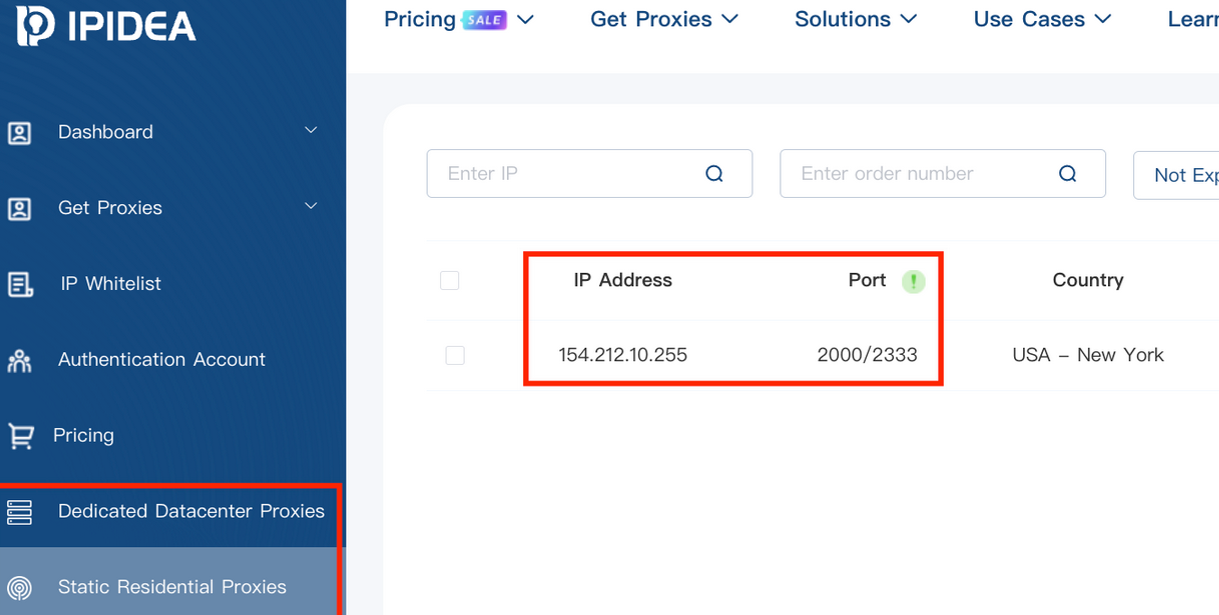
A screenshot of IPIDEA’s proxy service.
Kimwolf’s close association with residential proxy networks and compromised Android TV boxes might suggest we’d find relatively few infections on corporate networks. However, the security firm Infoblox said a recent review of its customer traffic found nearly 25 percent of them made a query to a Kimwolf-related domain name since October 1, 2025, when the botnet first showed signs of life.
Infoblox found the affected customers are based all over the world and in a wide range of industry verticals, from education and healthcare to government and finance.
“To be clear, this suggests that nearly 25% of customers had at least one device that was an endpoint in a residential proxy service targeted by Kimwolf operators,” Infoblox explained. “Such a device, maybe a phone or a laptop, was essentially co-opted by the threat actor to probe the local network for vulnerable devices. A query means a scan was made, not that new devices were compromised. Lateral movement would fail if there were no vulnerable devices to be found or if the DNS resolution was blocked.”
Synthient, a startup that tracks proxy services and was the first to disclose on January 2 the unique methods Kimwolf uses to spread, found proxy endpoints from IPIDEA were present in alarming numbers at government and academic institutions worldwide. Synthient said it spied at least 33,000 affected Internet addresses at universities and colleges, and nearly 8,000 IPIDEA proxies within various U.S. and foreign government networks.

The top 50 domain names sought out by users of IPIDEA’s residential proxy service, according to Synthient.
In a webinar on January 16, experts at the proxy tracking service Spur profiled Internet addresses associated with IPIDEA and 10 other proxy services that were thought to be vulnerable to Kimwolf’s tricks. Spur found residential proxies in nearly 300 government owned and operated networks, 318 utility companies, 166 healthcare companies or hospitals, and 141 companies in banking and finance.
“I looked at the 298 [government] owned and operated [networks], and so many of them were DoD [U.S. Department of Defense], which is kind of terrifying that DoD has IPIDEA and these other proxy services located inside of it,” Spur Co-Founder Riley Kilmer said. “I don’t know how these enterprises have these networks set up. It could be that [infected devices] are segregated on the network, that even if you had local access it doesn’t really mean much. However, it’s something to be aware of. If a device goes in, anything that device has access to the proxy would have access to.”
Kilmer said Kimwolf demonstrates how a single residential proxy infection can quickly lead to bigger problems for organizations that are harboring unsecured devices behind their firewalls, noting that proxy services present a potentially simple way for attackers to probe other devices on the local network of a targeted organization.
“If you know you have [proxy] infections that are located in a company, you can chose that [network] to come out of and then locally pivot,” Kilmer said. “If you have an idea of where to start or look, now you have a foothold in a company or an enterprise based on just that.”
This is the third story in our series on the Kimwolf botnet. Next week, we’ll shed light on the myriad China-based individuals and companies connected to the Badbox 2.0 botnet, the collective name given to a vast number of Android TV streaming box models that ship with no discernible security or authentication built-in, and with residential proxy malware pre-installed.
Further reading:
The Kimwolf Botnet is Stalking Your Local Network
Who Benefitted from the Aisuru and Kimwolf Botnets?
A Broken System Fueling Botnets (Synthient).
-
Trump Administration Orders USDA Employees to Investigate Foreign Colleagues
This story was originally published by ProPublica.
The Trump administration is directing employees at the U.S. Department of Agriculture to investigate foreign scientists who collaborate with the agency on research papers for evidence of “subversive or criminal activity.”
The new directive, part of a broader effort to increase scrutiny of research done with foreign partners, asks workers in the agency’s research arm to use Google to check the backgrounds of all foreign nationals collaborating with its scientists. The names of flagged scientists are being sent to national security experts at the agency, according to records reviewed by ProPublica.
At a meeting last month, USDA supervisors pushed back against the instructions, with one calling it “dystopic” and others expressing shock and confusion, according to an audio recording reviewed by ProPublica.
The USDA frequently collaborates with scientists based at universities in the U.S. and abroad. Some agency workers told ProPublica they were uncomfortable with the new requirement because they felt it could put those scientists in the crosshairs of the administration. Students and postdoctoral researchers are particularly vulnerable as many are in the U.S. on temporary visas and green cards, the employees said.
A “classic hallmark of authoritarianism.”
Jennifer Jones, director for the Center for Science and Democracy at the Union of Concerned Scientists, called the directive a “throwback to McCarthyism” that could encourage scientists to avoid working with the “best and brightest” researchers from around the world.
“Asking scientists to spy on and report on their fellow co-authors” is a “classic hallmark of authoritarianism,” Jones said. The Union of Concerned Scientists is an organization that advocates for scientific integrity.
Jones, who hadn’t heard of the instructions until contacted by ProPublica, said she had never witnessed policies so extreme during prior administrations or in her former career as an academic scientist.
The new policy applies to pending scientific publications co-authored by employees in the USDA’s Agricultural Research Service, which conducts research on crop yields, invasive species, plant genetics and other agricultural issues.
The USDA instructed employees to stop agency researchers from collaborating on or publishing papers with scientists from “countries of concern,” including China, Cuba, Iran, North Korea, Russia and Venezuela.
But the agency is also vetting scientists from nations not considered “countries of concern” before deciding whether USDA researchers can publish papers with them. Employees are including the names of foreign co-authors from nations such as Canada and Germany on lists shared with the department’s Office of Homeland Security, according to records reviewed by ProPublica. That office leads the USDA’s security initiatives and includes a division that works with federal intelligence agencies. The records don’t say what the office plans to do with the lists of names.
Asked about the changes, the USDA sent a statement noting that in his first term, President Donald Trump signed a memorandum designed to strengthen protections of U.S.-funded research across the federal government against foreign government interference. “USDA under the Biden Administration spent four years failing to implement this directive,” the statement said. The agency said Agriculture Secretary Brooke Rollins last year rolled out “long-needed changes within USDA’s research enterprise, including a prohibition on authoring a publication with a foreign national from a country of concern.”
International research has been essential to the Agricultural Research Service’s work, according to a page of the USDA website last updated in 2024: “From learning how to mitigate diseases before they reach the United States, to testing models and crops in diverse growing conditions, to accessing resources not available in the United States, cooperation with international partners provides solutions to current and future agricultural challenges.”
Still, the U.S. government has long been worried about agricultural researchers acting as spies, sometimes with good reason. In 2016, the Chinese scientist Mo Hailong was sentenced to three years in prison for conspiring to steal patented corn seeds. And in 2022, Xiang Haitao, admitted to stealing a trade secret from Monsanto.
“USDA under the Biden Administration spent four years failing to implement this directive.”
National security questions have also been raised about recent increases in foreign ownership of agricultural land. In 2022, Congress allocated money for a center to educate U.S. researchers about how to safeguard their data in international collaborations.
Since Trump took office last year, foreign researchers have faced increased obstacles. In March, a French researcher traveling to a conference was denied entry to the U.S. after a search of his phone at the airport turned up messages critical of Trump. The National Institutes of Health blocked researchers from China, Russia and other “countries of concern” from accessing various biomedical databases last spring. And in August, the Department of Homeland Security proposed shortening the length of time foreign students could remain in the country.
But the latest USDA instructions represent a significant escalation, casting suspicion on all researchers from outside the U.S. and asking agency staff to vet the foreign nationals they collaborate with. It’s unclear if employees at other federal agencies have been given similar directions.
The new USDA policy was announced internally in November and followed a July memo from Rollins that highlighted the national security risks of working with scientists who are not U.S. citizens.
“Foreign competitors benefit from USDA-funded projects, receiving loans that support overseas businesses, and grants that enable foreign competitors to undermine U.S. economic and strategic interests,” Rollins wrote in the memo. “Preventing this is the responsibility of every USDA employee.” The memo called for the department to “place America First” by taking a number of steps, including scrutinizing and making lists of the agency’s arrangements to work with foreign researchers and prohibiting USDA employees from participating in foreign programs to recruit scientists, “malign or otherwise.”
Rollins, a lawyer who studied agricultural development, co-founded the pro-Trump America First Policy Institute before being tapped to head the agency.
There have long been restrictions on collaborating with researchers from certain countries, such as Iran and China. But these new instructions create blanket bans on working with scientists from “countries of concern.”
In a late November email to staff members at one area office of the Agricultural Research Service, a research leader instructed managers to immediately stop all research with scientists who come from — or collaborate with institutions in — “countries of concern.”
The email also instructed employees to reject papers with foreign authors if they deal with “sensitive subjects” such as “diversity” or “climate change.” National security concerns were listed as another cause for rejection, with research service employees instructed to ask if a foreigner could use the research against American farmers.
In the audio recording of the December meeting, some employees expressed alarm about the instructions to investigate their fellow scientists. The “part of figuring out if they are foreign … by Googling is very dystopic,” said one person at the meeting, which involved leadership from the Agricultural Research Service.
Faced with questions about how to ascertain the citizenship of a co-author, another person at the meeting said researchers should do their best with a Google search, then put the name on the list “and let Homeland Security do their behind the scenes search.”
The USDA laid off 70 employees from “countries of concern” last summer.
Rollins’ July memo specifies that, within 60 days of receiving a list of “current arrangements” that involve foreign people or entities, the USDA’s Office of Homeland Security along with its offices of Chief Scientist and General Counsel should decide which arrangements to terminate. The USDA laid off 70 employees from “countries of concern” last summer as a result of the policy change laid out in the memo, NPR reported.
The USDA and Department of Homeland Security declined to answer questions about what happens to the foreign researchers flagged by the staff beyond potentially having their research papers rejected.
The documents also suggested new guidance would be issued on Jan. 1, but the USDA employees ProPublica interviewed said that the vetting work was continuing and that they had not received any written updates. The staff members spoke on the condition of anonymity because they weren’t authorized to talk publicly.
Scientists are often evaluated based on their output of new scientific research. Delaying or denying publication of pending papers could derail a researcher’s career. Over the past 40 years, the number of international collaborations among scientists has increased across the board, according to Caroline Wagner, an emeritus professor of public policy at Ohio State University. “The more elite the researcher, the more likely they’re working at the international level,” said Wagner, who has spent more than 25 years researching international collaboration in science and technology.
The changes in how the USDA is approaching collaboration with foreign researchers, she said, “will certainly reduce the novelty, the innovative nature of science and decrease these flows of knowledge that have been extremely productive for science over the last years.”
Mica Rosenberg contributed reporting. Adriana Pera contributed research.
The post Trump Administration Orders USDA Employees to Investigate Foreign Colleagues appeared first on Truthdig.
-
Pluralistic: AI is how bosses wage war on “professions” (20 Jan 2026)
Today’s links
- AI is how bosses wage war on “professions”: The only people *required* to tell their bosses to fuck off.
- Hey look at this: Delights to delectate.
- Object permanence: Enshittification v VC; Byrne v DRM; Forger does it for the exposure; Beach trash hotel; Mafia nicknames; Longbow puzzle; NIMBYs; No one should be on the No-Fly list.
- Upcoming appearances: Where to find me.
- Recent appearances: Where I’ve been.
- Latest books: You keep readin’ em, I’ll keep writin’ ’em.
- Upcoming books: Like I said, I’ll keep writin’ ’em.
- Colophon: All the rest.
AI is how bosses wage war on “professions” (permalink)
Growing up, I assumed that being a “professional” meant that you were getting paid to do something. That’s a perfectly valid definition (I still remember feeling like a “pro” the first time I got paid for my writing), but “professional” has another, far more important definition.
In this other sense of the word, a “professional” is someone bound to a code of conduct that supersedes both the demands of their employer and the demands of the state. Think of a doctor’s Hippocratic Oath: having sworn to “first do no harm,” a doctor is (literally) duty-bound to refuse orders to harm their patients. If a hospital administrator, a police officer or a judge orders a doctor to harm their patient, they are supposed to refuse. Indeed, depending on how you feel about oaths, they are required to refuse.
There are many “professions” bound to codes of conduct, policed to a greater or lesser extent by “colleges” or other professional associations, many of which have the power to bar a member from the profession for “professional misconduct.” Think of lawyers, accountants, medical professionals, librarians, teachers, some engineers, etc.
While all of these fields are very different in terms of the work they do, they share one important trait: they are all fields that AI bros swear will be replaced by chatbots in the near future.
I find this an interesting phenomenon. It’s clear to me that chatbots can’t do these jobs. Sure, there are instances in which professionals may choose to make use of some AI tools, and I’m happy to stipulate that when a skilled professional chooses to use AI as an adjunct to their work, it might go well. This is in keeping with my theory that to the extent that AI is useful, it’s when its user is a centaur (a person assisted by technology), but that employers dream of making AI’s users into reverse centaurs (machines who are assisted by people):
https://pluralistic.net/2025/12/05/pop-that-bubble/#u-washington
A psychotherapist who uses AI to transcribe sessions so they can refresh their memory about an exact phrase while they’re making notes is a centaur. A psychotherapist who monitors 20 chat sessions with LLM “therapists” in order to intervene if the LLM starts telling patients to kill themselves is a “reverse centaur.” This situation makes it impossible for them to truly help “their” patients; they are an “accountability sink,” installed to absorb the blame when a patient is harmed by the AI.
Lawyers might use a chatbot to help them format a brief or transcribe a client meeting (centaur)- but when senior partners require their juniors and paralegals to write briefs at inhuman speed (reverse centaur), they are setting themselves up for briefs full of “hallucinated” citations:
https://www.damiencharlotin.com/hallucinations/
I hold a bedrock view that even though an AI can’t do your job, an AI salesman can convince your boss to fire you and replace you with an AI that can’t do your job:
https://pluralistic.net/2025/03/18/asbestos-in-the-walls/#government-by-spicy-autocomplete
But why are bosses such easy marks for these gabby AI hustlers? Partly, it’s because an AI can probably do your boss’s job – if 90% of your job is answering email and delegating tasks, and if you are richly rewarded for success but get to blame failure on your underlings, then, yeah, an AI can totally do that job.
But I think there’s an important psychological dimension to this: bosses are especially easy to trick with AI when they’re being asked to believe that they can use AI to fire workers who are in a position to tell them to fuck off.
That certainly explains why bosses are so thrilled by the prospect of swapping professionals for chatbots. What a relief it would be to fire everyone who is professionally required to tell you to fuck off when you want them to do stupid and/or dangerous things; so you could replace them with servile, groveling LLMs that punctuate their sentences with hymns to your vision and brilliance!
This also explains why media bosses are so anxious to fire screenwriters and actors and replace them with AI. After all, you prompt an LLM in exactly the same way a clueless studio boss gives notes to a writers’ room: “Give me ET, but make it about a dog, give it a love interest, and put a car chase in Act III.” The difference is that the writers will call you a clueless fucking suit and demand that you go back to your spreadsheets and stop bothering them while they’re trying to make a movie, whereas the chatbot will cheerfully shit out a (terrible) script to spec. The fact that the script will suck is less important than the fact that swapping writers for LLMs will let studio bosses escape ego-shattering conflicts with empowered workers who actually know how to do things.
It also explains why bosses are so anxious to replace programmers with chatbots. When programmers were scarce and valuable, they had to be lured into employment with luxurious benefits, lavish pay, and a collegial relationship with their bosses, where everyone was “just an engineer.” Tech companies had business-wide engineering meetings where techies were allowed to tell their bosses that they thought their technical and business strategies were stupid.
Now that tech worker supply has caught up with demand, bosses are relishing the thought of firing these “entitled” coders and replacing them with chatbots overseen by traumatized reverse centaurs who will never, ever tell them to fuck off:
https://pluralistic.net/2025/08/05/ex-princes-of-labor/#hyper-criti-hype
And of course, this explains why bosses are so eager to use AI to replace workers who might unionize: drivers, factory workers, warehouse workers. For what is a union if not an institution that lets you tell your boss to fuck off?
https://www.thewrap.com/conde-nast-fires-union-staffers-video/
AI salesmen may be slick, but they’re not that slick. Bosses are easy marks for anyone who dangles the promise of a world where everyone – human and machine – follows orders to the letter, and praises you for giving them such clever, clever orders.
(Image: Christoph Scholz; CC BY-SA 2.0; Cryteria, CC BY 3.0; modified)
Hey look at this (permalink)

- Giving University Exams in the Age of Chatbots https://ploum.net/2026-01-19-exam-with-chatbots.html
-
Vein Finder Demonstration https://www.youtube.com/watch?v=NS68ePykav0
-
Author of ‘Don’t Say Abolish ICE’ Memo Is a Corporate Consultant
https://prospect.org/2026/01/19/author-dont-say-abolish-ice-memo-corporate-consultant-westexec/ -
Experiment suggests AI chatbot would save insurance agents a whopping 3 minutes a day https://www.theregister.com/2026/01/16/axlerod_ai_saves_insurance_agents_time/
-
IMF Warns Global Economic Resilience at Risk if AI Falters https://slashdot.org/story/26/01/19/1423221/imf-warns-global-economic-resilience-at-risk-if-ai-falters
Object permanence (permalink)
#20yrsago Broadcast Flag is back, this time it covers iPods and PSPs, too https://memex.craphound.com/2006/01/20/broadcast-flag-is-back-this-time-it-covers-ipods-and-psps-too/
#20yrsago Nonprofit alternative to CDDB gets its first deal https://web.archive.org/web/20060128114433/http://blog.musicbrainz.org/archives/2006/01/introducing_lin_1.html
#20yrsago David Byrne: boycott DRM https://web.archive.org/web/20060117084842/http://journal.davidbyrne.com/
#20yrsago Cozy blanket with sleeves: the Slanket https://web.archive.org/web/20060203040004/https://www.theslanket.com/
#15yrsago Safe-cracking robot autodials combinations to brute-force a high-security safe https://web.archive.org/web/20110709082726/http://www.kvogt.com/autodialer/
#15yrsago Forger never takes money, only wants to see his works hanging in galleries https://www.nytimes.com/2011/01/12/arts/design/12fraud.html
#15yrsago Hotel made of beach trash in Madrid https://www.smh.com.au/traveller/travel-news/new-hotel-is-complete-rubbish-20110120-19xjl.html
#15yrsago Enfield, CT cancels screening of Moore’s Sicko after pressure from local gov’t https://web.archive.org/web/20110123033350/http://web.resourceshelf.com/go/resourceblog/63420
#15yrsago Best mafiosi nicknames from today’s historic bust https://web.archive.org/web/20110126120419/https://blogs.villagevoice.com/runninscared/2011/01/the_20_best_nic.php
#10yrsago Very sad news about science fiction titan David G Hartwell https://memex.craphound.com/2016/01/20/very-sad-news-about-science-fiction-titan-david-g-hartwell/
#10yrsago Solving the “Longbow Puzzle”: why did France and Scotland keep their inferior crossbows? https://www.journals.uchicago.edu/doi/abs/10.1086/684231
#10yrsago Netflix demands Net Neutrality, but makes an exception for T-Mobile https://www.theverge.com/2016/1/19/10794288/netflix-t-mobile-binge-on-net-neutrality-zero-rating
#10yrsago Research: increased resident participation in city planning produces extreme wealth segregation https://arstechnica.com/tech-policy/2016/01/data-analysis-reveals-that-us-cities-are-segregating-the-wealthy/
#10yrsago Independent economists: TPP will kill 450,000 US jobs; 75,000 Japanese jobs, 58,000 Canadian jobs https://www.techdirt.com/2016/01/19/more-realistic-modelling-tpps-effects-predicts-450000-us-jobs-lost-gdp-contraction/
#10yrsago Howto: make your own fantastically detailed Star Trek: TOS bridge playset https://www.instructables.com/Star-Trek-Enterprise-Bridge-Playset/
#10yrsago Strategic butt coverings in video games https://www.youtube.com/watch?v=ujTufg1GvR4
#10yrsago Company that pampers rich people at Burning Man won’t give up https://memex.craphound.com/2016/01/20/company-that-pampers-rich-people-at-burning-man-wont-give-up/
#5yrsago No one should be on the No-Fly List https://pluralistic.net/2021/01/20/damn-the-shrub/#no-nofly
#5yrsago My letter to the FBI https://pluralistic.net/2021/01/20/damn-the-shrub/#foia
#1yrago Enshittification isn’t caused by venture capital https://pluralistic.net/2025/01/20/capitalist-unrealism/#praxis
#1yrago Keir Starmer appoints Jeff Bezos as his “first buddy” https://pluralistic.net/2025/01/22/autocrats-of-trade/#dingo-babysitter
Upcoming appearances (permalink)

- Denver: Enshittification at Tattered Cover Colfax, Jan 22
https://www.eventbrite.com/e/cory-doctorow-live-at-tattered-cover-colfax-tickets-1976644174937 -
Colorado Springs: Guest of Honor at COSine, Jan 23-25
https://www.firstfridayfandom.org/cosine/ -
Ottawa: Enshittification at Perfect Books, Jan 28
https://www.instagram.com/p/DS2nGiHiNUh/ -
Toronto: Enshittification and the Age of Extraction with Tim Wu, Jan 30
https://nowtoronto.com/event/cory-doctorow-and-tim-wu-enshittification-and-extraction/ -
Victoria: 28th Annual Victoria International Privacy & Security Summit, Mar 3-5
https://www.rebootcommunications.com/event/vipss2026/ -
Berlin: Re:publica, May 18-20
https://re-publica.com/de/news/rp26-sprecher-cory-doctorow -
Berlin: Enshittification at Otherland Books, May 19
https://www.otherland-berlin.de/de/event-details/cory-doctorow.html -
Hay-on-Wye: HowTheLightGetsIn, May 22-25
https://howthelightgetsin.org/festivals/hay/big-ideas-2
Recent appearances (permalink)
- Why Big Tech is a Trap for Independent Creators (Stripper News)
https://www.youtube.com/watch?v=nmYDyz8AMZ0 -
Enshittification (Creative Nonfiction podcast)
https://brendanomeara.com/episode-507-enshittification-author-cory-doctorow-believes-in-a-new-good-internet/ -
A post-American, enshittification-resistant internet (39c3)
https://media.ccc.de/v/39c3-a-post-american-enshittification-resistant-internet -
Enshittification with Plutopia
https://plutopia.io/cory-doctorow-enshittification/ -
“can’t make Big Tech better; make them less powerful” (Get Subversive)
https://www.youtube.com/watch?v=X1EzM9_6eLE
Latest books (permalink)
- “Canny Valley”: A limited edition collection of the collages I create for Pluralistic, self-published, September 2025
-
“Enshittification: Why Everything Suddenly Got Worse and What to Do About It,” Farrar, Straus, Giroux, October 7 2025
https://us.macmillan.com/books/9780374619329/enshittification/ -
“Picks and Shovels”: a sequel to “Red Team Blues,” about the heroic era of the PC, Tor Books (US), Head of Zeus (UK), February 2025 (https://us.macmillan.com/books/9781250865908/picksandshovels).
-
“The Bezzle”: a sequel to “Red Team Blues,” about prison-tech and other grifts, Tor Books (US), Head of Zeus (UK), February 2024 (thebezzle.org).
-
“The Lost Cause:” a solarpunk novel of hope in the climate emergency, Tor Books (US), Head of Zeus (UK), November 2023 (http://lost-cause.org).
-
“The Internet Con”: A nonfiction book about interoperability and Big Tech (Verso) September 2023 (http://seizethemeansofcomputation.org). Signed copies at Book Soup (https://www.booksoup.com/book/9781804291245).
-
“Red Team Blues”: “A grabby, compulsive thriller that will leave you knowing more about how the world works than you did before.” Tor Books http://redteamblues.com.
-
“Chokepoint Capitalism: How to Beat Big Tech, Tame Big Content, and Get Artists Paid, with Rebecca Giblin”, on how to unrig the markets for creative labor, Beacon Press/Scribe 2022 https://chokepointcapitalism.com
Upcoming books (permalink)
- “Unauthorized Bread”: a middle-grades graphic novel adapted from my novella about refugees, toasters and DRM, FirstSecond, 2026
-
“Enshittification, Why Everything Suddenly Got Worse and What to Do About It” (the graphic novel), Firstsecond, 2026
-
“The Memex Method,” Farrar, Straus, Giroux, 2026
-
“The Reverse-Centaur’s Guide to AI,” a short book about being a better AI critic, Farrar, Straus and Giroux, June 2026
Colophon (permalink)
Today’s top sources:
Currently writing: “The Post-American Internet,” a sequel to “Enshittification,” about the better world the rest of us get to have now that Trump has torched America (1002 words today, 10352 total)
- “The Reverse Centaur’s Guide to AI,” a short book for Farrar, Straus and Giroux about being an effective AI critic. LEGAL REVIEW AND COPYEDIT COMPLETE.
-
“The Post-American Internet,” a short book about internet policy in the age of Trumpism. PLANNING.
-
A Little Brother short story about DIY insulin PLANNING

This work – excluding any serialized fiction – is licensed under a Creative Commons Attribution 4.0 license. That means you can use it any way you like, including commercially, provided that you attribute it to me, Cory Doctorow, and include a link to pluralistic.net.
https://creativecommons.org/licenses/by/4.0/
Quotations and images are not included in this license; they are included either under a limitation or exception to copyright, or on the basis of a separate license. Please exercise caution.
How to get Pluralistic:
Blog (no ads, tracking, or data-collection):
Newsletter (no ads, tracking, or data-collection):
https://pluralistic.net/plura-list
Mastodon (no ads, tracking, or data-collection):
Medium (no ads, paywalled):
Twitter (mass-scale, unrestricted, third-party surveillance and advertising):
Tumblr (mass-scale, unrestricted, third-party surveillance and advertising):
https://mostlysignssomeportents.tumblr.com/tagged/pluralistic
“When life gives you SARS, you make sarsaparilla” -Joey “Accordion Guy” DeVilla
READ CAREFULLY: By reading this, you agree, on behalf of your employer, to release me from all obligations and waivers arising from any and all NON-NEGOTIATED agreements, licenses, terms-of-service, shrinkwrap, clickwrap, browsewrap, confidentiality, non-disclosure, non-compete and acceptable use policies (“BOGUS AGREEMENTS”) that I have entered into with your employer, its partners, licensors, agents and assigns, in perpetuity, without prejudice to my ongoing rights and privileges. You further represent that you have the authority to release me from any BOGUS AGREEMENTS on behalf of your employer.
ISSN: 3066-764X
-
Pet Acupuncture and Life
Traditional Inuit whale acupuncture.
The post Pet Acupuncture and Life first appeared on Science-Based Medicine.
-
NHS staff to train teachers, school nurses, and GPs to spot eating disorders
Teachers, school nurses, and GPs will be offered NHS support to spot the early signs of eating disorders, so no child is left to ‘suffer in silence’. The NHS has overhauled eating disorder services in response to rising demand with the number of children and young people treated rising two fifths since the pandemic (from […]


.png)
