Author: tio
-
Canadian from hantavirus-hit cruise ship tests positive
The individual is one of four former passengers on the MV Hondius isolating on Vancouver Island, British Columbia. -
Turning silence into stories: Cambodian activist amplifies LGBTQI+ youth voices
Cambodian activist Panha Theng, a 2025 UN Young Leader for the Sustainable Development Goals, says visibility and safe spaces remain critical for LGBTQI+ youth across Southeast Asia amid continuing stigma and discrimination. -
Pluralistic: Making sense of Trump’s unscheduled sudden midair disassembly of the American empire (16 May 2026)
Today’s links
- Making sense of Trump’s unscheduled sudden midair disassembly of the American empire: Don’t mistake “powerful” for “durable.”
- Hey look at this: Delights to delectate.
- Object permanence: Copyrighted law; Viral videos v cops; Crooked banker v tiny bat; “Infested”; Can the means of computation be seized?
- Upcoming appearances: Berlin, Hay-on-Wye, London, LA, Menlo Park, NYC, Edinburgh.
- Recent appearances: Where I’ve been.
- Latest books: You keep readin’ em, I’ll keep writin’ ’em.
- Upcoming books: Like I said, I’ll keep writin’ ’em.
- Colophon: All the rest.
Making sense of Trump’s unscheduled sudden midair disassembly of the American empire (permalink)
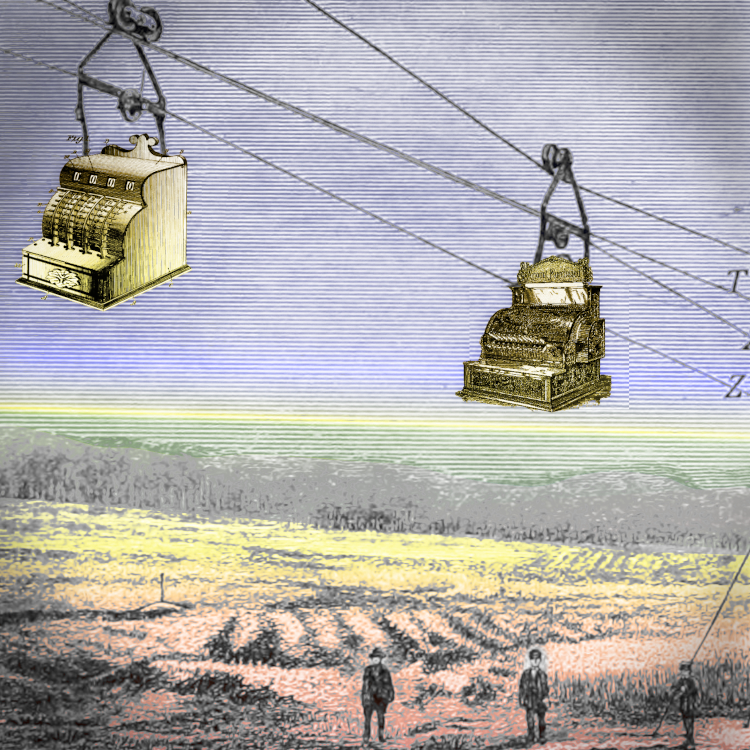
For generations, the American empire was the most powerful force on earth, and so we tended to assume that it was the most durable force on earth – surely anything so powerful must also be eternal?
But power and durability aren’t the same thing, as Le Guin reminded us with her oft-quoted maxim that “We live in capitalism, its power seems inescapable — but then, so did the divine right of kings”:
https://www.ursulakleguin.com/nbf-medal
Monarchs may be powerful, but that power is derived from a manifestly incorrect belief in special blood, a belief that requires monarchs to inbreed. At best, this produces heads of state who can’t stop bleeding and also can’t tell you if their blood is blue or red; at worst, it yields heads of state who can’t speak intelligibly, much less produce another generation of royals:
https://en.wikipedia.org/wiki/Charles_II_of_Spain
Oligarchy also produces a sequence of progressively weirder and more terrible rulers who rely on a mix of lies, flattery, coercion and personal cult nonsense to hold their coalition together in the face of mounting evidence for the system’s bankruptcy. Thus Reagan begat GW Bush, who begat Trump, whose potential successors are a kennel of the least-charismatic chud podcasters ever to curse an RSS feed.
Trump’s second term has resulted in a rapid, unscheduled, mid-air disassembly of the American empire. As Baldur Bjarnason writes, under Trump, America “first turned on their trading partners, then their allies in Europe, and then they delivered one of this century’s biggest economic and energy crises to their allies in Asia”:
https://www.baldurbjarnason.com/2026/the-old-world-of-tech-is-dying/
The line comes from an excellent post entitled “The old world of tech is dying and the new cannot be born,” about the impact of Trump’s de-Americanization of the world on the US tech industry, and thus the world’s relationship to tech more broadly. As Bjarnason writes, Trump’s tech giants dominate the world because America dominates the world. It’s not because the world likes American tech. As Bjarnason writes:
They are, more often than not, about as popular and respected as tobacco or pharmaceutical companies – some of them and their products are polling in terms of public sentiment in ranges similar to child molesters or authoritarian immigration enforcement entities – and their CEOs are some of the more despised public figures in recent history.
These very, very unpopular tech companies dominate because American trade policy insists that they must. They are allowed to violate local laws because stopping them from doing so would result in trade sanctions. It’s true that US tech companies face fines abroad from time to time, but these are “the price list for inflicting societal suffering. Pick the one that suits your business model.” US trading partners haven’t really attempted to extinguish the unlawful conduct of US tech companies.
All of that is up for grabs now, thanks to Trump’s uncontrollable compulsion to repeatedly hormuz himself (and America) in the foot. But – as Bjarnason writes – this didn’t start with Trump. As ever, Trump is as much an effect as a cause, and the most important cause of Trump is the conversion of America into a financial economy, which started under Reagan, but was only finalized by Obama, who let the Wall Street looters who destroyed the world economy walk away unscathed, even as they stole the homes of millions of Americans:
Financial economies “suck the air out of the rest of the economy and make it less competitive.” Keeping billionaires in megayachts comes at the expense of “research, education, infrastructure, and healthcare.” Countries that financialize lag behind countries where the economy is based on making things, not extracting or financing things.
Generations of both imperial looting and domestic investment made America the richest country on earth. That wealth cushioned America’s transition to oligarchy: for a while, the country could both “finance and billionaire parasites sucking its blood” and continue to invest in itself. But while you can double the wealth of a billionaire at the expense of a town or two, doubling the wealth of a centibillionaire requires the destruction of whole regions.
As America looted itself into irrelevance, China – a very different kind of autocracy – invested in domestic capacity and domestic consumption. China’s hardly a well-run place: like any autocracy, it functions according to the whims of extremely fallible officials, which produces real-estate bubbles and other crises of production (to say nothing of the demographic crisis of the One Child policy) and necessitates steadily increasing oppression, from online surveillance to concentration camps in Xinjiang.
Bjarnason writes about how this Chinese/US world presents a “double bind” for the EU. Siding with the US is increasingly untenable: the EU exists in large part to promote its domestic industries, but the US is no longer content to leave these alone. As Bjarnason says, US economic policy is now, “whatever our oligarchs want to steal this month, they get.”
US tech has extended so many tendrils into so many sectors that it’s not possible to defend any industrial sector without impinging on the “technopoly,” where “the only ideas and thoughts that have social and cultural legitimacy are those that support, are supported by, and are mediated through technology.”
This means that continuing to work within the American system means a steady transfer of economic and political control of every aspect of your life to the US, a decaying empire ruled over by a mad king. Nevertheless, there is a strong, vestigial reflex to protect American tech in the EU, which leaves European power-brokers scrambling to come up with reasons that the EU should confine its tech regulation to empty symbolic gestures, while avoiding meaningful action at all costs:
But the American tech sector relies on the other sources of American power – the ones that Trump is so bent on destroying. Trump’s de-dollarization of the world economy is pushing the world away from using American tech for payment processing and networking. The American empire created the form of the US tech sector. As Bjarnason writes, “without the weight of the US political empire behind it – if Airbnb or Uber had been local startups – much fewer countries in the world would have loosened their regulations and consumer protections to accommodate them to the point where they prospered as they did.”
Trump isn’t the first US leader to make a strategic blunder (the US has lost every war it’s fought since WWII, after all). But Trump’s blunders are different in that they “deliberately signal the end [the US] empire.” Hormuz and tariffs have driven people away from the US dollar, and everyone knows who to blame for the senseless deaths in the Gulf and the global privation caused by oil rationing.
That’s bad news for a software industry that “shifted its entire value proposition from ‘we make tools that help you make or save money’ to using political clout and the dollar hegemony to capture, control, and loot entire sectors of the various economies of the world. That strategy only works when you’re in charge.”
DOGE wiped out the health systems of the global south, and now Trump’s trade negotiators are demanding that these countries promise to keep their hands off of US tech in exchange for reinstating a small trickle of the aid they lost. These countries are rejecting those demands:
It’s all up for grabs, in other words. The post-American internet is being born in a post-American world, and the shape of both is impossible to determine from this side of the veil. Bjarnason quotes Gramsci: “the old is dying and the new cannot be born.”
I hold out high hopes for a world of international digital public goods: free and open software that replaces America’s extractive, defective black boxes with transparent, auditable, trustworthy alternatives that are under the control of the people who use them:
https://pluralistic.net/2026/04/16/pascals-wager/#doomer-challenge
But – as Bjarnason says – even the intellectual property framework that the free/open source movement relies on to make its licenses enforceable is an artifact of the collapsing American empire. If the global copyright system collapses with America, there won’t be any impediments to reverse-engineering and improving the tech around us – but there also won’t be any way to enforce the free software licenses that keep that software open:
https://pluralistic.net/2026/04/02/limited-monopoly/#petardism
The whole essay is very good and – like so many great essays – it raises more questions than it answers. It’s also full of standout one-liners like this one:
How do LLMs affect productivity and quality? (Much like leaded petrol. There’s some potential benefit for individual users with literally decades of expertise, provided nobody else uses LLMs. The results are catastrophic when everybody is using them.)
Consider moving it to the top of your weekend reading.
Hey look at this (permalink)

- Your Power Tools Got Worse On Purpose https://www.worseonpurpose.com/p/your-power-tools-got-worse-on-purpose
-
The privilege of bad writers https://coreyrobin.com/2026/05/15/the-privilege-of-bad-writers/
-
AI as the new avatar of American capitalism https://www.bloodinthemachine.com/p/ai-as-the-new-avatar-of-american
-
Cucked Internet Theory https://www.tikviewer.com/video/7639554103340698912
-
Bill to block publishers from killing online games advances in California https://arstechnica.com/gaming/2026/05/bill-to-keep-online-games-playable-clears-key-hurdle-in-california/
Object permanence (permalink)
#25yrsago Is the law copyrighted?
https://web.archive.org/web/20010519134232/http://www.uniontrib.com/news/uniontrib/sun/news/news_1n13own.html#15yrsago Canadian copyright collective wants a music tax on memory cards https://web.archive.org/web/20110517205114/https://www.michaelgeist.ca/content/view/5798/125/
#10yrsago FBI Director: viral videos make cops afraid to do their jobs https://www.nytimes.com/2016/05/12/us/comey-ferguson-effect-police-videos-fbi.html?_r=2
#10yrsago Banker implicated in one of history’s biggest frauds says boss beat him with a tiny baseball bat https://web.archive.org/web/20160516173952/http://www.ibtimes.co.uk/barclays-banker-accused-rigging-libor-rate-hit-assistant-baseball-bat-1559792
#10yrsago Infested: an itchy, fascinating natural history of the bed bug https://memex.craphound.com/2016/05/14/infested-an-itchy-fascinating-natural-history-of-the-bed-bug/
#5yrsago A weapon of mass financial destruction https://pluralistic.net/2021/05/14/billionaire-class-solidarity/#club-deals
#1yrago Are the means of computation even seizable? https://pluralistic.net/2025/05/14/pregnable/#checkm8
Upcoming appearances (permalink)

- Berlin: Re:publica, May 18-20
https://re-publica.com/de/news/rp26-sprecher-cory-doctorow -
Berlin: Enshittification at Otherland Books, May 18
https://www.otherland-berlin.de/de/event-details/cory-doctorow-in-der-friesenstrasse-23-kreuzberg-praesentiert-von-otherland.html -
Berlin: Enshittification at Otherland Books, May 19
https://www.otherland-berlin.de/de/event-details/cory-doctorow.html -
Hay-on-Wye: HowTheLightGetsIn, May 22-25
https://howthelightgetsin.org/festivals/hay/big-ideas-2 -
SXSW London, Jun 2
https://www.sxswlondon.com/session/how-big-tech-broke-the-internet-b3c4a901 -
LA: The Reverse Centaur’s Guide to Life After AI with Brian Merchant (Skylight Books), Jun 19
https://www.skylightbooks.com/event/skylight-cory-doctorow-presents-reverse-centaurs-guide-life-after-ai-w-brian-merchant -
Menlo Park: The Reverse Centaur’s Guide to Life After AI with Angie Coiro (Kepler’s), Jun 21
https://www.keplers.org/upcoming-events-internal/cory-doctorow-2026 -
NYC: The Reverse Centaur’s Guide to Life After AI with Jonathan Coulton (The Strand), Jun 24
https://www.strandbooks.com/cory-doctorow-the-reverse-centaur-s-guide-to-life-after-ai.html -
Edinburgh International Book Festival with Jimmy Wales, Aug 17
https://www.edbookfest.co.uk/events/the-front-list-cory-doctorow-and-jimmy-wales
Recent appearances (permalink)
- EFFecting Change: How to Disenshittify the Internet (EFF, with Wendy Liu)
https://archive.org/details/effecting-change-enshittification -
The “Enshittification” of Everything (Bioneers)
https://bioneers.org/cory-doctorow-enshittification-of-everything-zstf2605/ -
Enshittification (99% Invisible)
https://99percentinvisible.org/episode/666-enshittification/ -
Artificial Intelligence: The Ultimate Disruptor, with Astra Taylor and Yoshua Bengio (CBC Ideas)
https://www.cbc.ca/listen/live-radio/1-23-ideas/clip/16210039-artificial-intelligence-the-ultimate-disruptor -
When Do Platforms Stop Innovating and Start Extracting? (InnovEU)
https://www.youtube.com/watch?v=cccDR0YaMt8
Latest books (permalink)
- “Canny Valley”: A limited edition collection of the collages I create for Pluralistic, self-published, September 2025 https://pluralistic.net/2025/09/04/illustrious/#chairman-bruce
-
“Enshittification: Why Everything Suddenly Got Worse and What to Do About It,” Farrar, Straus, Giroux, October 7 2025
https://us.macmillan.com/books/9780374619329/enshittification/ -
“Picks and Shovels”: a sequel to “Red Team Blues,” about the heroic era of the PC, Tor Books (US), Head of Zeus (UK), February 2025 (https://us.macmillan.com/books/9781250865908/picksandshovels).
-
“The Bezzle”: a sequel to “Red Team Blues,” about prison-tech and other grifts, Tor Books (US), Head of Zeus (UK), February 2024 (thebezzle.org).
-
“The Lost Cause:” a solarpunk novel of hope in the climate emergency, Tor Books (US), Head of Zeus (UK), November 2023 (http://lost-cause.org).
-
“The Internet Con”: A nonfiction book about interoperability and Big Tech (Verso) September 2023 (http://seizethemeansofcomputation.org). Signed copies at Book Soup (https://www.booksoup.com/book/9781804291245).
-
“Red Team Blues”: “A grabby, compulsive thriller that will leave you knowing more about how the world works than you did before.” Tor Books http://redteamblues.com.
-
“Chokepoint Capitalism: How to Beat Big Tech, Tame Big Content, and Get Artists Paid, with Rebecca Giblin”, on how to unrig the markets for creative labor, Beacon Press/Scribe 2022 https://chokepointcapitalism.com
Upcoming books (permalink)
- “The Reverse-Centaur’s Guide to AI,” a short book about being a better AI critic, Farrar, Straus and Giroux, June 2026 (https://us.macmillan.com/books/9780374621568/thereversecentaursguidetolifeafterai/)
-
“Enshittification, Why Everything Suddenly Got Worse and What to Do About It” (the graphic novel), Firstsecond, 2026
-
“The Post-American Internet,” a geopolitical sequel of sorts to Enshittification, Farrar, Straus and Giroux, 2027
-
“Unauthorized Bread”: a middle-grades graphic novel adapted from my novella about refugees, toasters and DRM, FirstSecond, April 20, 2027
-
“The Memex Method,” Farrar, Straus, Giroux, 2027
Colophon (permalink)
Today’s top sources:
Currently writing: “The Post-American Internet,” a sequel to “Enshittification,” about the better world the rest of us get to have now that Trump has torched America. Third draft completed. Submitted to editor.
- “The Reverse Centaur’s Guide to AI,” a short book for Farrar, Straus and Giroux about being an effective AI critic. LEGAL REVIEW AND COPYEDIT COMPLETE.
-
“The Post-American Internet,” a short book about internet policy in the age of Trumpism. PLANNING.
-
A Little Brother short story about DIY insulin PLANNING

This work – excluding any serialized fiction – is licensed under a Creative Commons Attribution 4.0 license. That means you can use it any way you like, including commercially, provided that you attribute it to me, Cory Doctorow, and include a link to pluralistic.net.
https://creativecommons.org/licenses/by/4.0/
Quotations and images are not included in this license; they are included either under a limitation or exception to copyright, or on the basis of a separate license. Please exercise caution.
How to get Pluralistic:
Blog (no ads, tracking, or data-collection):
Newsletter (no ads, tracking, or data-collection):
https://pluralistic.net/plura-list
Mastodon (no ads, tracking, or data-collection):
Bluesky (no ads, possible tracking and data-collection):
https://bsky.app/profile/doctorow.pluralistic.net
Medium (no ads, paywalled):
Tumblr (mass-scale, unrestricted, third-party surveillance and advertising):
https://mostlysignssomeportents.tumblr.com/tagged/pluralistic
“When life gives you SARS, you make sarsaparilla” -Joey “Accordion Guy” DeVilla
READ CAREFULLY: By reading this, you agree, on behalf of your employer, to release me from all obligations and waivers arising from any and all NON-NEGOTIATED agreements, licenses, terms-of-service, shrinkwrap, clickwrap, browsewrap, confidentiality, non-disclosure, non-compete and acceptable use policies (“BOGUS AGREEMENTS”) that I have entered into with your employer, its partners, licensors, agents and assigns, in perpetuity, without prejudice to my ongoing rights and privileges. You further represent that you have the authority to release me from any BOGUS AGREEMENTS on behalf of your employer.
ISSN: 3066-764X
-

The Album the British Government Doesn’t Want You to Hear
A new album from Kneecap, at this point, is like a brick thrown through the window of the international music charts. Ever since they put up a “FUCK ISRAEL, FREE PALESTINE” banner at last year’s Coachella music festival, the politically-charged Irish rap group has been at the center of an ever-escalating hailstorm of controversy. Frontman Mo Chara (government name Liam Óg Ó hAnnaidh) faced terrorism charges for an incident where he allegedly waved a Hezbollah flag a fan threw at him onstage, then beat the case in court. Prime Minister Keir Starmer, in between rounds of cutting people’s disability benefits, called Kneecap’s politics “completely intolerable.” The governments of Canada and Hungary have both banned the group from entering their countries, and they’ve lost their U.S. visa sponsor, making it impossible for them to tour in the States for the time being. Sharon Osbourne called for them to be banned from the stage at Glastonbury, and even the once-great punk rocker Johnny Rotten of the Sex Pistols has deemed them “my enemy.” This March, Kneecap came under attack yet again from U.S. Representative Maria Salazar, this time for visiting and performing in Cuba, a trip we covered in this magazine. Their music has become a focal point for the broader, world-spanning fight over colonialism and resistance, and exactly what forms of political expression are and aren’t acceptable.

-

Forty-two Days on a Finnish Psychiatric Ward
Editor’s note: This blog has been published by Mad in Finland followed by an English translation on Mad in America
I went insane on my 34th birthday in November 2012. I was living and working in Brussels, Belgium, at the time. It wasn’t until eight days later that my father managed to bring me back to Finland. (Before that a lot had already happened, nothing violent though.)
This excerpt is from the end of my 135-page-long story “Yesmad Journey” (originally published in Finnish on Mad in Finland). It starts after I had escaped from my father’s custody and spent a night at a “magic villa.” Some time after leaving said villa, I am finally “caught” and taken to a mental hospital.

Photo by Miro Sulkumäki Eleventh Day
A police car drives behind me from the left and stops in front of me. One police officer jumps out of the car and asks: “Hi fellow, what are you doing here with so few clothes?” I answer: “I do have this magic cape,” referring to my bed cover. I feel calm and let them put me in the back of the police car. While waiting for an ambulance, the police officers check at least twice how I am doing. I look and admire the various and different colour lights on the police car’s dashboard.
Then I am lying on a stretcher inside an ambulance. I have no idea what is going on, but there is a nice woman who talks to me softly. She is both gentle and calm, so I trust her. We start to drive towards a hospital. A blanket is put on me. I feel warm and good.
They take me out of the ambulance by the big doors of some building. Inside the building, they move me from the stretcher to a bed. I have no idea where I am or why.
After a while, I get up from the bed. I start to follow the lines on the floor, they have different colours and they are very interesting. One nurse catches me quite quickly and escorts me back to my bed. Soon after this, a young nurse comes to visit me. She does something and leaves. I notice a little piece of plastic on top of my bed blanket. [I was given a shot of… something?]
Some time later, I get a harmless delusion. According to it, all the people here think that I am a lumberjack. After all, I am wearing rubber boots, long johns and a flannel shirt.
In the end, I get totally bored with everything and just start staring at the ceiling. The patterns on the ceiling are really interesting — and they move around.
Finally, one doctor arrives. However, I am no longer interested in anything and I am not reacting to anything either, I just keep staring at the ceiling. The doctor even shines a light in my eyes and asks me something, but I don’t care. I am totally sick and tired of everything.
Then I am on a bed in a small room with some people. I feel so very tired, I just want to sleep. People ask me some questions. I cannot say what I was being asked — or what my answers were, if there were any. In that state, I would have confessed and signed a statement stating that I am actually a cheese sandwich who has just moved here from the Moon, if only I had been allowed to get some sleep after that.
Now I am in some corridor, sitting in a wheelchair. Then we arrive at some big door. I do not remember going inside the ward.
Being Committed to a Ward
Just over ten days after going crazy, I finally ended up in a psychiatric ward in Finland. I was a patient there for forty-two days.
Of my first days at the ward, I only remember a few random events. I had been brought to the ward early on a Friday evening, so it wasn’t until the following Monday that I got to see my ward’s doctor for the first time. I do not remember anything about it. I have no idea what kind of questions she asked me, what I answered — if I answered — or how I looked/behaved. All I know is that after entering the ward, I was very suspicious — and sometimes even paranoid — towards all people for days, and I spoke hardly anything to anyone.
At some point during the first few days, I also took care of some paperwork with a nice but busy-looking social worker. I had absolutely no idea what was going on. I would have signed any kind of paper/document/statement put in front of me.
I did not recognise my father until his third visit — I remember nothing about his first two visits. During the first few days I walked around the ward, a lot.
The Turning Point
At no point had I realised that I had gone mad. I had been at the ward for about a week now, and it had been about three weeks since I went crazy. My mind was still in a very confused state, and I felt uneasy. I was standing by the window in my room, one of my flatmates was in the room too. I told him that I would like to get out of here. He asked me a very simple question: “Where would you go?” That is when my mind showed some signs of life. I looked out the window and saw — and especially understood — that there was already a lot of snow, what would I do there? If I just left, it would end very badly for me.
Even though I still did not understand my situation very well, this was some sort of a turning point. I cannot say whether I made any sort of conscious decision or not, but after this I did not think about leaving the ward anymore. I also stopped walking compulsively around the ward.
I had been in the ward exactly ten days when I asked, and got permission, to go out for a walk. I had not been outside since I came to the ward, except for smoking cigarettes in our inner courtyard. So I went for a walk alone, and even though it felt pretty scary to go outside, I still wanted to do it. I only walked for a while and stayed close to the hospital building’s lights all the time, but from now on I went out for a walk once or twice every day.
About Being a Patient
I can not say for sure at what point I finally realised that I was a patient in a mental hospital. Generally speaking, the ward’s atmosphere felt quite peaceful. Not once did I hear any people arguing about anything or anyone even raising their voice, and I never felt threatened by any other patient. Of course, sometimes people could behave — to put it mildly — in quite a peculiar manner. On the other hand, those patients who were still in too bad a shape might stay in their rooms for much of the day, sleeping or making a puzzle or something.
Right from the start, I kept to myself a lot, and I had only one woman and two men as my patient friends during the whole time. For many patients, the support and company of other patients seemed to be really important.
Getting used to the ward’s routines wasn’t hard, at least not for me. I was always in good time to go to the big canteen and to get my evening medication. After taking the evening medication, I usually went immediately to bed (as did most of the other patients too). I slept soundly for about 10 to 11 hours every night. Sometimes I also took an afternoon nap.
A fellow patient once said to me, in private, that some of the patients in our ward were “lifestyle nutcases.” According to him, just as soon as those people were feeling “a bit worse than usual,” they would voluntarily come to the ward — once again. Here they could rest, eat well, and do nothing. Admittedly, some of the patients at our ward — especially some who had been there longer than me — did not seem to have anything wrong with them. But then again, how can anyone ever know what is going on in someone else’s head?
A lot of people did seem to submit to their fate. I was one of the very few who even went outside for a walk. I did not know anything about other patients’ amount and quality of problems, medication, life history, et cetera, but still, most patients seemed to get “institutionalised” right away.
I received accidental random therapy for a second time also. I happened to see a new patient being brought to the ward. She was in really bad shape, and two nurses had to almost drag her forward. Despite the nurses’ orders, the person refused to or could not even open her eyes. When I saw this, it occurred to me to ask my patient friend: “Was I as messed up as her when I got here?” He answered: “Yes.” Next, I asked him how I had behaved during my first few days, to which he replied: “You were quite timid.” It was only after this brief exchange of words that I began to understand that I had, indeed, been in quite bad shape — and mad.
One day, my other roommate counted that he had to take seventeen pills every day. However, not all of those were psychotropics/sedatives: There was also, for example, blood pressure medicine in the mix. Anyway, he was in a pretty zombie-like state (and he was somewhat aware of it).
Almost all the nurses at our ward were really nice and professional. One time I was called to the doctor’s room. She informed me that my cholesterol levels had risen a bit, and ordered me to take some other drug to reverse this one side effect of the psychotropic medication I was given. Since I was already a bit sane, I asked: “Well, how about the possible side effects of this other medication?” The doctor’s answer was: “You have to take the medication.” Then I was stupid enough to ask about my psychotropic medication and its effects on me. To that, the doctor replied — as if repeating a mantra — “It will compose your condition, it will compose your condition.” I was left with a feeling that my doctor was mad at me, for some strange reason. From then on, I kept my mouth shut and did not ask any more questions.
I had a holiday three times — I visited my father. Nothing much happened during these three holidays. I watched some TV, read books, went for walks and slept a lot; that was pretty much it. In retrospect, I had been quite a zombie; I do not even remember my holidays clearly — even though they lasted a total of six days.
After my third holiday, I kept a low profile and hoped to get out of the whole facility as soon as possible. I did not want to talk to my doctor about anything unless I absolutely had to. Plus, I thought that I had “qualified” for an involuntary hospitalisation. (I only found out much later that I had been officially “Delivered to voluntary hospital ward care.”)
A few days before I got out, one nurse wanted to talk to me about drugs (drug screening had shown positive for cannabis and benzodiazepines). I told him honestly that I had smoked cannabis when I was living in Brussels. (The last time had been one day — 24 hours before going crazy.) I also told him that a few months earlier — in January 2012 to be precise — I had tried LSD twice and a small amount of mushrooms once. The nurse took some notes on a paper. He did not ask me anything about benzodiazepines — which I have never taken. At the time, I did not even know that I had been given benzodiazepines at some point(s).
After a total of six weeks, at the beginning of January 2013, I got out of the psychiatric ward. Generally speaking, I had received good care: a safe and peaceful place to recover, good food, and a lot of rest. Had I felt like it, I could have talked to the nice nurses, so all in all, it wasn’t a bad place to be.
My own activity — as well as the two accidental random therapy sessions I received — played an important role in my recovery. When it comes to psychotropic medication, all I can say is that in the early stages of my visit, some medication may have been helpful to me.
On the doctor’s orders, I had to see a substance abuse therapist about five times. She was a nice and well-meaning person, but at no point did she ask me anything about the time I spent in Brussels (3½ months). In short, nothing was said about my life history, my situation in life at the time, or the events leading up to my head doing a cartwheel, but the cause for me losing my marbles was crystal clear: Cannabis.
I also found it very strange that the substance abuse therapist did not ask or say anything about mushrooms or LSD, even though in the final medical report my diagnosis was “Psychotic disorder caused by the use of hallucinogens.”
I had already halved the amount of the psychotropic medication I took every day. A few days after seeing the substance abuse therapist for the last time, I could and did stop taking the drug altogether. Admittedly, for the next two days I did feel quite weird/off-balanced, but then it passed. Since then, I have not taken or felt any need to take any psychotropic medication.
Back to the Beginning
In mid-March 2013, I moved back to Jyväskylä where I had lived before moving to Brussels. For the first few days, I pretty much just stayed at home: The sense of failure and shame was quite enormous. I also felt a lot of guilt about the magic villa incident. After a few days of being down in the dumps, I started going on long walks again. I also started giving therapy to myself.
In addition to thinking about things, I sometimes talked to a couple of my friends. It did help to tell someone what had happened, but it was also a bit frustrating at the same time, because my friends had not had a similar experience. When I once tried to share something with one acquaintance of mine, the situation very soon began to feel as if I was trying to explain the purpose of a spiral staircase to a fish.
About the Writing Process
In autumn 2013, I had already recovered from my madness — but I still thought about the time and events of my madness every single day.
One evening, while being quite drunk, I started to write about some of the events that had taken place during my madness. The next day, I read everything I had written. Then I made a timeline on a big piece of paper, and wrote keywords on it about the things that had happened during each day. I understood that I would have to go through the whole thing carefully, and that writing about it would be the best way to do it — for me. Writing about my madness did not feel distressing or negative in any way.
Closing Words
Before I went crazy, I had not given madness much thought. I presumed that it simply could not happen to me. Well, it did. I would think that sleeping poorly — and less and less — every night for about three months was a big factor. I was also stressing about some personal stuff, was in a constant hurry at work, and I did not have enough “peace and quiet.” But in the end, I do not know why I went crazy — and no one else does either.
I have no clear recollections of what I answered to all of the nurses’ and doctors’ questions while being insane. Answering questions has depended on many different factors. In short: Who has asked what and in what kind of manner, in what kind of a place and in what sort of a situation, has produced — depending on my current form of madness and the amount of delusions — some sort of an answer, or not.
In the first statement by my doctor, my illness is still “F29 Unspecified Psychotic Disorder.” In the final medical report after my release — and the drug interview — my insanity is diagnosed as “F16.56 Psychotic disorder caused by the use of hallucinogens, hybrid form.” It sure would be interesting to hear the reasons for that diagnosis. What if I had not told about my mushroom and LSD experiments — which had taken place some ten months earlier? F12.5, F12.7 or some other box?
All in all, going crazy is easily one of the hardest and worst experiences of my life, and the recovery from it was no picnic either. But as crazy as it may sound, going mad is also one of the best things that has ever happened to me: I would not trade it for anything. I have always been curious and wondered a lot about life, so in that sense, going insane suited me well. I would not recommend it to anyone, though.
The post Forty-two Days on a Finnish Psychiatric Ward appeared first on Mad in the UK.
-

Universal Wins Delhi Court Order Against IMDb-Themed Pirate Streaming Sites
For more than two decades, pirates have used the Internet Movie Database, better known as IMDb, in ways its operators never intended.
Back in 2005, for example, there was already a popular Greasemonkey browser script called “IMDb torrent linker,” which added links to torrents directly on the site.
Similar scripts still exist today and, with streaming sites being far more popular now, the IMDb connections have evolved as well. Instead of linking to torrents, IMDb URLs can now be tweaked to stream pirated content directly in the browser.
Add ‘Play’ to the URL
One of the sites that openly uses the IMDb connection is Playimdb. This site can be used by simply adding the IMDb link to a search box, which then redirects users to a pirate stream.
PlayIMDb 
In addition, people can also use the official IMDb site as their main navigation tool. Then, they can simply “add” play to the URL, which will then trigger the redirect.
Add Play 
“Just modify the URL and start watching instantly,” PlayIMDb’s operator explains.
And indeed, at the time of writing, Playimdb points visitors to pirated movies that are streamed through streamimdb.ru, which loads the video from vidapi.ru.
Aside from the usual malware concerns that always come with untrusted sites, movie studios and other rightsholders are not happy with this ‘playful’ use of IMDb, which infringes the copyrights of their movies.
Indian Block, Suspend, and Expose Order
This prompted Universal City Studios to take action against the site and similar pirate portals. At the High Court of Delhi, the movie studio requested an injunction that targets PlayIMDb, StreamIMDb, and a cluster of associated embed and streaming domains from several angles.
Universal complained that, through these sites, pirated copies of its films, including “Fast X,” “F9: The Fast Saga,” and “The Secret Life of Pets 2” were widely shared.
Justice Tushar Rao Gedela granted the interim injunction against the sites’ operators last week. In addition to copyright infringement, the order notes that these sites exploit the goodwill of IMDb.
“The material on record demonstrates that the defendants have devised a mechanism whereby users are redirected from legitimate IMDb title pages to unauthorized streaming interfaces merely by altering the domain structure while retaining the same IMDb Title ID.”
“Such conduct, coupled with the use of domain names incorporating the expression “IMDb”, prima facie reflects dishonest adoption intended to exploit the goodwill and recognition associated with IMDb and to induce users into accessing infringing streams under the guise of legitimacy,” the order adds.
The order targets 17 unique domain names, and it directs Indian ISPs to block access to all of them within 72 hours. This also applies to several popular embed services, including VIDSRC and MoviesAPI.
Def No. Domains Registrar 1 vidsrc.icu NameSilo 2 vidsrc.vip, godriveplayer.com, and moviesapi.club Namecheap 3 vidsrc.me and streamimdb.me Immaterialism 4 playimdb.com, www.playimdb.com, vidsrc.stream, vidsrc.xyz and vidsrc.net Tucows Domains 5 vidsrc.to and moviesapi.to Tonic Registry 6 streamimdb.ru, vidsrcme.ru, vsembed.ru, vidrock.ru, and vidapi.ru R01-RU As we have seen before with these types of broad court orders, the injunction also expanded to domain name registrars, including American companies such as NameSilo, Namecheap, and Tucows, which are instructed to suspend the associated domains.
At the time of writing, Namecheap has indeed suspended the listed domain names by placing them on Clienthold. The other domain names remain active.
Clienthold 
The Indian court order also requires all the named registrars and registries to share the available personal details of the associated account holders, including credit card information and mobile numbers, within 72 hours.
Dynamic Injunction Extends to Mirrors
As with previous blocking orders from the Delhi High Court, the injunction is dynamic. If Universal identifies additional domains while the lawsuit is ongoing, it can request additional blocks through the Department of Telecommunications without going back to court.
Among others, it covers any “mirror/redirect/alphanumeric website which appears to be associated with any of the rogue defendants, either based on its name, branding, the identity of its operator, or source of the content..,” the order explains.
From the Court Order
Through this dynamic extension process, the Indian Government quietly approves hundreds, if not thousands, of new domain blockades every month.
For now, the effect of the IMDb-themed order is limited. While local ISPs in India are blocking the site, most foreign domain registrars have not taken action, likely because they fall outside the jurisdiction of the Delhi High Court. This means that these domains remain operational.
—
A copy of the Delhi High Court’s order in Universal City Studios Productions LLLP v. Playimdb.com & Ors., CS(COMM) 492/2026, is available here (pdf). Thanks to Bar and Bench for sharing the order.
From: TF, for the latest news on copyright battles, piracy and more.
-
Serb Separatists Paid Millions in Lobbying Campaign that Targeted Diplomat Tasked with Protecting Peace in Bosnia
When the top international official overseeing the fragile peace agreement in Bosnia and Herzegovina announced his resignation this week, analysts went into overdrive.
Among other factors, many noted the public clashes between Christian Schmidt and Bosnian Serb separatist leader Milorad Dodik, who had never acknowledged his appointment and called him a “tourist” in the country.
Schmidt, a German diplomat who served as head of the Office of the High Representative for five years, offered little explanation for his resignation. On Tuesday he told the United Nations Security Council it was a “personal decision.”
Bosnia watchers can have little insight into Schmidt’s thinking. What is known, however, is that he was a target in an aggressive lobbying campaign in the U.S. paid for by Republika Srpska, the Serb-dominated region of Bosnia that Dodik led until last year. The campaign aimed at wider goals, but Schmidt’s removal and the closure of his office was cited specifically.
An analysis by OCCRP of U.S. Foreign Agents Registration Act (FARA) filings found that Republika Srpska paid at least $8.9 million to 11 Washington lobbying firms throughout 2025 and 2026 to improve the image of the territory, and build support for secession.
Dodik was president of Republika Srpska until he was removed from the presidency last year for pushing separatist legislation inside the region, which threatened Bosnia’s constitutional order. Schmidt had used the powers of his office to annul Dodik’s separatist legislation.
Dodik still heads the ruling party in Republika Srpska, and remains its most influential politician.
A contract filed with FARA in March 2025 between Republika Srpska and the Montreal-based firm Dickens and Madson Canada Inc. states objectives that include lifting sanctions placed on Dodik by previous U.S. administrations — and getting rid of Schmidt.
The first goal was achieved last October, when the administration of U.S. President Donald Trump dropped the sanctions.
“We shall also secure the support of the United States government to remove Christian Schmidt as High Representative in Bosnia Herzegovina and condemn the biased decisions of this representative,” the Dickens and Madson contract said.
It’s hard to know if lobbying had anything to do with Schmidt’s decision to leave. The White House did not respond to a request for comment, and the Office of the High Representative said it had no more to add about Schmidt’s “personal decision” to step down.
But with Schmidt out of the way, Dodik faces one less obstacle in his dream of splitting up Bosnia, which is spelled out in the Dickens and Madson contract.
“The independence of the Republic of Srpska from Bosnia Herzegovina is our ultimate goal,” it states.
Neither Dodik nor the government of Republika Srpska responded to requests for comment.
Winds of Change
Back in 2022, when the administration of President Joe Biden slapped a second round of sanctions on Dodik — following sanctions imposed under his predecessor, Barack Obama — the U.S. government was concerned that he could unwind the Dayton Accords.
Brokered by the U.S. in 1995, the accords ended the four-year war that killed an estimated 100,000 people and displaced another 2.2 million — many fleeing ethnic cleansing. The agreement split the country into two semi-autonomous regions cut largely along ethnic lines, with Republika Srpska on one side and a Bosniak-Croat federation on the other.
The fear was that Dodik’s separatist moves could plunge the country back into armed conflict.
“Milorad Dodik’s destabilizing corrupt activities and attempts to dismantle the Dayton Peace Accords, motivated by his own self-interest, threaten the stability of Bosnia and Herzegovina and the entire region,” Brian E. Nelson, the U.S. Under Secretary of the Treasury for Terrorism and Financial Intelligence, said at the time.
But the political winds have shifted, and Dodik has found friends in the Trump government.
Kurt Bassouner, co-founder and senior associate of the Berlin-based Democratization Policy Council think tank, told OCCRP that Dodik and his allies viewed Trump’s return to the presidency in 2025 “as a real opportunity.”
“They had been hoping as soon as he was running again that he would get re-elected, because they thought that this would, at a very minimum, reduce the resistance to their agendas,” Bassouner said.
Under Dodik’s leadership, the government of Republika Srpska poured millions into contracts with lobbyists. Among those named in FARA documents are Trump’s former national security adviser Michael T. Flynn, and former Illinois governor Rod Blagojevich, whom Trump pardoned after he was sentenced for corruption.
But the latest lobbyist to sign a contract with Republika Srpska is even more eye-catching: Jonathan Moore, a former U.S. ambassador who headed the OSCE mission in Bosnia from 2014 to 2017.
At the time, Moore became well-known for speaking out against corruption and defending the Dayton Accords. Now he’s lobbying for a government that wants to break Bosnia apart.
According to the contract filed in February under FARA, Republika Srpska will pay Moore $30,000 per month to, among other tasks, facilitate the messaging of its key political leaders.
“Any work performed would be consistent with the Dayton Peace Accords,” Moore told OCCRP in a short response to questions.
The owner of Dickens and Madson, Ari Ben-Menashe, made no such promises.
“The Dayton peace agreement did not take into account various issues concerning the Serbs in Republika Srpska,” he told OCCRP. “They feel they were taken advantage of due to the circumstances of the day.”
He argued that the actions of Shmidt — whose office was created to oversee the Dayton Accords — “risk reigniting the conflict in the region.”
Rather than trying to keep Bosnia together, he said independence for Republika Srpska would “bring positive results for both sides of the equation.”
Dodik is only one in a long roster of controversial clients Dickens & Madson has represented, including Zimbabwe’s Robert Mugabe, as well as Myanmar’s military junta.
Ben-Menashe also inked a deal with Lieutenant General Mohamed Hamdan Dagaio who signed on behalf of the military council that took over Sudan after a 2019 coup. Dagaio had been part of the Janjaweed militia, which has been accused of genocide in Darfur.
Ben-Menashe said his company represents those who are “voiceless because they have a bad reputation.”
“Bad reputation is one thing,” he added. “But sometimes, bad reputation doesn’t mean they’re bad people.”
Interests Aligned
While foreign lobbying is legal and regulated in the U.S., transparency watchdogs warn that the practice allows autocratic figures to launder their reputations.
Ivana Korajlić, executive director of Transparency International in Bosnia and Herzegovina, also questions whether hiring expensive foreign lobbyists is the best use of taxpayer money in a country struggling with high unemployment and poverty rates.
Republika Srpska itself depends on continuous debt refinancing to stay afloat, according to S&P Global, a financial analytics firm which says the entity’s economic outlook “remains negative.”
“This is not lobbying for the interests of Republika Srpska at all, but rather for the interests of individuals within the Republika Srpska government, and the fulfillment of their personal ambitions,” Korajlić said.
Dodik’s interests appear to have aligned with those of the Trump administration, judging from some of the recent high profile visits to Republika Srpska.
In April, the president’s eldest son, Donald Trump Jr., spoke at a business conference in Republika Srpska’s capital of Banja Luka. That followed a visit to Banja Luka last year by former New York mayor Rudolph W. Giuliani, who has also served as Trump’s personal lawyer.
Giuliani came at the invitation of Dodik, and appeared at a political rally for the Bosnian Serb leader with a red cap that said “Make Srpska Great Again.”
Later this month, an economic and security conference in Banja Luka is scheduled to feature Flynn, Trump’s former national security adviser, as a speaker alongside Dodik.
Meanwhile, Schmidt’s decision to step down is another victory for Dodik. In a social media post the day Schmidt made his announcement, Dodik took the opportunity for another jab at the high representative to Bosnia and Herzegovina (BiH).
“Christian Schmidt is leaving BiH in the same way he came to it — without legitimacy,” Dodik wrote.
-
Pluralistic: No one wants a permanent gerontocracy (15 May 2026)
Today’s links
- No one wants a permanent gerontocracy: The one policy everyone agrees on.
- Hey look at this: Delights to delectate.
- Object permanence: Wolfengitmo; Facebook condemns Google privacy invasion; Michael Moore on bin Laden; TSA v babies; Tendril perversion; “Buy now”; Uber Ch(eats); Who Broke the Internet (II)?
- Upcoming appearances: Berlin, Hay-on-Wye, London, NYC, Edinburgh.
- Recent appearances: Where I’ve been.
- Latest books: You keep readin’ em, I’ll keep writin’ ’em.
- Upcoming books: Like I said, I’ll keep writin’ ’em.
- Colophon: All the rest.
No one wants a permanent gerontocracy (permalink)
Perhaps the most demoralizing part of Trumpismo is the fear that the people around you are so cruel and senseless that they approve of the violence, the racism, the pig-ignorant lies and rampant theft:
https://www.techdirt.com/2025/07/08/who-goes-maga/
One of the things keeping me going in these dark days is the pollster G Elliot Morris, whose “Strength in Numbers” newsletter is a reliable, robust and nuanced source of information about the way other people – including Trump’s base – feel about him from moment to moment. Reading items like “A reminder: Very few people support Donald Trump’s presidency” make it easier to get through the day:
https://www.gelliottmorris.com/p/a-reminder-very-few-people-support
It’s a very good piece, breaking down the collapse in support for Trumpismo and confidence in Trump’s mental health, even among the people who have historically stood by him, even though – incredibly! – about a third of Americans still support him and believe in his fitness to rule.
But the most interesting part of this post is the eye-popping poll result on a question that is only incidentally about Trump: the extremely broad, bipartisan support for both age limits and term limits for the House, the Senate, the Presidency and the Supreme Court.
How broad and bipartisan are these results?
- 80% of Americans want age limits in the House and Senate (D78%, R83%; I79%);
-
Most Americans want age limits for the presidency (R73%, I61%) (the most popular age limit is 79);
-
Most Americans (65%) want an 18-year term limit for Supreme Court justices;
-
Most Americans (79%) want age limits for Supreme Court justices.
As Morris writes, this represents “a level of cross-partisan agreement that’s almost unheard of on a high-salience issue.”
There are different ways to parse this out. The past decade has shown that, in the absence of a hard rule to the contrary, incumbents will stay in office long after it’s obvious they should step down. That was true of Biden, who continued to campaign for a presidential term long after it was obvious that he was no longer physically and mentally capable of doing the job.
It was true of Ruth Bader-Ginsburg, whose commitment to the symbolic value of having her successor appointed by the first woman president allowed Trump to appoint the monstrous Amy Coney Barrett to a lifetime on the Supreme Court, which could well last another 30 years. It was true of Antonin Scalia, who would have handed a Supreme Court pick to the Obama administration if it wasn’t for Mitch McConnell’s willingness to steal a seat for Neal Gorsuch.
It’s true of Kay Granger, a sitting congresswoman whose staff hid the fact that her dementia had progressed to the point that she had to be moved to an assisted living facility – while still holding office:
https://www.politico.com/news/magazine/2025/03/14/kay-granger-dementia-dc-media-00210317
It was true of Gerry Connolly, who insisted that he – not AOC – should be the head of the Oversight Committee, despite the fact that he was dying of cancer:
It was true of Dianne Feinstein, who continued to serve in the Senate despite having advanced dementia:
These politicians are wed to a system of seniority and patronage that insists that everyone who “pays their dues” should get a turn. It’s a system that relies on politicians banking favors from their peers and then paying them back by anointing successors, thus requiring politicians to serve until they are ready to choose that successor.
We have created a system in which no one dares to hand over power, because to do so is to unilaterally disarm, while the other side keeps their permanent gerontocrats in positions of authority. Not only does this system starve the pipeline of young politicians who can progress to fill those new roles, it also exposes each party to significant risk. If your majority rests on a handful of seats and your caucus includes a dozen people who are actuarially certain to die soon, then the whole system could be upended by a couple of highly likely blood-clots:
https://pluralistic.net/2023/07/01/designated-survivors/
It’s not that every politician over the age of 70 (or 80, or 85) is incapable of doing the job: it’s that a system that runs on a mix of incumbency advantage, seniority, patronage and hubris is a bad system and the only fix for it is to put hard limits on terms – both based on how many years you hold office, and how many years you walk the earth.
The system where everyone who pays their dues gets a turn was never going to work, and that should have been especially obvious to the system’s longest-tenured participants, who’ve had decades to notice how long-lived their colleagues are, and to compare those lifespans to the number of committee chairs, senate seats and other treasures there are to be had in the halls of power.
There are lots of good ideas – like abolishing the Electoral College or limiting political spending – that are popular with a majority of Americans, but these ideas are often very unpopular with conservatives:
https://pluralistic.net/2023/10/18/the-people-no/#tell-ya-what-i-want-what-i-really-really-want
But this is a realm in which – as Morris says – there is “almost unheard-of…cross-partisan agreement.” It’s the one idea that all Americans – including older Americans (at least the ones who aren’t in the House, Senate or Oval Office; or on the Supreme Court) agree on: rule by permanent gerontocracy is bad, and should end.
In not so many months, both parties are going to have to pick their next presidential candidates (in the case of Republicans, it may be sooner, depending on Trump’s cheeseburger intake). Those primary contests are going to implicitly raise the issue of whether we should be ruled according to the principle of “everyone who pays their dues gets a turn.” But a shrewd politician could win a lot of favor among voters (and fury among their colleagues) by campaigning on age- and term-limits for high office.
(Image: Pacamah, CC BY-SA 4.0, modified)
Hey look at this (permalink)

- Internet of Shit: AI Poop Analysis App Offered to Sell Me Database of Its Users’ Poops https://www.404media.co/ai-poop-analysis-app-offered-to-sell-me-access-to-its-users-poops/
-
How companies weaponize the terms of service against you https://www.theverge.com/podcast/930342/brendan-ballou-companies-courts-forced-arbitration-lawsuits-scalia
-
UK begins antitrust inquiry into Microsoft’s business software ecosystem https://www.theregister.com/oses/2026/05/14/uk-begins-antitrust-inquiry-into-microsofts-business-software-ecosystem/5240452
-
Meta’s New Reality: Record High Profits. Record Low Morale https://www.wired.com/story/meta-layoffs-bad-vibes-mark-zuckerberg-ai/
-
Verity MCP https://www.iccl.ie/digital-data/verity-mcp/
Object permanence (permalink)
#25yrsago The life of a celeb PA https://www.theguardian.com/education/2001/may/14/highereducation.comment
#20yrsago DOJ moves in dark of night to quash EFF wiretapping lawsuit https://web.archive.org/web/20060524092447/https://www.eff.org/deeplinks/archives/004659.php
#20yrsago WolfenGitmo: Guantanamo Bay mod for Castle Wolfenstein https://web.archive.org/web/20060520203517/https://a.parsons.edu/~evan/school/?q=node/29
#20yrsago Where does booing come from? https://web.archive.org/web/20181215223044/https://slate.com/news-and-politics/2006/05/where-do-hecklers-come-from.html
#15yrsago Steven Levy on Facebook’s ironic privacy charge against Google https://web.archive.org/web/20110514121727/https://www.wired.com/epicenter/2011/05/facebook-privacy-problems/
#15yrsago Michael Moore’s “Some Final Thoughts on the Death of Osama bin Laden” https://web.archive.org/web/20110513181408/https://www.michaelmoore.com/words/mike-friends-blog/some-final-thoughts-on-death-of-osama-bin-laden
#15yrsago DHS’s “Secure Communities” program will deport battered woman for calling 9-1-1 on her abuser https://web.archive.org/web/20110514142235/https://blogs.ocweekly.com/navelgazing/2011/05/isaura_garcia_battered_secure.php
#15yrsago TSA: we’ll search your baby and it will make the country safer https://www.loweringthebar.net/2011/05/tsa-says-baby-frisking-justified.html
#10yrsago Telcoms companies try to rescue TV by imposing Internet usage caps on cord-cutters https://www.techdirt.com/2016/05/13/isps-are-now-forcing-cord-cutters-to-subscribe-to-tv-if-they-want-to-avoid-usage-caps/
#10yrsago The weird, humiliating nicknames George W Bush gave to everyone https://en.wikipedia.org/wiki/List_of_nicknames_used_by_George_W._Bush
#10yrsago “Tendril perversion”: when one loop of a coil goes the other way https://en.wikipedia.org/wiki/Tendril_perversion
#10yrsago Clicking “Buy now” doesn’t “buy” anything, but people think it does https://papers.ssrn.com/sol3/papers.cfm?abstract_id=2778072
#5yrsago Uber (Ch)eats https://pluralistic.net/2021/05/13/uber-cheats/#50-companies
#5yrsago The Democratic establishment https://pluralistic.net/2021/05/13/uber-cheats/#party-bosses
#1yrago Who Broke the Internet? Part II https://pluralistic.net/2025/05/13/ctrl-ctrl-ctrl/#free-dmitry
Upcoming appearances (permalink)

- Berlin: Re:publica, May 18-20
https://re-publica.com/de/news/rp26-sprecher-cory-doctorow -
Berlin: Enshittification at Otherland Books, May 18
https://www.otherland-berlin.de/de/event-details/cory-doctorow-in-der-friesenstrasse-23-kreuzberg-praesentiert-von-otherland.html -
Berlin: Enshittification at Otherland Books, May 19
https://www.otherland-berlin.de/de/event-details/cory-doctorow.html -
Hay-on-Wye: HowTheLightGetsIn, May 22-25
https://howthelightgetsin.org/festivals/hay/big-ideas-2 -
SXSW London, Jun 2
https://www.sxswlondon.com/session/how-big-tech-broke-the-internet-b3c4a901 -
NYC: The Reverse Centaur’s Guide to Life After AI with Jonathan Coulton (The Strand), Jun 24
https://www.strandbooks.com/cory-doctorow-the-reverse-centaur-s-guide-to-life-after-ai.html -
Edinburgh International Book Festival with Jimmy Wales, Aug 17
https://www.edbookfest.co.uk/events/the-front-list-cory-doctorow-and-jimmy-wales
Recent appearances (permalink)
- EFFecting Change: How to Disenshittify the Internet (EFF, with Wendy Liu)
https://archive.org/details/effecting-change-enshittification -
The “Enshittification” of Everything (Bioneers)
https://bioneers.org/cory-doctorow-enshittification-of-everything-zstf2605/ -
Enshittification (99% Invisible)
https://99percentinvisible.org/episode/666-enshittification/ -
Artificial Intelligence: The Ultimate Disruptor, with Astra Taylor and Yoshua Bengio (CBC Ideas)
https://www.cbc.ca/listen/live-radio/1-23-ideas/clip/16210039-artificial-intelligence-the-ultimate-disruptor -
When Do Platforms Stop Innovating and Start Extracting? (InnovEU)
https://www.youtube.com/watch?v=cccDR0YaMt8
Latest books (permalink)
- “Canny Valley”: A limited edition collection of the collages I create for Pluralistic, self-published, September 2025 https://pluralistic.net/2025/09/04/illustrious/#chairman-bruce
-
“Enshittification: Why Everything Suddenly Got Worse and What to Do About It,” Farrar, Straus, Giroux, October 7 2025
https://us.macmillan.com/books/9780374619329/enshittification/ -
“Picks and Shovels”: a sequel to “Red Team Blues,” about the heroic era of the PC, Tor Books (US), Head of Zeus (UK), February 2025 (https://us.macmillan.com/books/9781250865908/picksandshovels).
-
“The Bezzle”: a sequel to “Red Team Blues,” about prison-tech and other grifts, Tor Books (US), Head of Zeus (UK), February 2024 (thebezzle.org).
-
“The Lost Cause:” a solarpunk novel of hope in the climate emergency, Tor Books (US), Head of Zeus (UK), November 2023 (http://lost-cause.org).
-
“The Internet Con”: A nonfiction book about interoperability and Big Tech (Verso) September 2023 (http://seizethemeansofcomputation.org). Signed copies at Book Soup (https://www.booksoup.com/book/9781804291245).
-
“Red Team Blues”: “A grabby, compulsive thriller that will leave you knowing more about how the world works than you did before.” Tor Books http://redteamblues.com.
-
“Chokepoint Capitalism: How to Beat Big Tech, Tame Big Content, and Get Artists Paid, with Rebecca Giblin”, on how to unrig the markets for creative labor, Beacon Press/Scribe 2022 https://chokepointcapitalism.com
Upcoming books (permalink)
- “The Reverse-Centaur’s Guide to AI,” a short book about being a better AI critic, Farrar, Straus and Giroux, June 2026 (https://us.macmillan.com/books/9780374621568/thereversecentaursguidetolifeafterai/)
-
“Enshittification, Why Everything Suddenly Got Worse and What to Do About It” (the graphic novel), Firstsecond, 2026
-
“The Post-American Internet,” a geopolitical sequel of sorts to Enshittification, Farrar, Straus and Giroux, 2027
-
“Unauthorized Bread”: a middle-grades graphic novel adapted from my novella about refugees, toasters and DRM, FirstSecond, April 20, 2027
-
“The Memex Method,” Farrar, Straus, Giroux, 2027
Colophon (permalink)
Today’s top sources:
Currently writing: “The Post-American Internet,” a sequel to “Enshittification,” about the better world the rest of us get to have now that Trump has torched America. Third draft completed. Submitted to editor.
- “The Reverse Centaur’s Guide to AI,” a short book for Farrar, Straus and Giroux about being an effective AI critic. LEGAL REVIEW AND COPYEDIT COMPLETE.
-
“The Post-American Internet,” a short book about internet policy in the age of Trumpism. PLANNING.
-
A Little Brother short story about DIY insulin PLANNING

This work – excluding any serialized fiction – is licensed under a Creative Commons Attribution 4.0 license. That means you can use it any way you like, including commercially, provided that you attribute it to me, Cory Doctorow, and include a link to pluralistic.net.
https://creativecommons.org/licenses/by/4.0/
Quotations and images are not included in this license; they are included either under a limitation or exception to copyright, or on the basis of a separate license. Please exercise caution.
How to get Pluralistic:
Blog (no ads, tracking, or data-collection):
Newsletter (no ads, tracking, or data-collection):
https://pluralistic.net/plura-list
Mastodon (no ads, tracking, or data-collection):
Bluesky (no ads, possible tracking and data-collection):
https://bsky.app/profile/doctorow.pluralistic.net
Medium (no ads, paywalled):
Tumblr (mass-scale, unrestricted, third-party surveillance and advertising):
https://mostlysignssomeportents.tumblr.com/tagged/pluralistic
“When life gives you SARS, you make sarsaparilla” -Joey “Accordion Guy” DeVilla
READ CAREFULLY: By reading this, you agree, on behalf of your employer, to release me from all obligations and waivers arising from any and all NON-NEGOTIATED agreements, licenses, terms-of-service, shrinkwrap, clickwrap, browsewrap, confidentiality, non-disclosure, non-compete and acceptable use policies (“BOGUS AGREEMENTS”) that I have entered into with your employer, its partners, licensors, agents and assigns, in perpetuity, without prejudice to my ongoing rights and privileges. You further represent that you have the authority to release me from any BOGUS AGREEMENTS on behalf of your employer.
ISSN: 3066-764X
-
Somalia at ‘real risk of famine’ as Middle East war fallout continues
At least six million people in Somalia are going days without enough food, UN aid teams warned on Friday, highlighting that nearly two million of this number are young children “at high risk of illness or death”. -
Sudan hunger crisis deepens as UN warns millions face acute food shortages
Nearly 20 million people across Sudan are facing acute hunger and more than 800,000 children risk severe malnutrition this year, UN agencies warned on Friday, as civil war, mass displacement and collapsing food and health systems deepen one of the world’s worst humanitarian crises and push parts of the country closer to famine.