In a tribute to Renee Macklin Good, her wife, Rebecca Good, wrote of her final encounter with ICE: “On Wednesday, January 7th, we stopped to support our neighbors. We had whistles. They had guns.” Good’s observation has become a well-known shorthand for the situation unfolding in Minnesota. To anyone in South Minneapolis, the asymmetry between the protestors and immigration authorities is hard to…
Author: tio
-
UN envoy urges renewed political push as Yemen tensions rise
The UN Special Envoy for Yemen on Thursday welcomed recent steps to bolster stability and improve living conditions, but told the Security Council that only a renewed political process can end the country’s long-running conflict. -
Protecting children in war is key to lasting peace, top UN envoy warns
After three decades of its mandate to protect children caught up in war, the UN’s top advocate on the issue is determined to remind the world that prevention and protection go hand in hand. -
NHS waiting list lowest in almost 3 years as NHS battled busiest winter on record
The NHS delivered more elective activity in 2025 than any other year in its history, helping cut the waiting list to its lowest level since February 2023. Staff delivered a historic high of 18.4 million treatments and operations in 2025, up from 18 million in 2024, as the waiting list dropped to 7.29 million. Today’s […] -
Pluralistic: Doctors’ union may yet save the NHS from Palantir (12 Feb 2026)
Today’s links
- Doctors’ union may yet save the NHS from Palantir: There is power in the union.
- Hey look at this: Delights to delectate.
- Object permanence: Premature internet activists; Privacy Without Monopoly; “Broad Band”; Yazidi supersoldiers; I was a Jeopardy! clue.
- Upcoming appearances: Where to find me.
- Recent appearances: Where I’ve been.
- Latest books: You keep readin’ em, I’ll keep writin’ ’em.
- Upcoming books: Like I said, I’ll keep writin’ ’em.
- Colophon: All the rest.
Doctors’ union may yet save the NHS from Palantir (permalink)
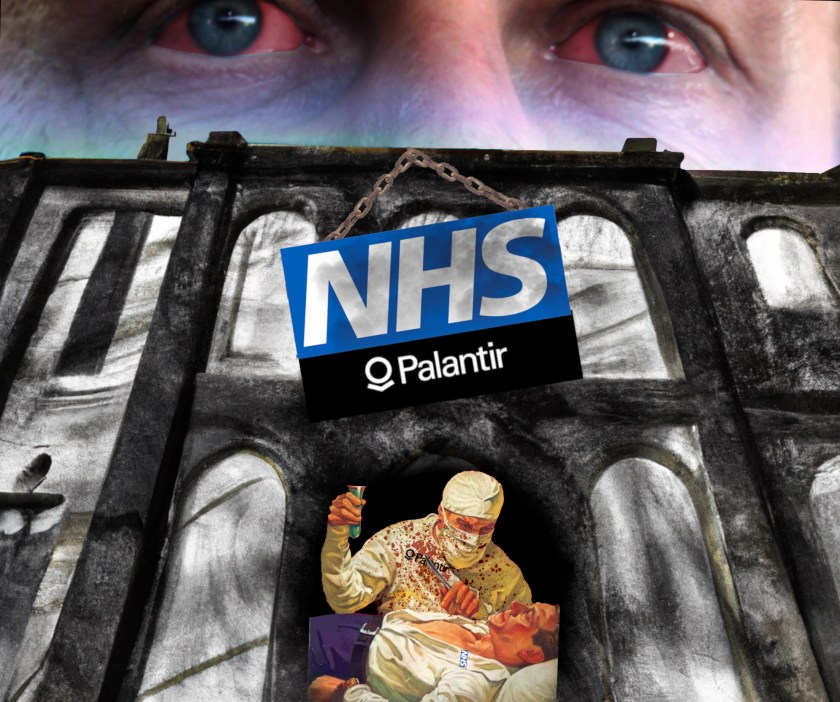
If you weren’t paying close attention, you might think that the most grotesque and indefensible aspect of Keir Starmer’s Labour government turning over NHS patient records to the American military contractor Palantir is that Palantir are Trumpist war-criminals, “founded to kill communists”:
https://www.thecanary.co/trending/2026/01/07/palantir-kill-communists/
And that is indeed grotesque and indefensible, and should have been grounds for Starmer being forced to resign as PM long before it became apparent that he stuffed his government with Epstein’s enablers and chums:
But it’s actually much worse than that! It’s not just that Labour hand over Britain’s crown jewels to rapacious international criminals who are deeply embedded in a regime that has directly threatened the sovereignty of the UK. They also passed up a proven, advanced, open, safe, British alternative: the OpenSAFELY initiative, developed by Ben Goldacre and his team at Jesus College Oxford:
OpenSAFELY is the latest iteration of Goldacre’s Trusted Research Environment (TRE), arguably the most successful patient record research tool ever conceived. It’s built atop a special server that can send queries to each NHS trust, without ever directly accessing any patient data. Researchers formulate a research question – say, an inquiry into the demographics of the comorbidities of a given disease – and publish it using a modified MySQL syntax on a public git server. Other researchers peer-review the query, assessing it for rigour, and then the TRE farms that query out to each NHS trust, then aggregates all the responses and publishes it, either immediately or after a set period.
This is a fully privacy-preserving, extremely low-cost, rapid way for researchers to run queries against the full load of NHS patient records, and holy shit does it ever work. By coincidence, it went online just prior to the pandemic, and it enabled an absolute string of blockbuster papers on covid, dozens of them, including several in leading journals like Nature:
https://www.digitalhealth.net/2022/04/goldacre-trusted-research-environments/
This led HMG to commission Goldacre to produce a report on the use of TREs as the permanent, principal way for medical researchers to mine NHS data (disclosure: I was interviewed for this report):
This is a near-miraculous system: an ultra-effective, ultra-cost-effective, Made-in-Britain, open, transparent, privacy-preserving, rigorous way to produce medical research insights at scale, which could be perfected in the UK and then exported to the world, getting better every time a new partner signs on and helps shoulder the work of maintaining and improving the free/open source software that powers it.
OpenSAFELY was the obvious contender for NHS research. But it wasn’t the only one: in the other corner was Palantir, a shady American company best known for helping cops and spies victimise people on the basis of dodgy statistics. Palantir blitzed Westminster with expensive PR and lobbying, and embarked on a strategy to “hoover up” every small NHS contractor until Palantir was the last company standing. Palantir UK boss Louis Moseley called it “Buying our way in”:
https://pluralistic.net/2022/10/01/the-palantir-will-see-you-now/#public-private-partnership
It worked. First, Palantir got £60m worth of no-bid contracts during the acute phase of the pandemic, and then it bootstrapped that into a £330m contract to handle all the NHS England data:
https://www.theregister.com/2023/11/22/palantir_wins_nhs_contract/
It was a huge win for corruption over excellence and corporate surveillance over privacy. At the same time, it was a terrible blow to UK technological sovereignty, and long-term trust in the NHS.
But that’s not where it ended. Palantir continued its wildly profitable, highly public programme of collaborating with fascists – especially Trump’s ICE kill/snatch-squads – further trashing its reputation around the world. It’s now got so bad that the British Medical Association (BMA) – a union representing more than 200,000 UK doctors – has told its members that they should not use the Palantir products that the NHS has forced onto their practices:
https://www.bmj.com/content/392/bmj.s168/rr-2
In response, an anonymous Palantir spokesperson told The Register that Britons should trust its software because the company is also working with British police forces:
https://www.theregister.com/2026/02/11/bma_palantir_nhs/
The BMA is a very powerful, militant union, and it has already run successful campaigns against Starmer’s government that forced Labour to shore up its support for the NHS. The fact that there’s a better, cheaper, more effective, technologically sovereign tool that HMG has already recognised only bolsters the union’s case for jettisoning Palantir’s products altogether.
(Image: Gage Skidmore, CC BY 2.0, modified)
Hey look at this (permalink)

- Open Letter to Tech Companies: Protect Your Users From Lawless DHS Subpoenas https://www.eff.org/deeplinks/2026/02/open-letter-tech-companies-protect-your-users-lawless-dhs-subpoenas
-
Auspicious Omens and Excellent Insubordination https://www.meditationsinanemergency.com/auspicious-omens-and-excellent-insubordination/
-
Olympic Spirits on ICE https://prospect.org/2026/02/11/feb-2026-magazine-sports-olympic-spirits-on-ice-los-angeles/
-
Bracing for the Enshittification of Embodied AI and Robotics https://sites.google.com/view/bracing-for-enshittification
-
Joshua Idehen – Once in a lifetime (Talking Heads/Angélique Kidjo) https://www.youtube.com/watch?v=xQG5zN8QOAs
Object permanence (permalink)
#20yrsago Google Video DRM: Why is Hollywood more important than users? https://memex.craphound.com/2006/02/13/google-video-drm-why-is-hollywood-more-important-than-users/
#20yrsago Phishers trick Internet “trust” companies https://web.archive.org/web/20060222232249/http://blog.washingtonpost.com/securityfix/2006/02/the_new_face_of_phishing_1.html
#15yrsago With a Little Help: first post-publication progress report https://www.publishersweekly.com/pw/by-topic/columns-and-blogs/cory-doctorow/article/46105-with-a-little-help-the-early-returns.html
#15yrsago Nokia’s radical CEO has a mercenary, checkered past https://web.archive.org/web/20100608100324/http://www.siliconbeat.com/2008/01/11/microsoft-beware-stephen-elop-is-a-flight-risk/
#15yrsago Scientology’s science fictional origins: thesis from 1981 https://web.archive.org/web/20110218045653/http://digitalcommons.mcmaster.ca/opendissertations/126/
#10yrsago I was a Jeopardy! clue https://memex.craphound.com/2016/02/13/i-was-a-jeopardy-clue/
#10yrsago Liberated Yazidi sex slaves become a vengeful, elite anti-ISIS fighting force https://www.independent.co.uk/news/world/middle-east/isis-yazidi-sex-slaves-take-up-arms-for-mosul-fight-to-bring-our-women-home-a6865056.html
#10yrsago Listen: a new podcast about science fiction and spectacular meals https://www.scottedelman.com/2016/02/10/the-first-episode-of-eating-the-fantastic-with-guest-sarah-pinsker-is-now-live/
#10yrsago Politician given green-light to name developer’s new streets with synonyms for greed and deceit https://web.archive.org/web/20160213001324/http://www.capitalnewyork.com/article/city-hall/2016/02/8590908/staten-island-borough-president-gets-approval-name-new-streets-gre
#5yrsago $50T moved from America’s 90% to the 1% https://pluralistic.net/2021/02/13/data-protection-without-monopoly/#inequality
#5yrsago Broad Band https://pluralistic.net/2021/02/13/data-protection-without-monopoly/#broad-band
#5yrsago Privacy Without Monopoly https://pluralistic.net/2021/02/13/data-protection-without-monopoly/#comcom
#1yrago Premature Internet Activists https://pluralistic.net/2025/02/13/digital-rights/#are-human-rights
Upcoming appearances (permalink)

- Salt Lake City: Enshittification at the Utah Museum of Fine Arts (Tanner Humanities Center), Feb 18
https://tanner.utah.edu/center-events/cory-doctorow/ -
Montreal (remote): Fedimtl, Feb 24
https://fedimtl.ca/ -
Oslo (remote): Seminar og lansering av rapport om «enshittification»
https://www.forbrukerradet.no/siste-nytt/digital/seminar-og-lansering-av-rapport-om-enshittification/ -
Victoria: 28th Annual Victoria International Privacy & Security Summit, Mar 3-5
https://www.rebootcommunications.com/event/vipss2026/ -
Berkeley: Bioneers keynote, Mar 27
https://conference.bioneers.org/ -
Berlin: Re:publica, May 18-20
https://re-publica.com/de/news/rp26-sprecher-cory-doctorow -
Berlin: Enshittification at Otherland Books, May 19
https://www.otherland-berlin.de/de/event-details/cory-doctorow.html -
Hay-on-Wye: HowTheLightGetsIn, May 22-25
https://howthelightgetsin.org/festivals/hay/big-ideas-2
Recent appearances (permalink)
- Panopticon :3 (Trashfuture)
https://www.patreon.com/posts/panopticon-3-150395435 -
America’s Enshittification is Canada’s Opportunity (Do Not Pass Go)
https://www.donotpassgo.ca/p/americas-enshittification-is-canadas -
Everything Wrong With the Internet and How to Fix It, with Tim Wu (Ezra Klein)
https://www.nytimes.com/2026/02/06/opinion/ezra-klein-podcast-doctorow-wu.html -
How the Internet Got Worse (Masters in Business)
https://www.youtube.com/watch?v=auXlkuVhxMo -
Enshittification (Jon Favreau/Offline):
https://crooked.com/podcast/the-enshittification-of-the-internet-with-cory-doctorow/
Latest books (permalink)
- “Canny Valley”: A limited edition collection of the collages I create for Pluralistic, self-published, September 2025
-
“Enshittification: Why Everything Suddenly Got Worse and What to Do About It,” Farrar, Straus, Giroux, October 7 2025
https://us.macmillan.com/books/9780374619329/enshittification/ -
“Picks and Shovels”: a sequel to “Red Team Blues,” about the heroic era of the PC, Tor Books (US), Head of Zeus (UK), February 2025 (https://us.macmillan.com/books/9781250865908/picksandshovels).
-
“The Bezzle”: a sequel to “Red Team Blues,” about prison-tech and other grifts, Tor Books (US), Head of Zeus (UK), February 2024 (thebezzle.org).
-
“The Lost Cause:” a solarpunk novel of hope in the climate emergency, Tor Books (US), Head of Zeus (UK), November 2023 (http://lost-cause.org).
-
“The Internet Con”: A nonfiction book about interoperability and Big Tech (Verso) September 2023 (http://seizethemeansofcomputation.org). Signed copies at Book Soup (https://www.booksoup.com/book/9781804291245).
-
“Red Team Blues”: “A grabby, compulsive thriller that will leave you knowing more about how the world works than you did before.” Tor Books http://redteamblues.com.
-
“Chokepoint Capitalism: How to Beat Big Tech, Tame Big Content, and Get Artists Paid, with Rebecca Giblin”, on how to unrig the markets for creative labor, Beacon Press/Scribe 2022 https://chokepointcapitalism.com
Upcoming books (permalink)
- “The Reverse-Centaur’s Guide to AI,” a short book about being a better AI critic, Farrar, Straus and Giroux, June 2026
-
“Enshittification, Why Everything Suddenly Got Worse and What to Do About It” (the graphic novel), Firstsecond, 2026
-
“The Post-American Internet,” a geopolitical sequel of sorts to Enshittification, Farrar, Straus and Giroux, 2027
-
“Unauthorized Bread”: a middle-grades graphic novel adapted from my novella about refugees, toasters and DRM, FirstSecond, 2027
-
“The Memex Method,” Farrar, Straus, Giroux, 2027
Colophon (permalink)
Today’s top sources:
Currently writing: “The Post-American Internet,” a sequel to “Enshittification,” about the better world the rest of us get to have now that Trump has torched America (1006 words today, 27741 total)
- “The Reverse Centaur’s Guide to AI,” a short book for Farrar, Straus and Giroux about being an effective AI critic. LEGAL REVIEW AND COPYEDIT COMPLETE.
-
“The Post-American Internet,” a short book about internet policy in the age of Trumpism. PLANNING.
-
A Little Brother short story about DIY insulin PLANNING

This work – excluding any serialized fiction – is licensed under a Creative Commons Attribution 4.0 license. That means you can use it any way you like, including commercially, provided that you attribute it to me, Cory Doctorow, and include a link to pluralistic.net.
https://creativecommons.org/licenses/by/4.0/
Quotations and images are not included in this license; they are included either under a limitation or exception to copyright, or on the basis of a separate license. Please exercise caution.
How to get Pluralistic:
Blog (no ads, tracking, or data-collection):
Newsletter (no ads, tracking, or data-collection):
https://pluralistic.net/plura-list
Mastodon (no ads, tracking, or data-collection):
Medium (no ads, paywalled):
Twitter (mass-scale, unrestricted, third-party surveillance and advertising):
Tumblr (mass-scale, unrestricted, third-party surveillance and advertising):
https://mostlysignssomeportents.tumblr.com/tagged/pluralistic
“When life gives you SARS, you make sarsaparilla” -Joey “Accordion Guy” DeVilla
READ CAREFULLY: By reading this, you agree, on behalf of your employer, to release me from all obligations and waivers arising from any and all NON-NEGOTIATED agreements, licenses, terms-of-service, shrinkwrap, clickwrap, browsewrap, confidentiality, non-disclosure, non-compete and acceptable use policies (“BOGUS AGREEMENTS”) that I have entered into with your employer, its partners, licensors, agents and assigns, in perpetuity, without prejudice to my ongoing rights and privileges. You further represent that you have the authority to release me from any BOGUS AGREEMENTS on behalf of your employer.
ISSN: 3066-764X
-
‘His loss is massive’: Inquests show spread of deadly synthetic drugs
A BBC investigation shows how nitazene deaths have risen and the illegal drug market is changing. -
🗣 Homeland Security Wants Names | EFFector 38.3
Criticize the government online? The Department of Homeland Security (DHS) might ask Google to cough up your name. By abusing an investigative tool called “administrative subpoenas,” DHS has been demanding that tech companies hand over users’ names, locations, and more. We’re explaining how companies can stand up for users—and covering the latest news in the fight for privacy and free speech online—with our EFFector newsletter.
For over 35 years, EFFector has been your guide to understanding the intersection of technology, civil liberties, and the law. This latest issue tracks our campaign to expand end-to-end encryption protections, a bill to stop government face scans from Immigration and Customs Enforcement (ICE) and others, and why Section 230 remains the best available system to protect everyone’s ability to speak online.
Prefer to listen in? In our audio companion, EFF Senior Staff Attorney F. Mario Trujillo explains how Homeland Security’s lawless subpoenas differ from court orders. Find the conversation on YouTube or the Internet Archive.
EFFECTOR 38.3 – 🗣 Homeland Security Wants Names
Want to stay in the fight for privacy and free speech online? Sign up for EFF’s EFFector newsletter for updates, ways to take action, and new merch drops. You can also fuel the fight against unlawful government surveillance when you support EFF today!
-
“Free” Surveillance Tech Still Comes at a High and Dangerous Cost
Surveillance technology vendors, federal agencies, and wealthy private donors have long helped provide local law enforcement “free” access to surveillance equipment that bypasses local oversight. The result is predictable: serious accountability gaps and data pipelines to other entities, including Immigration and Customs Enforcement (ICE), that expose millions of people to harm.
The cost of “free” surveillance tools — like automated license plate readers (ALPRs), networked cameras, face recognition, drones, and data aggregation and analysis platforms — is measured not in tax dollars, but in the erosion of civil liberties.
The cost of “free” surveillance tools is measured not in tax dollars, but in the erosion of civil liberties.
The collection and sharing of our data quietly generates detailed records of people’s movements and associations that can be exposed, hacked, or repurposed without their knowledge or consent. Those records weaken sanctuary and First Amendment protections while facilitating the targeting of vulnerable people.
Cities can and should use their power to reject federal grants, vendor trials, donations from wealthy individuals, or participation in partnerships that facilitate surveillance and experimentation with spy tech.
If these projects are greenlit, oversight is imperative. Mechanisms like public hearings, competitive bidding, public records transparency, and city council supervision aid to ensure these acquisitions include basic safeguards — like use policies, audits, and consequences for misuse — to protect the public from abuse and from creeping contracts that grow into whole suites of products.
Clear policies and oversight mechanisms must be in place before using any surveillance tools, free or not, and communities and their elected officials must be at the center of every decision about whether to bring these tools in at all.
Here are some of the most common methods “free” surveillance tech makes its way into communities.
Trials and Pilots
Police departments are regularly offered free access to surveillance tools and software through trials and pilot programs that often aren’t accompanied by appropriate use policies. In many jurisdictions, trials do not trigger the same requirements to go before decision-makers outside the police department. This means the public may have no idea that a pilot program for surveillance technology is happening in their city.
The public may have no idea that a pilot program for surveillance technology is happening in their city.
In Denver, Colorado, the police department is running trials of possible unmanned aerial vehicles (UAVs) for a drone-as-first-responder (DFR) program from two competing drone vendors: Flock Safety Aerodome drones (through August 2026) and drones from the company Skydio, partnering with Axon, the multi-billion dollar police technology company behind tools like Tasers and AI-generated police reports. Drones create unique issues given their vantage for capturing private property and unsuspecting civilians, as well as their capacity to make other technologies, like ALPRs, airborne.
Functional, Even Without Funding
We’ve seen cities decide not to fund a tool, or run out of funding for it, only to have a company continue providing it in the hope that money will turn up. This happened in Fall River, Massachusetts, where the police department decided not to fund ShotSpotter’s $90,000 annual cost and its frequent false alarms, but continued using the system when the company provided free access.
Police technology companies are developing more features and subscription-based models, so what’s “free” today frequently results in taxpayers footing the bill later.
In May 2025, Denver’s city council unanimously rejected a $666,000 contract extension for Flock Safety ALPR cameras after weeks of public outcry over mass surveillance data sharing with federal immigration enforcement. But Mayor Mike Johnston’s office allowed the cameras to keep running through a “task force” review, effectively extending the program even after the contract was voted down. In response, the Denver Taskforce to Reimagine Policing and Public Safety and Transforming Our Communities Alliance launched a grassroots campaign demanding the city “turn Flock cameras off now,” a reminder that when surveillance starts as a pilot or time‑limited contract, communities often have to fight not just to block renewals but to shut the systems off.
Importantly, police technology companies are developing more features and subscription-based models, so what’s “free” today frequently results in taxpayers footing the bill later.
Gifts from Police Foundations and Wealthy Donors
Police foundations and the wealthy have pushed surveillance-driven agendas in their local communities by donating equipment and making large monetary gifts, another means of acquiring these tools without public oversight or buy-in.
In Atlanta, the Atlanta Police Foundation (APF) attempted to use its position as a private entity to circumvent transparency. Following a court challenge from the Atlanta Community Press Collective and Lucy Parsons Labs, a Georgia court determined that the APF must comply with public records laws related to some of its actions and purchases on behalf of law enforcement.
In San Francisco, billionaire Chris Larsen has financially supported a supercharging of the city’s surveillance infrastructure, donating $9.4 million to fund the San Francisco Police Department’s (SFPD) Real-Time Investigation Center, where a menu of surveillance technologies and data come together to surveil the city’s residents. This move comes after the billionaire backed a ballot measure, which passed in March 2025, eroding the city’s surveillance technology law and allowing the SFPD free rein to use new surveillance technologies for a full year without oversight.Free Tech for Federal Data Pipelines
Federal grants and Department of Homeland Security funding are another way surveillance technology appears free to, only to lock municipalities into long‑term data‑sharing and recurring costs.
Through the Homeland Security Grant Program, which includes the State Homeland Security Program (SHSP) and the Urban Areas Security (UASI) Initiative, and Department of Justice programs like Byrne JAG, the federal government reimburses states and cities for “homeland security” equipment and software, including including law‑enforcement surveillance tools, analytics platforms, and real‑time crime centers. Grant guidance and vendor marketing materials make clear that these funds can be used for automated license plate readers, integrated video surveillance and analytics systems, and centralized command‑center software—in other words, purchases framed as counterterrorism investments but deployed in everyday policing.
Vendors have learned to design products around this federal money, pitching ALPR networks, camera systems, and analytic platforms as “grant-ready” solutions that can be acquired with little or no upfront local cost. Motorola Solutions, for example, advertises how SHSP and UASI dollars can be used for “law enforcement surveillance equipment” and “video surveillance, warning, and access control” systems. Flock Safety, partnering with Lexipol, a company that writes use policies for law enforcement, offers a “License Plate Readers Grant Assistance Program” that helps police departments identify federal and state grants and tailor their applications to fund ALPR projects.
Grant assistance programs let police chiefs fast‑track new surveillance: the paperwork is outsourced, the grant eats the upfront cost, and even when there is a formal paper trail, the practical checks from residents, councils, and procurement rules often get watered down or bypassed.
On paper, these systems arrive “for free” through a federal grant; in practice, they lock cities into recurring software, subscription, and data‑hosting fees that quietly turn into permanent budget lines—and a lasting surveillance infrastructure—as soon as police and prosecutors start to rely on them. In Santa Cruz, California, the police department explicitly sought to use a DHS-funded SHSP grant to pay for a new citywide network of Flock ALPR cameras at the city’s entrances and exits, with local funds covering additional cameras. In Sumner, Washington, a $50,000 grant was used to cover the entire first year of a Flock system — including installation and maintenance — after which the city is on the hook for roughly $39,000 every year in ongoing fees. The free grant money opens the door, but local governments are left with years of financial, political, and permanent surveillance entanglements they never fully vetted.
The most dangerous cost of this “free” funding is not just budgetary; it is the way it ties local systems into federal data pipelines. Since 9/11, DHS has used these grant streams to build a nationwide network of at least 79–80 state and regional fusion centers that integrate and share data from federal, state, local, tribal, and private partners. Research shows that state fusion centers rely heavily on the DHS Homeland Security Grant Program (especially SHSP and UASI) to “mature their capabilities,” with some centers reporting that 100 percent of their annual expenditures are covered by these grants.
Civil rights investigations have documented how this funding architecture creates a backdoor channel for ICE and other federal agencies to access local surveillance data for their own purposes. A recent report by the Surveillance Technology Oversight Project (S.T.O.P.) describes ICE agents using a Philadelphia‑area fusion center to query the city’s ALPR network to track undocumented drivers in a self‑described sanctuary city.
Ultimately, federal grants follow the same script as trials and foundation gifts: what looks “free” ends up costing communities their data, their sanctuary protections, and their power over how local surveillance is used.
Protecting Yourself Against “Free” Technology
The most important protection against “free” surveillance technology is to reject it outright. Cities do not have to accept federal grants, vendor trials, or philanthropic donations. Saying no to “free” tech is not just a policy choice; it is a political power that local governments possess and can exercise. Communities and their elected officials can and should refuse surveillance systems that arrive through federal grants, vendor pilots, or private donations, regardless of how attractive the initial price tag appears.
For those cities that have already accepted surveillance technology, the imperative is equally clear: shut it down. When a community has rejected use of a spying tool, the capabilities, equipment, and data collected from that tool should be shut off immediately. Full stop.
And for any surveillance technology that remains in operation, even temporarily, there must be clear rules: when and how equipment is used, how that data is retained and shared, who owns data and how companies can access and use it, transparency requirements, and consequences for any misuse and abuse.
“Free” surveillance technology is never free. Someone profits or gains power from it. Police technology vendors, federal agencies, and wealthy donors do not offer these systems out of generosity; they offer them because surveillance serves their interests, not ours. That is the real cost of “free” surveillance.
-
US Bars Palau Senate Leader Over Alleged China Ties
The U.S. State Department has barred the president of Palau’s Senate from traveling to the United States over allegations that he accepted bribes to advance the interests of China’s government and Chinese criminal figures, according to a department statement.
The travel ban announced Tuesday targets Hokkons Baules, the president of Palau’s Senate, and Anderson Jibas, a former mayor from Marshall Islands.
“Baules abused his public position by accepting bribes in exchange for providing advocacy and support for government, business, and criminal interests from China” the State Department said in a statement.
Baules denied any wrongdoing in comments to OCCRP. “I feel they just don’t like me because I am supporting People’s Republic of China businessmen in Palau,” Baules told OCCRP. “So they are trying to find a way to make my name bad, but I don’t know any corruption they’re talking about,” he said.
Previous OCCRP reporting has revealed how organized crime figures and other questionable businessmen have helped China expand its presence in Palau, a Pacific island country of just 16,000 people that is closely allied with the U.S.. Last year, Washington sanctioned several ethnic Chinese businesspeople with ties to the Prince Group, a multi-billion-dollar online fraud syndicate.
Baules has been a vocal advocate for ending Palau’s diplomatic recognition of Taiwan and moving closer to China.
-
Public Health Workers Are Quitting Over Guantánamo Assignments
Rebekah Stewart, a nurse at the U.S. Public Health Service, got a call last April that brought her to tears. She had been selected for deployment to the
Homeland Security Secretary Kristi Noem has said: “President Donald Trump has been very clear: Guantanamo Bay will hold the worst of the worst.” However, several news organizations have reported that many of the men shipped to the base had no criminal convictions. As many as 90% of them were described as “low-risk” in a May progress report from ICE.
In fits and starts, the Trump administration has sent about 780 noncitizens to Guantánamo Bay, according to The New York Times. Numbers fluctuate as new detainees arrive and others are returned to the U.S. or deported.
The Trump administration has sent about 780 noncitizens to Guantánamo Bay.
While some Public Health Service officers have provided medical care to detained immigrants in the past, this is the first time in American history that Guantánamo has been used to house immigrants who had been living in the U.S. Officers said ICE postings are getting more common. After dodging Guantánamo, Stewart was instructed to report to an ICE detention center in Texas.
“Public health officers are being asked to facilitate a man-made humanitarian crisis,” she said.
Seeing no option to refuse deployments that she found objectionable, Stewart resigned after a decade of service. She would give up the prospect of a pension offered after 20 years.
“It was one of the hardest decisions I ever had to make,” she said. “It was my dream job.”
One of her PHS colleagues, nurse Dena Bushman, grappled with a similar moral dilemma when she got a notice to report to Guantánamo a few weeks after the shooting at the Centers for Disease Control and Prevention in August. Bushman, who was posted with the CDC, got a medical waiver delaying her deployment on account of stress and grief. She considered resigning, then did.
“This may sound extreme,” Bushman said. “But when I was making this decision, I couldn’t help but think about how the people who fed those imprisoned in concentration camps were still part of the Nazi regime.”

Medics practice evacuating a detained immigrant in a simulated exercise at Guantánamo in April.(Aubree Owens/U.S. Air Force) Others have resigned, but many officers remain. While they are alarmed by Trump’s tactics, detained people need care, multiple PHS officers told KFF Health News.
“We do the best we can to provide care to people in this shit show,” said a PHS nurse who worked in detention facilities last year.
“I respect people and treat them like humans,” she said. “I try to be a light in the darkness, the one person that makes someone smile in this horrible mess.”
“We do the best we can to provide care to people in this shit show.”
The PHS officers conceded that their power to protect people was limited in a detention system fraught with overcrowding, disorganization, and the psychological trauma of uncertainty, family separations, and sleep deprivation.
“Ensuring the safety, security, and well-being of individuals in our custody is a top priority at ICE,” said Tricia McLaughlin, chief spokesperson for the Department of Homeland Security, in an emailed statement to KFF Health News.
Adm. Brian Christine, assistant secretary for health at the Department of Health and Human Services, which oversees the Public Health Service, said in an email: “Our duty is clear: say “Yes Sir!”, salute smartly, and execute the mission: show up, provide humane care, and protect health.” Christine is a recent appointee who, until recently, was a urologist specializing in testosterone and male fertility issues.
“In pursuit of subjective morality or public displays of virtue,” he added, “we risk abandoning the very individuals we pledged to serve.”
Into the Unknown
In the months before Stewart resigned, she reflected on her previous deployments, during Trump’s first term, to immigration processing centers run by Customs and Border Protection. Fifty women were held in a single concrete cell in Texas, she recalled.
“The most impactful thing I could do was to convince the guards to allow the women, who had been in there for a week, to shower,” she said. “I witnessed suffering without having much ability to address it.”
Stewart spoke with Bushman and other PHS officers who were embedded at the CDC last year. They assisted with the agency’s response to ongoing measles outbreaks, with sexually transmitted infection research, and more. Their roles became crucial last year as the Trump administration laid off droves of CDC staffers.
Stewart, Bushman, and a few other PHS officers at the CDC said they met with middle managers to ask for details about the deployments: If they went to Guantánamo and ICE facilities, how much power would they have to provide what they considered medically necessary care? If they saw anything unethical, how could they report it? Would it be investigated? Would they be protected from reprisal?
“I witnessed suffering without having much ability to address it.”
Stewart and Bushman said they were given a PHS office phone number they could call if they had a complaint while on assignment. Otherwise, they said, their questions went unanswered. They resigned and so never went to Guantánamo.
PHS officers who were deployed to the base told KFF Health News they weren’t given details about their potential duties — or the standard operating procedure for medical care — before they arrived.
Stephen Xenakis, a retired Army general and a psychiatrist who has advised on medical care at Guantánamo for two decades, said that was troubling. Before health workers deploy, he said, they should understand what they’ll be expected to do.
The consequences of insufficient preparation can be severe. In 2014, the Navy threatened to court-martial one of its nurses at Guantánamo who refused to force-feed prisoners on hunger strike, who were protesting inhumane treatment and indefinite detention. The protocol was brutal: A person was shackled to a five-point restraint chair as nurses shoved a tube for liquid food into their stomach through their nostrils.
“He wasn’t given clear guidance in advance on how these procedures would be conducted at Guantánamo,” Xenakis said of the nurse. “Until he saw it, he didn’t understand how painful it was for detainees.”

U.S. service members stand by during an April simulated medical evacuation of immigrants detained at Guantánamo. (Aubree Owens/U.S. Air Force) The American Nurses Association and Physicians for Human Rights sided with the nurse, saying his objection was guided by professional ethics. After a year, the military dropped the charges.
A uniformed doctor or nurse’s power tends to depend on their rank, their supervisor, and chains of command, Xenakis said. He helped put an end to some inhumane practices at Guantánamo more than a decade ago, when he and other retired generals and admirals publicly objected to certain interrogation techniques, such as one called “walling,” in which interrogators slammed the heads of detainees suspected of terrorism against a wall, causing slight concussions. Xenakis argued that science didn’t support “walling” as an effective means of interrogation, and that it was unethical, amounting to torture.
“They are arresting and detaining more people than their facilities can support.”
Torture hasn’t been reported from Guantánamo’s immigration operation, but ICE shift reports obtained through a Freedom of Information Act request by the government watchdog group American Oversight note concerns about detainees resorting to hunger strikes and self-harm.
“Welfare checks with potential hunger strike IA’s,” short for illegal aliens, says an April 30 note from a contractor working with ICE. “In case of a hunger strike or other emergencies,” the report adds, the PHS and ICE are “coordinating policies and procedures.”
“De-escalation of potential pod wide hunger strike/potential riot,” says an entry from July 8. “Speak with alien on suicide watch regarding well being.”
Inmates and investigations have reported delayed medical care at immigration detention facilities and dangerous conditions, including overcrowding and a lack of sanitation. Thirty-two people died in ICE custody in 2025, making it the deadliest year in two decades.
“They are arresting and detaining more people than their facilities can support,” one PHS officer told KFF Health News. The most prevalent problem the officer saw among imprisoned immigrants was psychological. They worried about never seeing their families again or being sent back to a country where they feared they’d be killed. “People are scared out of their minds,” the officer said.
No Sunlight
The PHS officers who were at Guantánamo told KFF Health News that the men they saw were detained in either low-security barracks, with a handful of people per room, or in Camp 6, a dark, high-security facility without natural light. The ICE shift reports describe the two stations by their position on the island, Leeward for the barracks and Windward for Camp 6. About 50 Cuban men sent to Guantánamo in December and January have languished at Camp 6.
A Navy hospital on the base mainly serves the military and other residents who aren’t locked up — and in any case, its capabilities are limited, the officers said. To reduce the chance of expensive medical evacuations back to the U.S. to see specialists quickly, they said, the immigrants were screened before being shipped to Guantánamo. People over age 60 or who needed daily drugs to manage diabetes and high blood pressure, for example, were generally excluded. Still, the officers said, some detainees have had to be evacuated back to Florida.
PHS nurses and doctors said they screened immigrants again when they arrived and provided ongoing care, fielding complaints including about gastrointestinal distress and depression. One ICE monthly progress report says, “The USPHS psychologist started an exercise group” for detainees.
“I’d tell them, ‘I’m sorry you are here.’”
Doctors’ requests for lab work were often turned down because of logistical hurdles, partly due to the number of agencies working together on the base, the officers said. Even a routine test, a complete blood count, took weeks to process, versus hours in the U.S.
DHS and the Department of Defense, which have coordinated on the Guantánamo immigration operation, did not respond to requests for comment about their work there.
One PHS officer who helped medically screen new detainees said they were often surprised to learn they were at Guantánamo.
“I’d tell them, ‘I’m sorry you are here,’” the officer said. “No one freaked out. It was like the ten-millionth time they had been transferred.” Some of the men had been detained in various facilities for five or six months and said they wanted to return to their home countries, according to the officer. Health workers had neither an answer nor a fix.
Unlike ICE detention facilities in the U.S., Guantánamo hasn’t been overcrowded. “I have never been so not busy at work,” one officer said. A military base on a tropical island, Guantánamo offers activities such as snorkeling, paddleboard yoga, and kickboxing to those who aren’t imprisoned. Even so, the officer said they would rather be home than on this assignment on the taxpayer’s dime.
Transporting staff and supplies to the island and maintaining them on-base is enormously expensive. The government paid an estimated $16,500 per day, per detainee at Guantánamo, to hold those accused of terrorism, according to a 2025 Washington Post analysis of DOD data. (The average cost to detain immigrants in ICE facilities in the U.S. is $157 a day.)
Even so, the funding has skyrocketed: Congress granted ICE a record $78 billion for fiscal year 2026, a staggering increase from $9.9 billion in 2024 and $6.5 billion nearly a decade ago.
Last year, the Trump administration also diverted more than $2 billion from the national defense budget to immigration operations, according to a report from congressional Democrats. About $60 million of it went to Guantánamo.
The government paid an estimated $16,500 per day, per detainee at Guantánamo.
“Detaining noncitizens at Guantanamo is far more costly and logistically burdensome than holding them in ICE detention facilities within the United States,” wrote Deborah Fleischaker, a former assistant director at ICE, in a declaration submitted as part of a lawsuit brought by the American Civil Liberties Union early last year. In December, a federal judge rejected the Trump administration’s request to dismiss a separate ACLU case questioning the legality of detaining immigrants outside the U.S.
Anne Schuchat, who served with the PHS for 30 years before retiring in 2018, said PHS deployments to detention centers may cost the nation in terms of security, too. “A key concern has always been to have enough of these officers available for public health emergencies,” she said.
Andrew Nixon, an HHS spokesperson, said the immigration deployments don’t affect the public health service’s potential response to other emergencies.
In the past, PHS officers have stood up medical shelters during hurricanes in Louisiana and Texas, rolled out covid testing in the earliest months of the pandemic, and provided crisis support after the deadly shooting at Sandy Hook Elementary School and the Boston Marathon bombing.
“It’s important for the public to be aware of how many government resources are being used so that the current administration can carry out this one agenda,” said Stewart, one of the nurses who resigned. “This one thing that’s probably turning us into the types of countries we have fought wars against.”
The post Public Health Workers Are Quitting Over Guantánamo Assignments appeared first on Truthdig.


.jpg)